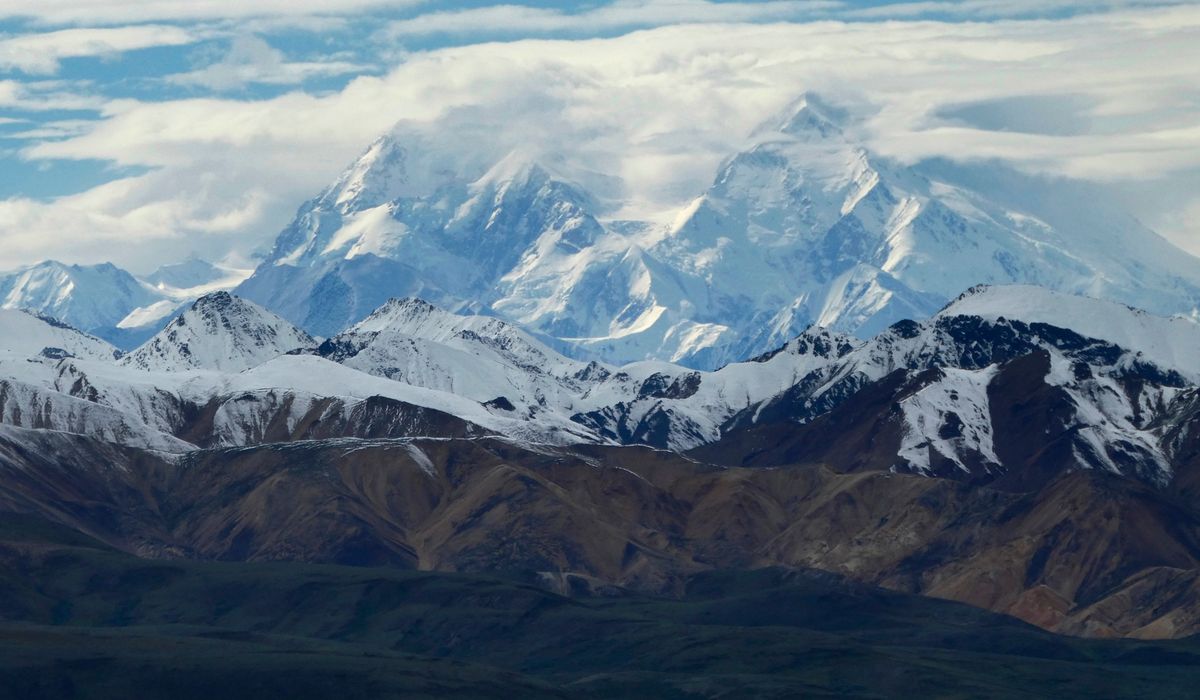
In the realm of mountaineering, Alaska’s Mount McKinley — also known as Denali — stands as a towering challenge. Rising approximately 20,310 feet (6,190 meters) above sea level, it is the highest peak in North America. Its icy slopes and treacherous passes serve as a formidable adversary to the climbers who dare to conquer its heights. But the mountain’s magnificence belies a brutal reality — the risk of fatal accidents.
A grim reminder of this risk unfolded recently when an unfortunate incident claimed the lives of three climbers from a Latvian mountaineering team. The tragic news was announced by the mountaineering group on Friday. A fourth member of the team, who also fell near a dangerous pass, was fortunately rescued, marking a solitary silver lining amid a dark cloud of sorrow.
The four climbers were part of a seven-person expedition from Latvia, undertaking their challenge on Mount McKinley. The group was traversing a route notoriously recognized for its exposed and dangerous sections — places that have been the sites of numerous injuries and fatalities over the years. The accident occurred on Wednesday, as per information from the National Park Service.
Mount McKinley’s altitude, combined with its challenging terrain, makes rescue operations particularly difficult. The survivor of the accident was rescued from an elevation of approximately 17,200 feet (5,240 meters) by the search and rescue personnel of Denali National Park and Preserve. Due to the challenging terrain and conditions, a helicopter could not land at the site. Instead, a long line from the helicopter was deployed to rescue the climber late Thursday afternoon. After the rescue, the survivor was airlifted to a hospital for medical attention.
The accident took place during the climb near Denali Pass, which is situated at an elevation of about 18,200 feet (5,550 meters). After the fall, the three other members of the climbing group attended to the fallen climbers before returning to a camp at about 17,000 feet (5,180 meters), as stated by the agency.
The climbers were following the West Buttress route, the most popular path to the summit. This route is notorious for its crevasses, steep ice, and exposed ridges. Over the years, many mountaineering injuries and fatalities have occurred on the traverse between an area known as the high camp at around 17,200 feet (5,240 meters) and Denali Pass. Most of these accidents have resulted from unprotected falls, and the majority of them have occurred while climbers were descending.
To mitigate the risks, park rangers and mountain guides install and maintain snow pickets, which are used for building anchors and extra protection on areas like steep slopes. This area, between the high camp and Denali Pass, is also known as the Autobahn. It is a snow and ice slope with conditions ranging from deep snow carrying avalanche risk to hard ice.
Climbers have the option to put in their own pickets if needed. However, as climber Clint Helander, who has summitted McKinley and been on the mountain numerous times, highlighted, this can be a difficult task. He explained that one might have to bash the picket in through very dense snow and ice. The challenges presented by the mountain are manifold: intense glaciation, rapid weather changes, altitude, and the sheer scale of the peak make climbing McKinley a massive undertaking. This is further compounded by the need for climbers to carry a significant amount of gear for what can often be lengthy expeditions.
Approximately 1,000 to 1,200 climbers attempt to reach the top of Mount McKinley each year, mostly during May and June. A typical expedition takes about 17 days, and less than half made it to the summit last year, according to park statistics. The mountain’s history is marked with over 130 fatalities, including two deaths last year. In 2012, a particularly tragic incident occurred when four climbers from Japan lost their lives after a shallow avalanche pushed them into a crevasse.
As of Thursday, there were 516 climbers on the mountain, according to Scott Carr, a park service spokesperson. Two other climbers, who were not part of the group involved in the accident, were evacuated from the mountain by helicopter on Wednesday, the park service confirmed.
The world of mountaineering is one of breathtaking beauty and incredible achievements. But it is also a world fraught with danger and potential disaster. The recent tragic incident on Mount McKinley serves as a stark reminder of this reality. As climbers continue to brave the mountain’s challenging terrain in pursuit of their summit dreams, the hope remains that such unfortunate incidents can be minimized, and every possible safety measure taken to protect those who dare to take on one of nature’s most formidable challenges.