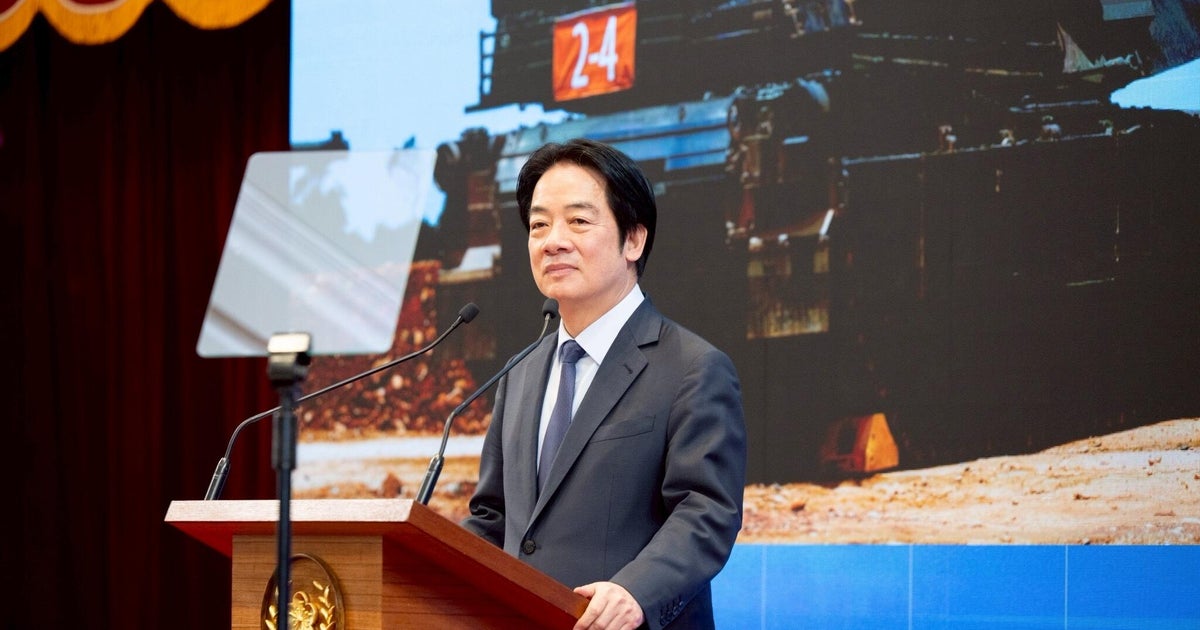
President Trump’s decision not to speak with Taiwanese President Lai Ching-te before Chinese President Xi Jinping’s potential trip to the United States this fall has sparked discussions and debates on international relations and diplomacy. The situation highlights the complex dynamics between the United States, China, and Taiwan, as well as the historical context that shapes their interactions.
When President Trump visited China earlier this month, Chinese President Xi Jinping warned him about the potential dangers of mishandling the Taiwan issue. This warning came as a response to President Trump’s earlier statements indicating that he would speak with President Lai before deciding on selling a new package of defensive military weapons to Taiwan. The decision not to engage with President Lai directly underscores the sensitive nature of the Taiwan-China relationship and the U.S.’s role in mediating between the two parties.
The idea of a sitting U.S. president speaking directly with a Taiwanese leader is a highly controversial one, given the diplomatic sensitivities surrounding Taiwan’s status as a self-governed, democratic island and China’s claims of sovereignty over it. The last time a U.S. president spoke with a Taiwanese leader was in 1979, and since then, the U.S. has maintained a delicate balance in its relations with both Taiwan and China. President Trump’s willingness to engage with President Lai, even if ultimately not realized, reflects a departure from traditional diplomatic norms and practices.
The Chinese Communist Party’s longstanding goal of “reunifying” Taiwan with the mainland adds another layer of complexity to the situation. China has consistently opposed any official exchanges between the U.S. and Taiwan, viewing them as a challenge to its sovereignty and territorial integrity. The potential for military conflict over Taiwan remains a real concern, as China has not ruled out the use of force to achieve reunification with the island.
President Trump’s comments during his visit to China, where he discussed arms sales to Taiwan with President Xi Jinping, further illustrate the delicate dance of international diplomacy. The U.S. has a longstanding policy known as the Six Assurances, which includes a pledge not to cut off arms sales to Taiwan and not to consult with Beijing on such sales. This policy, established during the Reagan era, underscores the U.S.’s commitment to supporting Taiwan’s defense capabilities while also navigating its relationship with China.
The issue of arms sales to Taiwan has been a contentious one, with the last major sale totaling $11 billion announced in December of the previous year. A proposed $14 billion package has been under consideration, highlighting the strategic importance of Taiwan in the U.S.’s regional security calculus. President Trump’s decision to hold off on the weapons sale as a potential negotiating chip with China reflects the complex interplay of security, diplomacy, and economic interests in the region.
Taiwan’s representatives in the U.S. have expressed a desire to present their side of the story to President Trump, emphasizing Taiwan’s resilience in the face of Chinese aggression. Alexander Yui, Taiwan’s Representative to the U.S., has underscored the importance of dialogue and understanding in resolving the Taiwan-China issue peacefully. However, the lack of direct engagement between President Trump and President Lai raises questions about the future of U.S.-Taiwan relations and the role of the U.S. in mediating between Taiwan and China.
Overall, the decision not to speak with President Lai before President Xi’s potential visit to the U.S. highlights the complexities and challenges of managing relations between the U.S., China, and Taiwan. The Taiwan issue remains a sensitive and contentious one, with implications for regional stability and U.S. strategic interests. As tensions continue to simmer in the Taiwan Strait, the need for diplomatic dialogue and engagement becomes increasingly critical in preventing conflict and promoting peace in the region.