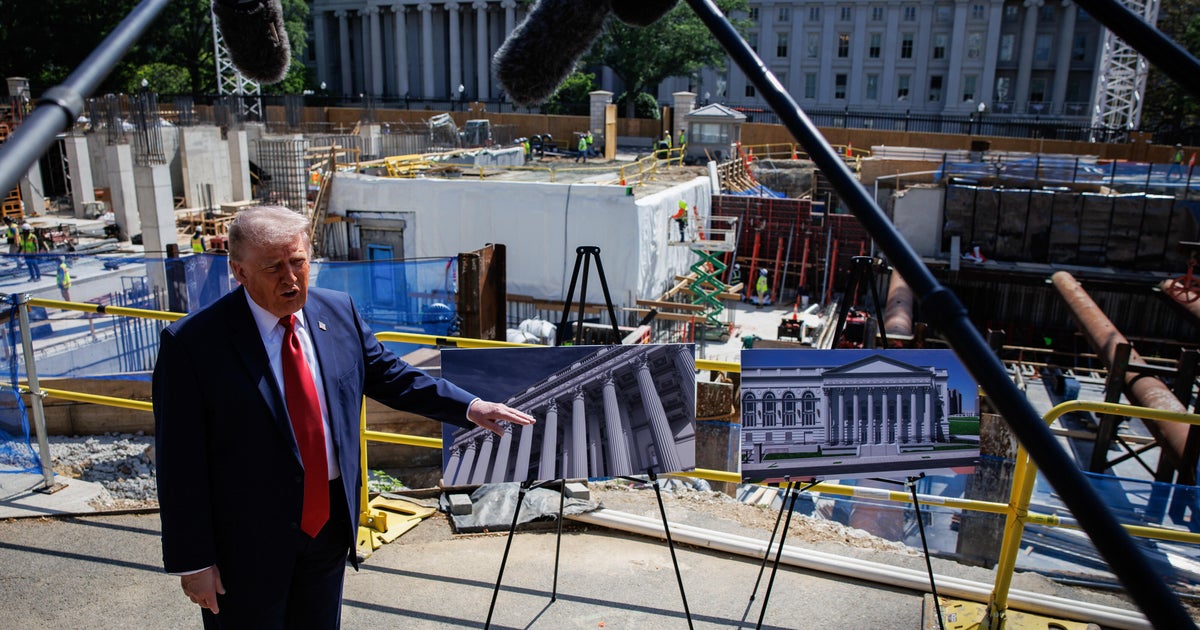
In light of a recent escalation in security threats demonstrated by a shooting incident near the White House, Acting Attorney General Todd Blanche has passionately advocated for the immediate resumption of construction on the expansive and sophisticated White House ballroom. The project, temporarily halted by judicial orders pending Congressional approval, has been identified by Blanche as pivotal to national security and presidential safety.
Late Sunday, in a detailed court filing, Todd Blanche underscored the urgency of the situation, referencing the weekend’s unsettling events where a gunman opened fire at a U.S. Secret Service checkpoint just outside the White House. This distressing incident, which resulted in the assailant’s death and a bystander’s injury, marks the second such attack this month, catapulting White House security needs into sharp focus.
Blanche’s filing was emphatic about the project’s crucial role: “The Ballroom, as a part of the broader East Wing Project, is designed to offer a secure, fortified venue essential not just for the President and his immediate circle, but for hosting dignitaries and conducting pivotal governmental functions securely,” he stated.
The proposed 9,000-square-foot ballroom is not merely an architectural addition; its design encompasses military-grade security measures including a drone-proof roof, missile-resistant columns, and bulletproof, ballistic glass. Notably, the installation will integrate sophisticated air filtration systems, bomb shelters, and even a state-of-the-art medical facility, aimed at making it a self-sufficient, secure hub in case of major emergencies.
However, the ambitious project encountered a financial and regulatory roadblock when a Washington, D.C., district judge issued a pause last month, requiring the administration to first obtain congressional green light. The complexity increased after the Senate parliamentarian concluded that the requisite $1 billion funding for the project’s elaborate security measures could not be included in a reconciliation bill, leading to an impasse as Congress recessed without a resolution.
Despite this setback, an appellate court issued a temporary permit, allowing construction to proceed until an upcoming hearing in early June, where a panel of judges is slated to deliberate further.
Blanche, in his filing, persistently argues that without these enhancements, the current infrastructure — reliant on temporary tented structures for large gatherings — remains vulnerably inadequate. He details the integrated security technologies that will transform the ballroom into a veritable fortress, with features like heavy steel reinforcements, military installations, protective partitions, and sniper stations on its roof.
President Trump, addressing the situation last week, emphasized the combination of private financing for the construction and the need for Congressional approval for the security enhancements. He voiced concerns over the security of the White House if these plans were curbed, suggesting that without such defenses, the safety of the nation’s executive leadership would be significantly compromised.
This assertion was also reflected in Blanche’s earlier appeal following another security breach at the White House Correspondents’ Dinner, which only served to fortify his argument for accelerated construction provisions. Yet, concerns linger, like those from Federal Judge Richard Leon, who voiced apprehensions about the project’s $400 million private financing model and the apparent lack of Congressional involvement, which hints at potential legal and ethical complexities that could delay the project further.
As the ballroom stands poised to serve as a critical asset for national security and a testament to architectural and technological advancements in protective infrastructure, the debates surrounding its funding and oversight highlight the intricate balance between ensuring security and adhering to procedural and fiscal protocols. The impending court decision will likely clarify the path forward, potentially setting a precedent for how security-centric federal projects are financed and managed.
The decision to either proceed with or halt the construction of the White House ballroom is one that carries implications for national security, presidential safety, and the architectural integrity of the nation’s most iconic residence. As such, it remains a focal issue in broader discussions about how best to protect the nation’s leaders amidst an increasingly complex global security landscape.