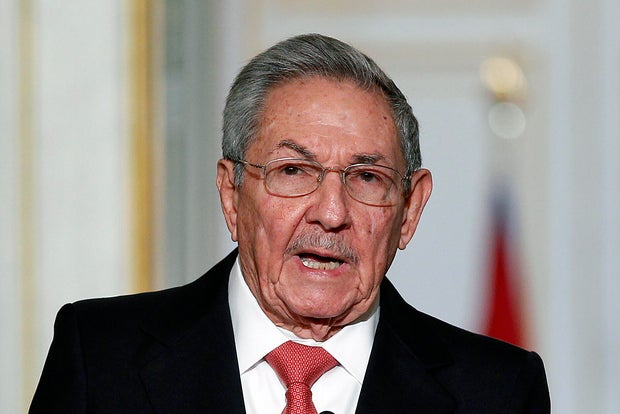
As the U.S. government ramps up diplomatic pressure on Cuba, new developments surrounding a decades-old aviation incident have resurfaced in a notable way. Reports from several U.S. officials have indicated that steps are being taken to potentially indict Raúl Castro, the 94-year-old former president of Cuba, in connection with an event that took place roughly 30 years ago: the downing of two planes by Cuban forces.
Raúl Castro, who is the brother of the late Fidel Castro, served as President of Cuba until 2021 and is still considered a significant influence within the country. Despite stepping down as the leader of Cuba’s Communist Party, his presence in Cuban politics remains substantial, as evidenced by his involvement in major policy decisions and his role in the national defense during his tenure.
The incident drawing new scrutiny involved a humanitarian group known as Brothers to the Rescue, which operated flights in search of Cubans fleeing the country by sea. In February 1996, this group faced a tragic episode when two of their Cessnas were shot down by a Cuban MiG-29 fighter jet, resulting in the death of four people. This aggressive military action was soon met with international condemnation; it was disclosed that the planes were outside Cuban airspace at the time of attack, leading the Organization of American States to declare Cuba’s acts a violation of international law. The incident was notable for the lack of any warning given to the planes prior to the attack, raising questions about the necessity and legality of the use of force.
The Cuban government, led at the time by Fidel Castro, responded by defending their actions, arguing that the shootdown was a legitimate defense measure against what they claimed were repeated violations of airspace and potential acts of sabotage directed at the island. In interviews, including one with “CBS Evening News,” Fidel Castro suggested that such military responses were part of standing orders to protect Cuba’s sovereignty.
In the wake of the incident, U.S. legal actions saw Gerardo Hernandez, a man alleged to be part of a Cuban spy ring, convicted in the United States of conspiracy to commit murder in connection with the plane shootdowns. Hernandez was sentenced to life in prison but later returned to Cuba as part of a prisoner swap in 2014.
Recently, momentum has gathered around revisiting the indictments related to this event. Florida’s attorney general has announced the reopening of a state investigation into the 1996 incident. Prominent Florida lawmakers have vocalized support for this move, underlining a continued interest in addressing past grievances with the Cuban government. In light of these developments, federal prosecutors in Miami, along with federal and local law enforcement and the U.S. Treasury Department, have launched a new initiative targeting Cuban communist leaders for a range of alleged offenses, including economic crimes and immigration violations.
Speculatively, any new indictments, including potentially against Raúl Castro himself, would require approval by a grand jury. This legal pursuit aligns with broader strategies the U.S. government has employed under various administrations to exert pressure on Cuba for reforms and to diminish its alliances with other nations like Venezuela. The latter was a key ally until the U.S. intervention that removed Venezuelan leader Nicolás Maduro from power, significantly impacting Cuba’s economic and geopolitical landscape.
The renewed focus on Raúl Castro and by extension, the political legacy of the Castro family, could have wide-reaching implications, not only for U.S.-Cuba relations but also within the internal dynamics of Cuban politics. As U.S. officials, including CIA Director John Ratcliffe, make direct contacts with influential figures like Raúl Castro’s grandson, the message is clear: change is expected.
This complex tapestry of historical grievances, international law, and geopolitical maneuvering underscores a pivotal moment in the trajectory of U.S.-Cuba relations. The call for justice over the incident from three decades ago reverberates through the corridors of power from Miami to Havana, setting the stage for potentially significant diplomatic and legal developments in the near future.