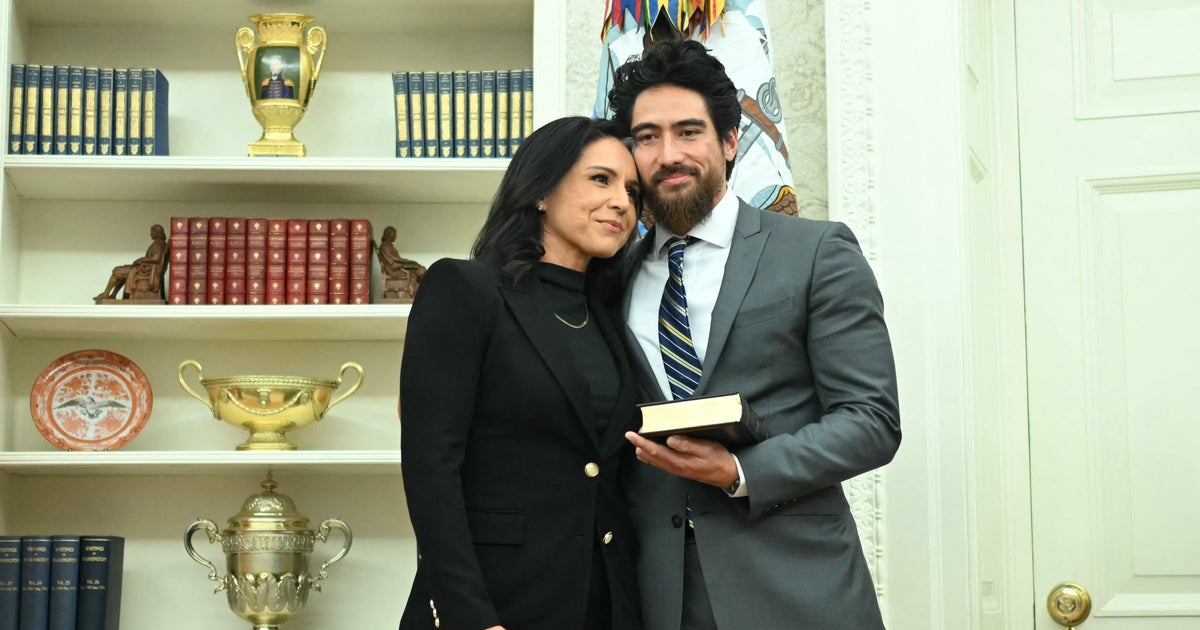
Tulsi Gabbard, the Director of National Intelligence, announced her resignation on Friday due to her husband’s recent diagnosis of a rare form of bone cancer. In a heartfelt letter to President Trump, Gabbard expressed her need to step away from her position in order to support her husband, Abraham, through his upcoming battle with the disease. She stated that it would be effective as of June 30th, highlighting the importance of standing by her husband during this difficult time.
Throughout their 11-year marriage, Gabbard emphasized that her husband has been her rock, providing unwavering support during deployments, political campaigns, and her role in the Trump administration. She described him as a source of strength and love that has sustained her through every challenge they have faced together. Gabbard expressed her full commitment to ensuring a smooth and thorough transition in the coming weeks as she prepares to leave her position.
A photo of Gabbard and her husband, Abraham Williams, hugging before she was sworn in as the Director of National Intelligence in the Oval Office on February 12, 2025, captured a poignant moment between the couple. The image symbolized their bond and the support they have for each other, even in the face of difficult circumstances.
President Trump commended Gabbard for her service in a post on Truth Social, praising her for the incredible job she has done in her role. He announced that Aaron Lukas, Gabbard’s deputy at the Office of the Director of National Intelligence, would serve as acting director in her absence. The news of Gabbard’s resignation was first reported by Fox News, making her the fourth Cabinet member to leave the administration this year, following other prominent figures like Attorney General Pam Bondi and Homeland Security Secretary Kristi Noem.
Gabbard’s departure will create a vacancy in a crucial position overseeing the nation’s intelligence community, which is especially significant amid the ongoing conflict with Iran. Her tenure as Director of National Intelligence was marked by her principled stance against military intervention in Iran, a position she has maintained throughout her political career. During a congressional hearing earlier this year, Gabbard refrained from expressing support for the current war, emphasizing that it is the president’s prerogative to determine what constitutes an “imminent threat.”
In March, Gabbard’s top aide, Joe Kent, who led the National Counterterrorism Center, resigned, citing his belief that Iran posed no imminent threat to the nation. Gabbard expressed concern over Kent’s statement to lawmakers, underscoring the complexities of intelligence assessments and the president’s decision-making process in matters of national security.
As Gabbard prepares to step down from her role as Director of National Intelligence, her focus remains on supporting her husband through his battle with cancer. Her decision to prioritize her family during this challenging time reflects her commitment to personal values and responsibilities outside of her public service role. The transition to a new acting director will be a significant change for the intelligence community, as a key position overseeing national security and intelligence operations undergoes a shift in leadership.