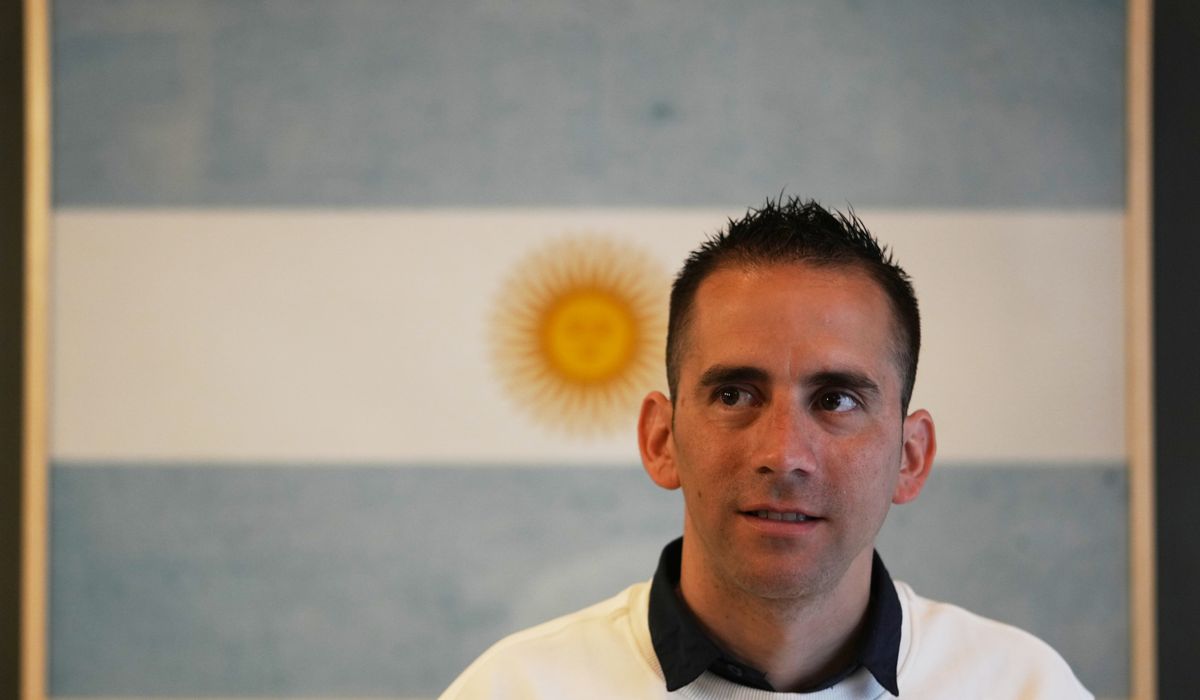
In Buenos Aires, Argentina, Nahuel Gallo, an Argentine national, who had been incarcerated for a total of 448 days in Venezuela, made a plea to the international community on Friday. He urged the international community to increase pressure on the government of interim Venezuelan President Delcy Rodríguez to release other prisoners.
Nahuel Gallo, 35, was finally released on March 1 after having been detained on accusations of espionage by the government of now-ousted President Nicolás Maduro. Despite his freedom, he insists that the fight for justice is far from over. “I think we’re still imprisoned until our fellow inmates are freed,” Gallo told The Associated Press.
During his lengthy incarceration, which spanned over nearly 15 months, Gallo endured harsh conditions including physical beatings, inadequate medical care, and constant psychological pressure all within the confines of Rodeo I prison.
With Rodríguez taking over the helm of the country following Maduro’s capture by U.S forces in January, promises of democratic reforms have been made. The Venezuelan government has also previously denied reports of abuses in prisons. However, critics argue that hundreds remain jailed for political reasons, signifying that Venezuela’s repressive system remains intact.
Gallo’s perspective reflects this sentiment. “For me, these detentions demonstrate that Venezuela’s oppressive system continues unabated,” he states.
This past Thursday, Gallo met with the U.S. Ambassador to Argentina, Peter Lamelas, in Buenos Aires. Lamelas issued a statement asserting that “the Maduro regime in Venezuela used the arbitrary detention of foreign citizens as a tool of political repression.”
Earlier this week, National Assembly President Jorge Rodríguez, who is also the interim president’s brother, announced plans to release 300 detainees, some of whom rights groups believe are being held for politically motivated reasons.
Gallo’s ordeal began on December 8, 2024, when he was arrested while trying to enter Venezuela to visit his Venezuelan partner, María Alexandra Gómez García, and their son, who was then less than 2 years old. At an immigration checkpoint, Venezuelan authorities searched his phone and found WhatsApp conversations with his partner about Venezuela’s political and economic situation.
“You’re criticizing my president,” Gallo remembered officers telling him. From there, he was taken to the General Directorate of Military Counterintelligence where he was handcuffed, physically assaulted, and subjected to rigorous interrogations.
Gallo’s ordeal further escalated when he was forced into a truck, where agents continued interrogating him after discovering contacts linked to Argentine judicial agencies on his cellphone. “You are a spy. You work for the government,” he recalled them saying while threatening to throw him from the vehicle, pressing a gun against his head, and pointing a Taser at him.
Nearly three weeks after his arrest, then-Venezuelan Attorney General Tarek William Saab accused Gallo of participating in “terrorist actions” against Venezuela.
Throughout his near 15 months of confinement at Rodeo I, Gallo had no contact with Argentine officials and no information about whether negotiations for his release were underway. Inside the prison, conditions were harsh. Medical care was limited and detainees were only allotted a few minutes each day to bathe, wash clothes, and use the bathroom. In addition, inmates were frequently sprayed with pepper spray.
Being a foreigner, Gallo was not permitted to receive visits. His first interaction with his wife only came after a year in detention and only after he launched a hunger strike. The memories that still haunt him are of guards beating prisoners in nearby cells. “I think the greatest torture is seeing something being done to someone else and not being able to do anything,” Gallo said.
Since his release, Gallo has been using social media to denounce conditions in Venezuelan prisons and advocate for those still detained. “The person who’s still inside is waiting for the one who got out to do something,” he said.
As he exited Rodeo I, the words of his fellow inmates resonated with him: “Gallo, don’t forget about us.” This plea from his compatriots has left a lasting impression on him and has fueled his advocacy efforts.
For comprehensive coverage on Latin America, visit https://apnews.com/hub/latin-america.
Copyright © 2026 The Washington Times, LLC.