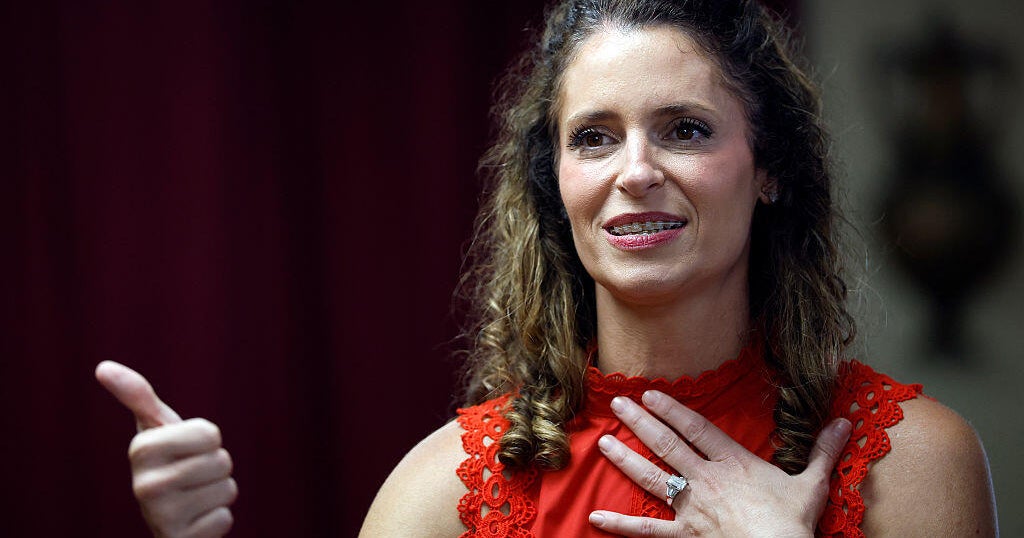
In a significant shake-up in Louisiana’s political landscape, Representative Julia Letlow and State Treasurer John Fleming have outmaneuvered incumbent Republican Senator Bill Cassidy, propelling them into the spotlight of the Republican primary for the U.S. Senate. This surprising turn of events signals a potentially transformative shift in the state’s political alignments and illustrates the potent influence of endorsements in primary races.
The battleground for this Senate seat, particularly marked by the involvement of former President Donald Trump, underscored his continuing sway in Republican primaries. Trump’s endorsement of Letlow, at a time when Cassidy seemed vulnerable due to his impeachment vote against Trump, certainly tilted scales. This development paints a vivid picture of the interplay between local political dynamics and national political figures, illustrating how endorsements can significantly alter the course of an election.
Representative Julia Letlow’s rise is not just a political story but also a deeply personal one. She entered the political arena following the heartbreaking death of her husband from COVID-19 complications in 2020, just before he was set to assume office. Winning her husband’s would-be seat and becoming the first Republican woman to represent Louisiana in Congress, Letlow has carried forward her late husband’s political legacy with a fierce dedication to the conservative cause. Her campaign against Cassidy was robust, accusing him of being insufficiently loyal to Republican values, an argument that found considerable resonance among Louisiana’s GOP base, aggravated by Cassidy’s controversial vote to convict Trump.
On the other hand, Cassidy, a seasoned politician and a medical doctor, has had notable disagreements with his party’s line in recent times, particularly with his conflicy stance regarding the Trump administration and specific healthcare policies under the current administration. His impeachment vote was seen as a betrayal by many of Trump’s loyalists, and his nuanced positions on healthcare and other issues, although reflective of his medical background, have sometimes alienated the Republican base.
Adding another layer to the Republican primary was John Fleming, who brought with him a wealth of experience from both his time in Congress and his role in Trump’s administration. Fleming’s entry into the race seemed opportunistic, capitalizing on the fracturing support for Cassidy and leveraging his own substantial conservative credentials and connections within the Trump-aligned factions of the GOP.
As Louisiana heads towards a runoff, the stakes are high, and the outcome is likely to be seen as a referendum on Trump’s hold on the Republican Party. A recent poll by Emerson College indicated a tightly contested race, suggesting that the runoff could go either way. This scenario places immense pressure on candidates to shore up support and refine their campaign strategies in the weeks leading up to the runoff.
The situation in Louisiana is further complicated by the broader national context, with Trump having recently succeeded in influencing other Republican primaries, as seen in Indiana. His active participation in the Louisiana race through endorsements and public criticisms reflects his strategic engagement in key races, aiming to reshape the party according to his political vision.
Amidst these developments, the Democratic contenders seem to face an uphill battle in this staunchly Republican state. The primary contest among Democrats appeared less dramatic, with Nick Albares, Gary Crockett, and Jamie Davis vying for the nomination. However, given the strong Republican leaning of the state and Trump’s previous victory margins, the Democratic nominee faces significant challenges.
Governor Jeff Landry’s decision to suspend the state’s House primaries further adds a layer of uncertainty to Louisiana’s political landscape, reflecting the state’s complex and sometimes tumultuous political environment. This, combined with the Supreme Court’s recent decision affecting the state’s congressional map, indicates a period of intense political activity and potential realignment within Louisiana.
As the state progresses towards the runoff and eventually to the November general elections, all eyes will be on how these dynamics unfold, shaping not only the future of Louisiana’s political representation but also offering insights into the broader national political climate, particularly the enduring influence of former President Trump within the Republican Party. The outcomes here will likely echo beyond the borders of Louisiana, influencing Republican strategies and alignments as the 2024 presidential elections approach.