The unfolding narrative surrounding the mysteries of the universe and the potential existence of extraterrestrial life took a new twist as the Pentagon, following directives from President Donald Trump, commenced the release of a trove of government declassified documents relating to Unidentified Anomalous Phenomena (UAP) — commonly known as UFOs. This step is expected to shed light on numerous sightings and phenomena which have, over the decades, fueled speculation, inspired sci-fi culture, and spawned many conspiracy theories.
President Trump’s decision to initiate the declassification process made headlines on February 19, when he publicly tasked Defense Secretary Pete Hegseth and other key agency leaders to begin identifying and releasing pertinent information concerning alien life forms, UAP, and UFOs— emphasizing the importance and fascinating nature of these topics. His announcement gleaned further attention following remarks made by former President Obama during a podcast, in which he expressed his belief in the statistical likelihood of extraterrestrial life given the vastness of the universe, although clarifying he saw no direct evidence during his presidency.
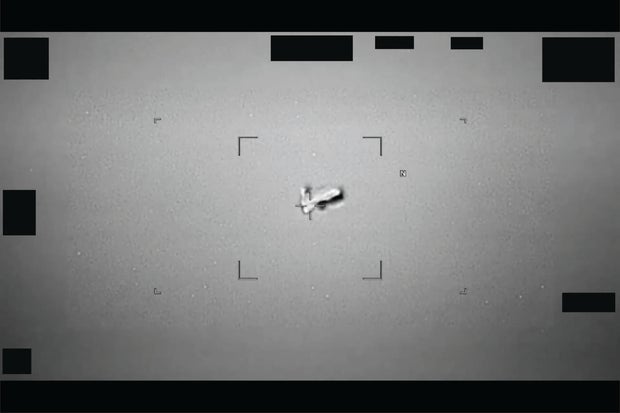
The disclosure began on May 8, with the Pentagon posting online various documents, photographs, and videos. One notable release included a video that showed an unidentified glowing orb in the sky which seemed unaffected when struck by a U.S. missile, a clip that previously became public last year through a Congressional reveal.
Compellingly, from May 2023 through June 2024, there were over 750 new UAP sightings reported, as per a recent government study. The hope is that this disclosure will enable scientists and researchers to provide factual explanations for these unexplained sightings, taking advantage of modern analysis techniques that weren’t previously accessible.
Sean Kirkpatrick, who served as the inaugural director of the Pentagon’s All-domain Anomaly Resolution Office (AARO), voiced skepticism about finding proof of extraterrestrial life, indicating that much of what has been considered unexplained could be attributed to either military exercises or advanced defense technology secrecy. He expressed that while he held personal hopes of discovering alien technology, realistically, the expectations for such a revelation should be tempered.
Further echoing Kirkpatrick’s caution was Federica Bianco, a member of NASA’s independent team studying UAPs. She stressed the astronomical improbability that Earth stands singular in nurturing life or advanced societies but also acknowledged the lack of concrete evidence suggesting any visitation by alien civilizations based on scientifically gathered data.
Prominent voices in the scientific community, including Neil deGrasse Tyson, have pointed out that most UAP sightings can likely be explained by natural phenomena that are often misunderstood by the general public. Tyson emphasized the improbability of government-exclusive access to aliens, arguing that in today’s digital age, keeping such a secret would be near impossible.
From the perspective of academia, Dr. Shelley Wright from the University of California San Diego stressed the need for more rigorous scientific inquiry into these phenomena while tempering public expectations about revelations of advanced alien technology appearing in the declassified files. She highlighted the likelihood of significant redactions due to the sensitive nature of many surveillance technologies involved.
Adding to this dialogue, Dr. Janna Levin, a professor of physics and astronomy at Barnard College of Columbia University, noted the excitement in the astronomical community about the potential insights these documents could provide into extraterrestrial microbes, which could offer clues about the origins of life on Earth.
The expansive efforts to sift through and interpret the implications of the released files will also involve theoretical physicists like Avi Loeb who expressed a focus on anomalies that defy current understanding of physics, suggesting a potential for more groundbreaking discoveries in the field of extraterrestrial research.
As the global community awaits further disclosures, the intrigue surrounding UAPs continues to captivate the imaginations of scientists, skeptics, and enthusiasts alike, all yearning to uncover more about our place in the cosmos and the possibility of life beyond our world. The ongoing release of these classified documents not only speaks to heightened public interest and governmental transparency but also highlights the enduring human quest for knowledge and understanding of the universe.