On a pivotal Thursday in the heart of the United Kingdom, the landscape of local governance underwent a significant transformation following a major round of local elections. This election not only served as a reflection of the public’s sentiment towards the national leadership but also signaled a dramatic shift in regional political dynamics that has been slowly brewing. Traditionally dominated by the Labour Party and the Conservative Party, the results of this election painted a different picture, highlighting a move towards right-wing populism while also signaling concern for the established order of British politics.
The Labour Party, under the leadership of Prime Minister Keir Starmer, experienced substantial losses across city councils in England. While results were still being processed in Scotland and Wales, the initial outcomes indicated a severe blow to Labour’s stronghold in various regions. Since assuming office less than two years ago after a landslide victory in the national parliamentary elections, Starmer and his administration have faced increasing scrutiny. This latest result has intensified calls from within his party for his resignation, challenging his leadership and the path he has charted for Labour.
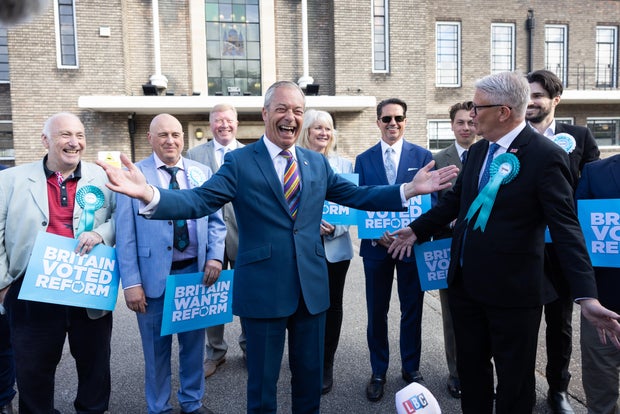
In stark contrast, Nigel Farage’s Reform UK emerged as a clear victor, making headway with substantial gains across England. This election underscored Farage’s growing influence in British politics, particularly as his party captured seats primarily in areas that were once considered bastions of the Labour and Conservative parties. Farage, known for his ideological similarities with figures like former U.S. President Donald Trump, described the electoral gains as marking a “truly historic shift” in the nation’s political landscape. The success of Reform UK has not only reshaped local governments but also set the stage for a new political discourse in Britain.
While the shock waves from Labour’s losses were still being felt, the Conservative Party likewise faced its own set of challenges. Having governed Britain for 14 years before their defeat in the 2024 national elections, the Conservatives continued to struggle with voter dissatisfaction and internal division. The rise of Reform UK seems to be supplanting them as the primary opposition in many regions, a testament to the shifting allegiances among the electorate, particularly in working-class and post-industrial communities that were once loyal to Labour.
Local elections in the UK often extend beyond the duties associated with positions such as managing waste disposal, road upkeep, social care, and public housing. They serve as a barometer for the national mood and offer smaller parties, independent candidates, and political newcomers a chance to make their mark—an opportunity they seem to increasingly capitalize on, given the current political climate.
Despite the upheaval, some gains were made by parties like the Green Party of England and Wales, though these were minor compared to the strides made by Reform and the losses incurred by the traditional powerhouses. Under the leadership of Zack Polanski, the Greens positioned themselves on contrasting issues, distinguishing their environmental and social activism from the broader political tactics of their rivals. After a recent controversy involving Polanski’s criticism of police actions in London, the Green Party faced both scrutiny and support, which slightly influenced their electoral performance.
The local elections have, undoubtedly, left both Labour and the Conservatives contemplating their future strategies and leadership. For Starmer, the loss was both a personal and political blow, prompting him to publicly acknowledge his responsibility and express a strengthened resolve to address the underlying issues plaguing Labour. He emphatically refused to resign, emphasizing his commitment to navigating through these turbulent times without causing further instability in the country.
With the dust beginning to settle and the results painting a clear picture of discontent and desire for change among voters, the future of British politics remains uncertain. The traditional two-party system, once a hallmark of British governance, appears to be unraveling, or at the very least, evolving. The emergence of parties like Reform UK and the gradual rise of smaller entities signal a new era that might see a more fragmented but potentially more representative political spectrum.
The events of this election are likely to have extended consequences, influencing policy, governance, and the ideological battles that will shape the United Kingdom in the coming years. As the political landscape continues to shift, the only certainty is that the effects of this election will resonate well beyond the walls of council chambers and town halls. It beckons a reevaluation of strategies by the old guards and possibly a recalibration of political alliances and platforms in anticipation of future national contests. With a nation at a crossroads, the unfolding political narrative will be crucial in defining the trajectory of the United Kingdom’s democracy.