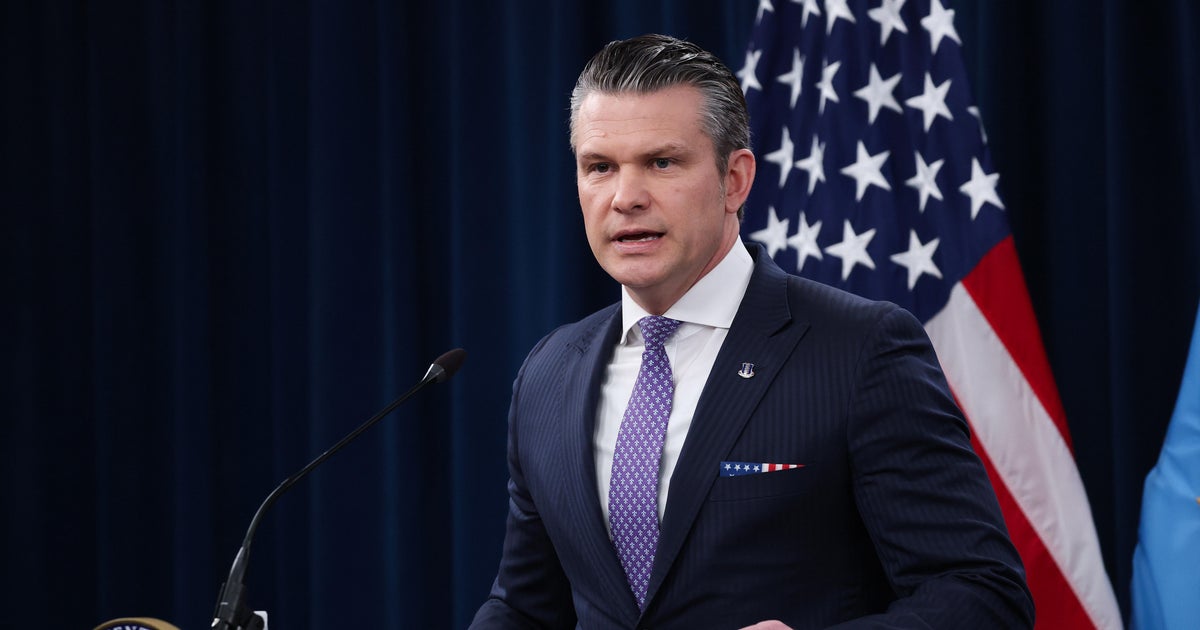
In a significant announcement from Washington on Tuesday, Defense Secretary Pete Hegseth alongside Gen. Dan Caine, Chairman of the Joint Chiefs of Staff, conveyed that critical developments in the ongoing conflict with Iran are expected in the forthcoming days. The press conference set a definitive tone for the future course of military operations, indicating a pivotal shift in the conflict dynamics.
“The upcoming days will be decisive,” asserted Hegseth, emphasizing the diminishing military might of Iran compared to the escalating American firepower. “Iran is aware of this, and there’s almost nothing they can militarily do about it,” he added, underscoring a sharp asymmetry in power that favors the United States.
This statement came just a month into the conflict, a period during which, according to Hegseth, the U.S. managed to dictate the terms of engagement. The assertion here is clear: American forces have not only held the upper hand but have incrementally depleted Iran’s offensive capabilities.
Parallel to the military updates, political maneuvers were also unfolding. President Donald Trump, in a discussion with CBS News’ Weijia Jiang, expressed his reluctance to halt efforts forcing Iran to reopen the strategically crucial Strait of Hormuz. Despite the strained relations and heightened tensions, Trump voiced his frustration over the lack of substantial international military support for the U.S.-Israeli efforts against Iran. “Countries have to come in and take care of it,” he remarked, highlighting a gap in collaborative defense efforts among allied nations.
In a fervent call to action posted on social media early Tuesday, Trump criticized other countries, specifically pointing out their reliance on the U.S. for securing oil supplies through the Strait of Hormuz. He challenged these nations to demonstrate more independence and resilience: “I have a suggestion for you: Number 1, buy from the U.S., we have plenty, and Number 2, build up some delayed courage, go to the Strait, and just TAKE IT. You’ll have to start learning how to fight for yourself, the U.S.A. won’t be there to help you anymore, just like you weren’t there for us,” Trump wrote.
Addressing the operational status of the Strait of Hormuz, Hegseth reiterated the president’s stance to Iran: “open it for business or we have other options.” He noted that despite a significant reduction in the usual traffic, more vessels were passing through than in the previous weeks, none of which were being inspected by U.S. forces, thereby obscuring their cargo’s nature and final destinations.
The Defense Secretary also echoed Trump’s earlier statements, stressing the responsibility of global powers in maintaining the security of this vital waterway. Additionally, Hegseth criticized the United Kingdom for not leveraging its naval capabilities more aggressively in the region, pointing to a broader expectation of international solidarity in strategic offensives.
The possibility of negotiating a resolution with Iran was also discussed, with Hegseth suggesting that the terms of a potential deal were known to Iranian leaders. The dialogue, he noted, was “active and, I think, gaining strength.” Despite the looming threat of continued military action, the secretary expressed a clear preference for diplomacy, provided Iran met certain conditions regarding its nuclear ambitions and regional conduct. “We would much prefer to get a deal. If Iran was willing to relinquish material they have and ambitions they have, open the strait—that’s the goal,” Hegseth stated.
On a related note, Gen. Dan Caine updated on the military perspective, emphasizing the ongoing efforts to systematically degrade Iran’s capabilities in projecting power beyond its borders, specifically targeting its ballistic missile and drone programs.
The geopolitical tensions have also had economic repercussions, as illustrated by the recent attack on a Kuwaiti oil tanker by an Iranian drone near Dubai, contributing to the escalation of gas prices in the U.S. to over $4 a gallon for the first time since August 2022. This increase marks a significant jump, attributed largely to the instability induced by military activities in the region since late February.
Amidst these developments, White House press secretary Karoline Leavitt assured that gas prices would normalize once the conflict is resolved, highlighting President Trump’s commitment to enhancing American energy independence and dominance.
In the broader scope of military collaborations, U.S. Central Command reported significant discussions between Commander Adm. Brad Cooper and Lt. Gen. Eyal Zamir, Chief of the General Staff of the Israel Defense Forces. Their dialogue focused on the ongoing operations against Iran and emphasized the robust U.S.-Israel defense partnership, a critical element in the strategic and operational framework of the current conflict.
As the situation develops, the international community watches closely, gauging the impact of these military and political maneuvers on regional stability, global oil markets, and the future trajectory of U.S.-Iranian relations. The coming days, as stated by Hegseth, could indeed prove crucial in determining the next phase of this high-stakes geopolitical chess game.