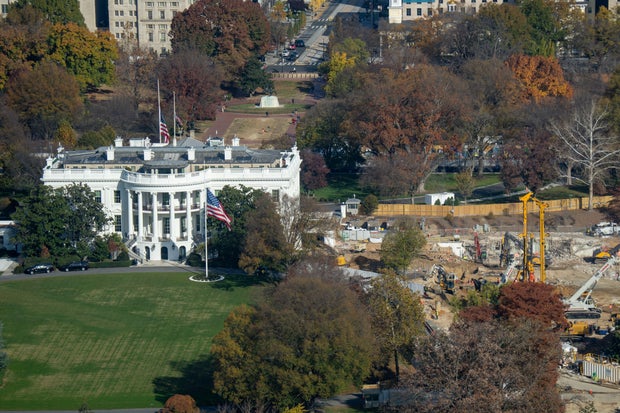
The White House is set to undergo one of its most notable and expansive transformations with the construction of a new $300 million ballroom, expected to be completed in the summer of 2028. This project, unfolding just months before the end of President Trump’s term, signals a significant alteration to the historic landscape of this iconic American symbol, according to a detailed environmental assessment prepared by the National Park Service (NPS) in late August.
Spanning an immense 90,000 square feet, the proposed ballroom will nearly double the size of the existing executive estate. Situated on the eastern portion of the White House grounds, this grand structure is set to disrupt the historical continuity and architectural integrity of the site. The assessment underscores the massive footprint and heightened stature of the new building, drawing attention to the potential visual imbalance it may create alongside the comparatively modestly scaled West Wing and Executive Mansion. It further elaborates on how these physical changes could adversely impact the design, setting, and overall ambiance of the White House and its surrounding grounds in the long term. Despite these concerns, the report also acknowledges the utility of the added space, suggesting that it would accommodate large gatherings effectively—a point repeatedly corroborated by the history of perpetual adaptations and expansions the White House has undergone.
This bold undertaking was officially announced by President Trump on July 31, where he assured that the new addition would not interfere with the current building, being adjacent but not directly connected. However, the situation saw a swift turnaround when subsequent plans revealed a significant alteration to the property. By August 28, it was decided that the existing East Wing and East Colonnade would be deconstructed, a process that took place in late October, marking a significant architectural and historical shift for the White House.
In preparation for this demolition, the Park Service ensured meticulous precautions to safeguard and preserve valuable museum collections, artifacts, paintings, and interior components such as wood panelings and light fixtures from the East Wing, along with the iconic East Wing movie theater. Notably, items with historical significance, such as the commemorative cornerstone from the East Wing’s 1942 renovation, the bronze plaque, two fanlight windows, and the Kennedy Garden arbor, were also carefully preserved.
Regarding the design specifics of the new ballroom outlined in the NPS assessment, there is a clear effort to maintain architectural harmony with the existing structures. The planned bi-level corridor connecting the ballroom to the executive mansion will feature a white painted exterior, windows, and doors that reflect historical compatibility, and a roof that aligns architecturally with the current buildings. Interior finishes are set to include stone slab flooring, decorative plaster moldings, and high-quality elevator interiors.
Addressing the implications of this project, the NPS conducted an extensive analysis covering various aspects including the cultural landscape, historic buildings, visitor access and experience, public health and safety, economic impact, and the general quality of life. Although the addition of the ballroom will bring about significant changes, such as the removal of trees and shrubs—including commemoratives planted back in the 1940s—the overall assessment concluded that there would be “no significant impact” on the environment or historical integrity.
A contentious aspect of the project, however, arose from the alterations to public views. The Park Service acknowledges that while the views from the White House toward the Washington Monument and Jefferson Memorial will remain unchanged, the sightlines from Lafayette Park and the Ellipse will be permanently altered. This underscores an enduring tension between modernization and preservation, a theme recurrent in the history of the White House.
Despite the projected disruptions, measures are planned to mitigate negative effects on the locale and its denizens, including the endangered species such as the northern long-eared bat, tricolored bat, and monarch butterfly, with the NPS report indicating minimal impact on these species. This comprehensive approach reflects a careful consideration of not just the architectural and aesthetic aspects but also the environmental and ecological concerns tied to such a monumental project.
Overall, the upcoming addition of the ballroom at the White House highlights a significant development in the architectural and operational landscape of one of America’s most significant historical structures. It echoes a history of continuous evolution that mirrors the dynamic changes of the nation it serves, blending the needs of contemporary governance with the respect for historical preservation.