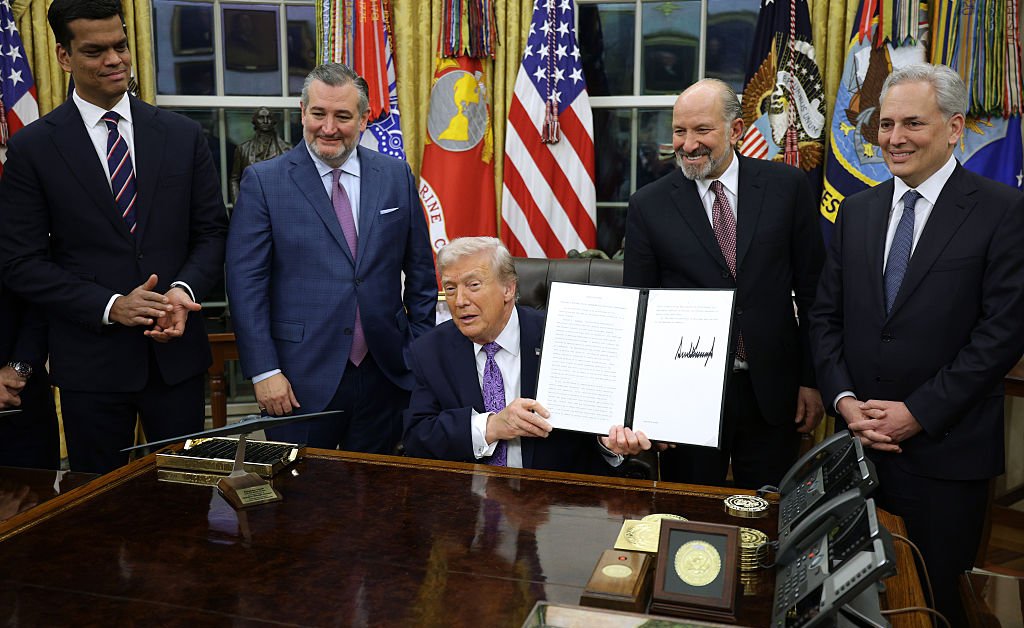
President Donald Trump recently signed an executive order aimed at blocking states from regulating AI, a move that has caused controversy among both liberal and conservative leaders. The AI industry has long been advocating for this type of measure, as they believe a patchwork of state laws would make it difficult for them to conduct business. However, some conservative leaders, such as Florida Governor Ron DeSantis and Utah Governor Spencer Cox, have expressed concern over the executive order, citing states’ rights and the need to protect their constituents. This internal policy battle within the conservative movement could have implications for the upcoming midterms, as Republicans may be forced to take sides on the issue.
Despite polling showing that most Americans want regulations around AI, Congress has been slow to act on the matter, leading to over 100 AI-related laws being passed at the state level. AI proponents argue that this flood of laws creates compliance challenges and have made efforts to preempt state regulations through federal legislation. A moratorium on state AI laws was included in Trump’s proposed bill, but it failed to pass in Congress, leading to continued state-level regulation of AI technologies.
The executive order signed by President Trump has sparked a heated debate between those who support a federal approach to regulating AI and those who believe in states’ rights. Liberal leaders have criticized the order as an overreach of power, warning that it could allow AI harms to spread unchecked. On the other hand, conservative leaders, while generally supportive of the AI industry, are concerned about federal interference in state laws and the potential impact on their constituents.
The divide within the conservative movement over the issue of AI regulation reflects broader tensions between populists and tech advocates. Some conservative leaders fear that the administration’s willingness to potentially sue states over their AI laws could create negative optics going into the midterms. The clash over AI regulation highlights the challenges facing policymakers in balancing innovation and economic growth with the need for safeguards to protect the public from potential harms associated with AI technologies.
As the debate over AI regulation continues to unfold, it remains to be seen how the issue will impact the upcoming midterms and the broader conservative movement. With states taking the lead in passing AI-related laws, the federal government’s role in regulating AI technologies remains a contentious issue. The ongoing battle over AI regulation underscores the complexity of balancing innovation and regulation in a rapidly evolving technological landscape.