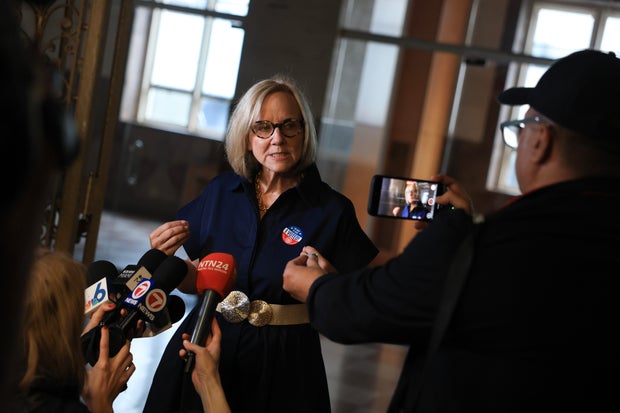
In a landmark electoral victory, Eileen Higgins, a former Miami-Dade County Commissioner, has been elected as the Mayor of Miami, marking a pivotal shift in the city’s political landscape. This election has historical significance as it’s the first time in over three decades that a Democrat has been elected to the city’s highest office.
Higgins, who garnered 59% of the vote, triumphed over Emilio Gonzalez, the former Miami City Manager, who received nearly 41%. The race concluded a formidable campaign that began with a crowded initial field of 13 candidates, narrowing down to a sharp contest between Higgins and Gonzalez. The electoral process drew to a close with Miami-Dade County Supervisor of Elections releasing these unofficial results, underscoring a competitive race filled with dynamic public discourse and robust political strategies.
The mayoral runoff election, characterized by considerable voter engagement and critical debates, saw a voter turnout of 21.3% with 37,496 ballots cast from a pool of 175,692 registered voters. This turnout, while reflecting a moderate voter participation, signaled the high stakes involved in this electoral race, resonating deeply with the issues and concerns at the heart of the city’s residents.
During her victory speech, Higgins articulated a vision of hope and change. She addressed a jubilant crowd, emphasizing a shift from “chaos to competence,” and stressing the importance of proactive governance that prioritizes the collective welfare of Miami’s citizens over bureaucratic excuses. “Our city chose a new direction. You chose competence over chaos, results over excuses and a city government that finally works for you,” declared Higgins, setting the tone for her forthcoming mayoral tenure.
Campaign discussions centered around pressing urban issues such as immigration, housing shortages, flooding, and the broader vision for Miami’s development. Both candidates had the opportunity to delineate their stances during a critical CBS News Miami debate moderated by Jim DeFede on November 25, providing voters with clear insights into each candidate’s plans for the city.
While the race itself was officially nonpartisan, political undercurrents were palpable, with Higgins receiving significant support from key Democrats across the board. Conversely, prominent Republicans, including figures like Governor Ron DeSantis and former President Donald Trump, threw their support behind Gonzalez, underscoring the politically charged environment of the campaign.
In her campaign, Higgins focused on restoring public trust and championed a vision for a calm and collaborative leadership style at City Hall. She outlined her priorities, putting affordable housing at the forefront of her agenda, promising to leverage city-owned land to develop housing solutions for working families, and criticized the city’s infrastructure that struggled to catch up with its rapid growth. Further, Higgins called for a comprehensive review of city spending and proposed significant updates to infrastructure to improve flood management and accelerate park constructions.
Addressing the city council’s structure, Higgins advocated for expanding the number of members from five to nine, arguing that Miami’s legislative body was disproportionately small for a major city, which left numerous communities underrepresented. Her platform also highlighted stringent criticisms of the recent immigration enforcement in Miami, which she described as “inhumane and cruel.”
The victory celebration was not just a personal triumph but a collective progressive push for the city. Higgins framed it as a turning point and a reminder that the real work begins now. She promised to streamline city processes, making it easier for families and businesses, confront the affordability crisis, ensure safer streets, and protect natural resources like Biscayne Bay. Her address was a call to action: to move Miami forward with urgency and decisive governance.
Recognizing her as the first woman ever elected to this office, Miami-Dade County Mayor Daniella Levine Cava described Higgins’ win as a historic milestone that reflected the electorate’s fatigue with the existing chaos, corruption, and escalating costs. The support from other prominent local figures at Higgins’ celebration also underscored the significant endorsements that backed her candidacy.
Gonzalez, on his part, gracefully conceded, reflecting on his legal challenge which ensured the election took place. He expressed his commitment to the city and his readiness to support Higgins in her new role, emphasizing the importance of civic engagement and legal rectitude he upheld by pushing for a timely election.
Looking ahead, Higgins is set to usher in an era of substantive policy shifts addressing housing, climate resilience, and greater government transparency. Her leadership is anticipated to reshape Miami’s governance landscape, bringing in new paradigms of civic engagement and political stewardship aimed at fostering a city that truly caters to the needs of its diverse population.
This election not only redefines who leads Miami but also illustrates the robust democratic values that empower citizens to choose leaders that resonate with their aspirations and concerns, promising a future where the city thrives through inclusivity, integrity, and innovation.