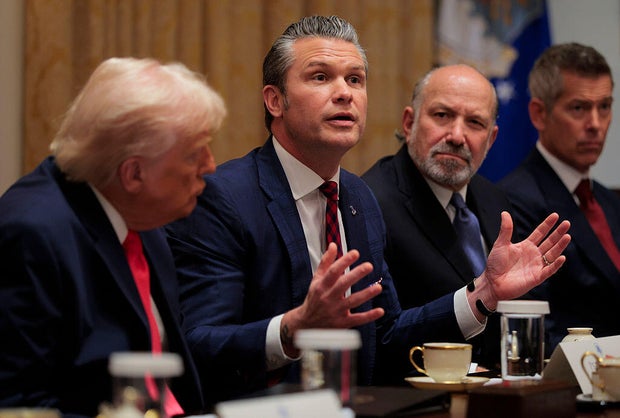
In an expansive discussion held during a recent Cabinet meeting at the White House in Washington, D.C., Secretary of Defense Pete Hegseth alongside President Donald Trump delved into the intricacies of a contentious military operation conducted on September 2, 2025. This operation involved a targeted attack on a Venezuelan boat which was allegedly transporting illegal drugs. The dialogue centered not only on the tactical aspects of the strike but also illuminated the broader policy underpinnings and the personal viewpoints of the individuals involved in decision-making processes at the highest levels of the U.S. defense hierarchy.
During the meeting, when pressed for details about the operation, President Trump admitted his dependence on the briefings provided by Hegseth, acknowledging that there were aspects of the operation he was not fully aware of at the time of execution. He described the operation in emphatic terms, emphasizing that it was not a matter of isolated actions but a continuous assault. “To me, it was an attack. It wasn’t one strike, two strikes, three strikes,” Mr. Trump clarified, revealing his initially limited knowledge about the multiple facets of the operation.
In his remarks, Secretary Hegseth elaborated on his engagement with the operation. He noted that he was present for the live feed of the initial strike against the Venezuelan vessel but had to step away before subsequent actions due to other commitments. “I watched that first strike live. As you can imagine, at the Department of War, we’ve got a lot of things to do. So I didn’t stick around for the hour, two hours, whatever, where all the sensitive site exploitation digitally occurs,” Hegseth explained.
Hegseth was informed afterwards that Admiral Mitch Bradley, the officer in charge of the operation, made the critical decision to sink the vessel entirely to neutralize the perceived threat. According to Hegseth, Bradley had full authority for this decision and his actions were deemed appropriate given the circumstances. Hegseth praised the professionalism and judgment exercised during the operation, especially highlighting the role of JSOC (Joint Special Operations Command) and SOCOM (Special Operations Command) in these high-pressure scenarios.
He also addressed the complexity and the chaotic nature of warfare, often referred to as the “fog of war,” which can obscure situational clarity during military operations. This was in response to his observation post-strike, wherein he did not personally witness any survivors. “I did not personally see survivors, but I stand — because the thing was on fire. It exploded, and with fire and smoke, you can’t see anything,” Hegseth stated, adding a critique of the media and certain political circles for their lack of understanding of the ground realities faced by military personnel.
Adding a layer of political philosophy to the operational narrative, Hegseth reflected upon the empowered role that U.S. commanders have under President Trump’s administration. He stressed that these commanders are tasked with executing extremely challenging operations under the cover of darkness to protect American interests and prevent the influx of drugs, which he referred to as the “poisoning of the American people.”
Throughout the discussion, the Secretary of Defense articulated a strong defense of the ethical and tactical decisions made during the operation. He underscored the meticulous planning, intelligence gathering, and legal scrutiny involved in military strikes, especially those linked directly to anti-terrorism and anti-narcotics efforts.
The cabinet meeting, therefore, not only served as a platform for the Trump administration to recount the specifics of a single military strike but also as an opportunity to articulate a broader defense policy stance that intertwines military operations with national security objectives and ethical warfare. This approach illustrates the complex mosaic of decision-making, where real-time operations intersect with overarching policy directives to shape the contours of U.S. military engagement worldwide.