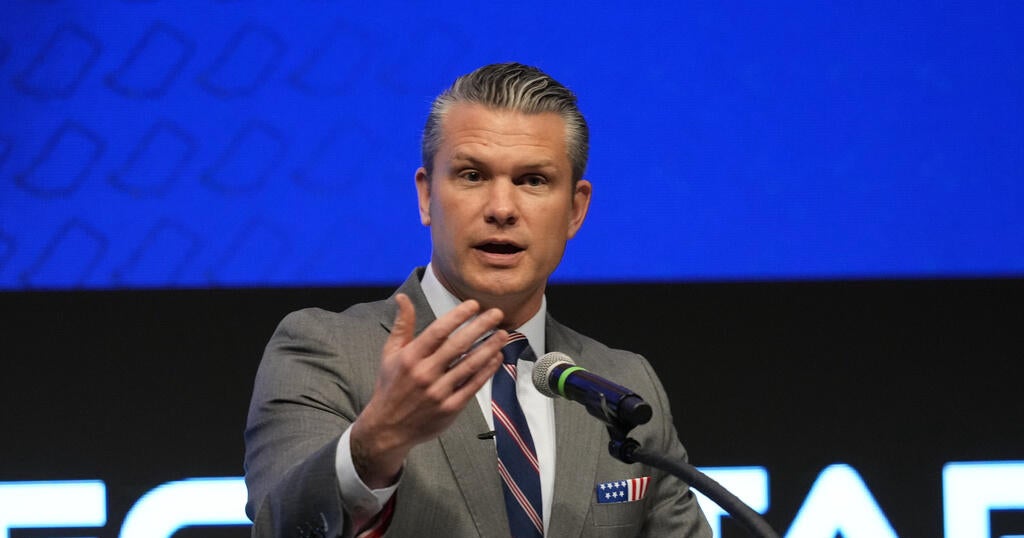
In a controversial move that has stirred both political and cultural discussion, U.S. Secretary of Defense Pete Hegseth found himself at the center of a media storm following his use of a doctored image of a popular children’s book character engaging in violent military actions. Hegseth’s post, which surfaced on his X social media account on a Sunday evening, depicted Franklin the Turtle, a well-known figure from the Canadian children’s literature realm, firing a rocket-propelled grenade from a helicopter at what appears to be a narco-terrorist’s boat.
The altered image, titled “Franklin Targets Narco-Terrorists,” arrived amidst swirling questions about the Trump administration’s prolonged campaign of strikes against boats in South America. More specifically, it coincided with news about a potentially controversial second strike aimed at survivors from an initial boat strike—a move that some, including Senator Mark Kelly of Arizona, a retired Navy captain, suggested could be construed as a war crime under international laws precluding attacks on incapacitated combatants.
The backlash was swift and fierce from various quarters. Kids Can Press, the Toronto-based publisher of the “Franklin” series, was quick to express its disapproval. In a statement released via social media, the publishing house emphasized that “Franklin the Turtle is a beloved Canadian icon who has inspired generations of children and stands for kindness, empathy, and inclusivity.” The statement strongly condemned any “denigrating, violent, or unauthorized use of Franklin’s name or image,” stressing that such representations starkly contradicted the character’s values.
Kids Can Press, known for producing over a dozen picture books featuring Franklin navigating various childhood challenges and adventures in a manner that teaches moral lessons and social skills, found itself defending the integrity of a children’s icon that had been adapted into a well-loved TV series as well. The publisher’s sudden thrust into a political and ethical debate highlights the broader implications of the misuse of cultural symbols, especially those cherished in childhood memories across borders.
On the political front, critiques were not restricted to the publisher’s statements. Senator Kelly, addressing the media, questioned the appropriateness and seriousness of Secretary Hegseth’s actions. “He is in the national command authority for nuclear weapons, and last night he’s putting out, on the internet, turtles with rocket-propelled grenades. This is not a serious person,” Kelly remarked, highlighting the gravity expected of someone in Hegseth’s position.
The Trump administration, meanwhile, defended the military actions that the edited image allegorically supported. According to the White House, which confirmed the occurrence of a second strike but denied that it was ordered by Hegseth as reported, the actions taken were within legal boundaries aimed at neutralizing threats. The administration portrayed the strikes as necessary steps in a broader strategy to combat drug trafficking that poses a significant threat to national security.
Chief Pentagon Spokesman Sean Parnell retorted to the criticisms of the image by asserting, somewhat contentiously, that “We doubt Franklin the Turtle wants to be inclusive of drug cartels… or laud the kindness and empathy of narco-terrorists.” This statement seemed aimed at justifying the aggressive military stance while simultaneously attempting to neutralize the shock caused by the juxtaposition of a children’s character and military violence.
Further compounding the controversy, Hegseth himself defended Admiral Frank Bradley, the commander of the operation on September 2, lauding him as “an American hero, a true professional” and affirming his full support for the decisions made during the mission. The defense secretary’s robust endorsement of the military’s actions, coupled with his prior posting, painted a picture of an unflinching approach to military engagements, irrespective of the surrounding controversy.
The incident—fraught with ethical, legal, and cultural nuances—continues to be a topic of intense debate. It presents a convergence of media influence, political power, and public sensitivity, especially concerning the representation of beloved cultural icons. The Franklin image controversy underscores the complexities of symbolism in media and the profound impacts—intended or otherwise—that such representations can have in the politically charged arena of global security issues.