In recent developments, a controversial amendment was made on the Centers for Disease Control and Prevention (CDC) website regarding the longstanding debate about the relationship between vaccines and autism. This change, implemented on Thursday, was attributed to political appointees within the Department of Health and Human Services (HHS), bypassing the usual protocol of consulting CDC’s expert staff. The alteration has sparked widespread concern and debate over the influence of political ideology on public health information.
Previously, the CDC’s webpage firmly stated that there were no links between vaccines and Autism Spectrum Disorder (ASD), a stance supported by extensive scientific research and evidence. However, the revised text now challenges this assertion, stating that the claim “Vaccines do not cause autism” is not based on evidence and suggesting that there is scientific support for a link that health authorities have overlooked. This modification directly contradicts the consensus in the scientific community, as illustrated by a wealth of studies involving millions of participants worldwide which have found no causal relationship between vaccines and autism.
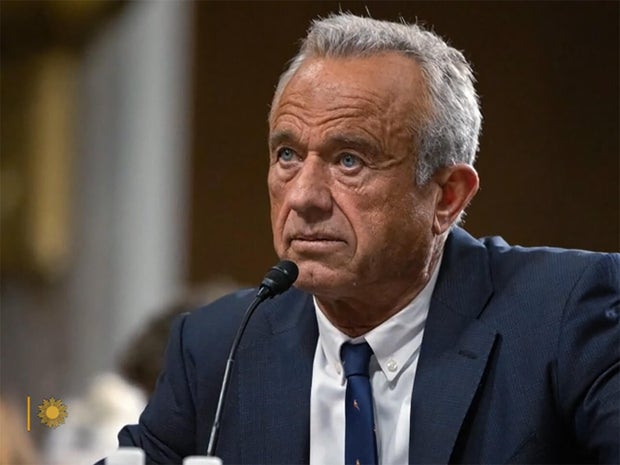
The CDC has traditionally consulted with its National Center on Birth Defects and Developmental Disabilities and its National Center for Immunization and Respiratory Diseases before making any changes to its guidance. Yet, this protocol was sidestepped when political appointees at HHS directed the update, a move allegedly ordered by Health and Human Services Secretary Robert F. Kennedy Jr., a known vaccine skeptic.
Kennedy’s directive has catalyzed a wave of criticism from various health experts and institutions. Dr. Sean O’Leary, chair of the American Academy of Pediatrics Committee on Infectious Diseases, expressed grave concerns about the potential implications for child health in America, emphasizing the critical role of vaccines in preventing deadly diseases and maintaining public health. The sentiment was echoed by the American Academy of Pediatrics President Susan Kressly, who denounced the website alteration for undermining decades of robust scientific evidence proving the safety and non-association of vaccines with autism.
Autism itself, characterized as a developmental disability resulting from differences in the brain, manifests a broad spectrum of symptoms and developmental delays. The National Institutes of Health (NIH) has dedicated significant resources towards understanding the causes and development of autism, pointing out that genetic factors and environmental exposures such as prenatal exposure to pollutants are potential risk factors, rather than vaccinations.
While health authorities like the CDC and the World Health Organization have worked hard to dispel myths surrounding vaccinations and autism, rooted in a now-debunked 1998 study, the latest statement from the CDC’s website seems to revive these disproven theories, potentially endangering public health by fostering vaccine hesitancy. This hesitancy could lead to lower vaccination rates, leaving children vulnerable to preventable diseases like measles, mumps, rubella, and whooping cough. Senator Bill Cassidy, a physician, and chair of the Senate Health Committee, emphasized the historical safety and effectiveness of vaccines, denouncing any contrary claims as irresponsible and dangerous.
Furthermore, the issue of transparency and scientific integrity at the CDC has been brought into question. HHS Communications Director Andrew Nixon defended the change as being in line with a commitment to evidence-based conclusions and transparency. However, this explanation has not quelled the criticisms from various quarters, including Dr. Mandy Cohen, a former CDC director, who argued that the update could tarnish the CDC’s credibility and compromise its mandate to protect public health based on science.
The controversial edit also prompted resignations within the CDC, reflecting internal dissent and concerns about the erosion of scientific independence in public health policy. Observers and former officials worry that sidelining scientific expertise in favor of political perspectives could result in misleading public health messaging, potentially having dire consequences for public health.
In conclusion, the recent changes to the CDC’s webpage on vaccines and autism have rekindled a contentious debate and raised alarms about the intersection of politics and science in public health. It underscores the importance of grounding public health policies in rigorous scientific research and keeping them free from political interference, to maintain trust in public health institutions and protect the wellbeing of the population.