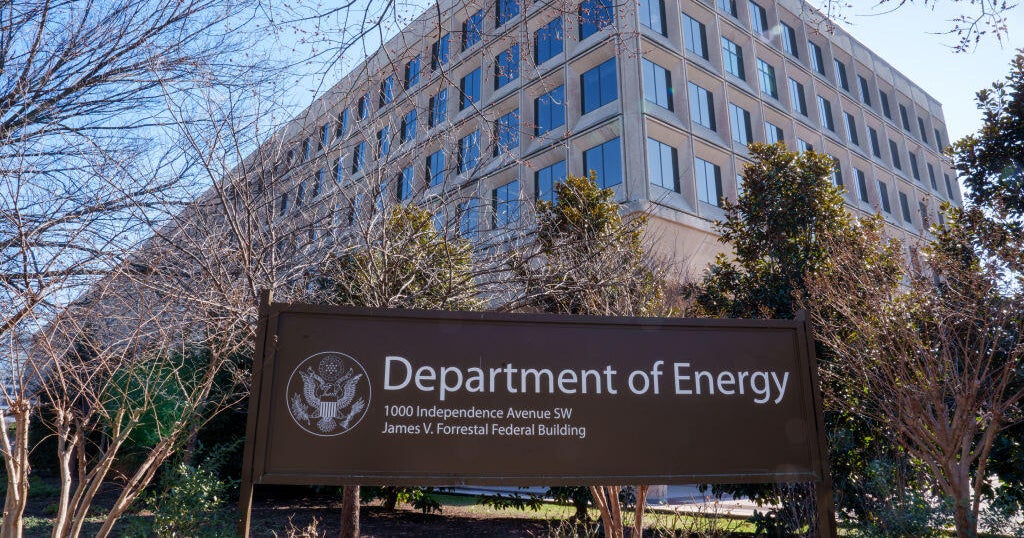
On a historic Monday, President Trump set the stage for a monumental advancement in scientific research and technology by signing an executive order designed to leverage the power of artificial intelligence (AI) across various sectors. The executive action directs the U.S. Department of Energy along with its network of national labs to develop an integrated AI platform that harnesses the capabilities of both existing and forthcoming supercomputers. This initiative, dubbed the “Genesis Mission,” is heralded as a major stride in expediting the process of scientific discovery by employing supercomputing technology to analyze vast datasets from myriad sources.
The concept behind the Genesis Mission is ambitious and broad. As characterized by the White House, this initiative aims at accelerating the tempo of research and discovery in several critical fields including science, engineering, energy, and health care. It plans to achieve this by tapping into the wealth of data housed within federal government archives, university research databases, and the repositories maintained by relevant private sector entities. Particularly, this mission is seen as a significant move towards fostering rapid advancements in various branches of research, which has the potential to lead to breakthroughs in developing new disease therapies among other scientific aims.
Michael Krastios, science advisor to the President, explained the initiative’s massive scope and its potential impact during a conference call with reporters. He likened the Genesis Mission to the Apollo program in terms of the scale of federal resource allocation and its potential to redefine what is possible in scientific inquiry. Krastios outlined that by amalgamating vast federal datasets, cutting-edge supercomputing power, and the premier scientific facilities, the mission will employ AI not only to automate the design of experiments but also to enhance the speed of simulations and the creation of predictive models for numerous scientific phenomena—ranging from protein folding mechanisms to fusion plasma dynamics. Such advancements, he noted, could dramatically reduce the time required for scientific discoveries, changing timelines from years to mere days, or even hours, hence enabling scientists to engage with more daring hypotheses and pursuit of what are currently considered distant or unreachable breakthroughs.
The White House staff emphasized the desire to incorporate AI and supercomputing capabilities akin to those being developed in the private sector. They noted substantial interest from significant tech players including Nvidia and Dell, underlining a collaborative approach to build this advanced technological platform.
The initiative will commence using the current capabilities of the 17 national laboratories overseen by the Department of Energy, recognized widely for their superior computing facilities. However, there is a vision to expand this capability with more supercomputers in the pipeline.
Despite the detailed ambitions of the Genesis Mission, certain practical details such as its funding mechanisms remain unspecified. White House officials indicated that while there are resources to begin, achieving the full potential of the mission would necessitate further assistance from Congress. An official pointed out that leveraging the “world-class supercomputing facilities” already in operation constitutes a part of their strategy, but congressional support will be crucial for sustaining and scaling up the investments required to fully realize the mission objectives.
One official expressed optimism about the transformative impact of the Genesis Mission, particularly in the field of health sciences. He projected that with enhanced capabilities to understand the underlying chemistry and biology of various diseases, which are currently considered incurable or lethal, significant progress can be expected. Drawing on advancements made in the last five years, the official was confident that the next five years would witness unprecedented breakthroughs, drastically changing the landscape of medical science and potentially saving countless lives.
The ambitious project and its envisioned impacts underline a significant commitment toward utilizing technology, specifically AI, to leapfrog scientific and medical research capabilities. As the Genesis Mission unfolds, it promises not only to enhance the United States’ standing in global science and technology realms but also aims at substantial practical outcomes in terms of improved health care solutions and energy efficiencies—highlighting an era where data and computing power converge to unlock new frontiers of knowledge and application.
Contributing to this comprehensive overview, reporter Ibrahim Aksoy provided essential details to bring this report to fruition, ensuring that the scope and potential implications of the Genesis Mission were vividly captured and communicated to the public.
The announcement of the Genesis Mission thus sets a new paradigm in the integration of technology with scientific research, heralding a new age of accelerated innovation and discovery facilitated by the strategic deployment of artificial intelligence and supercomputing resources.