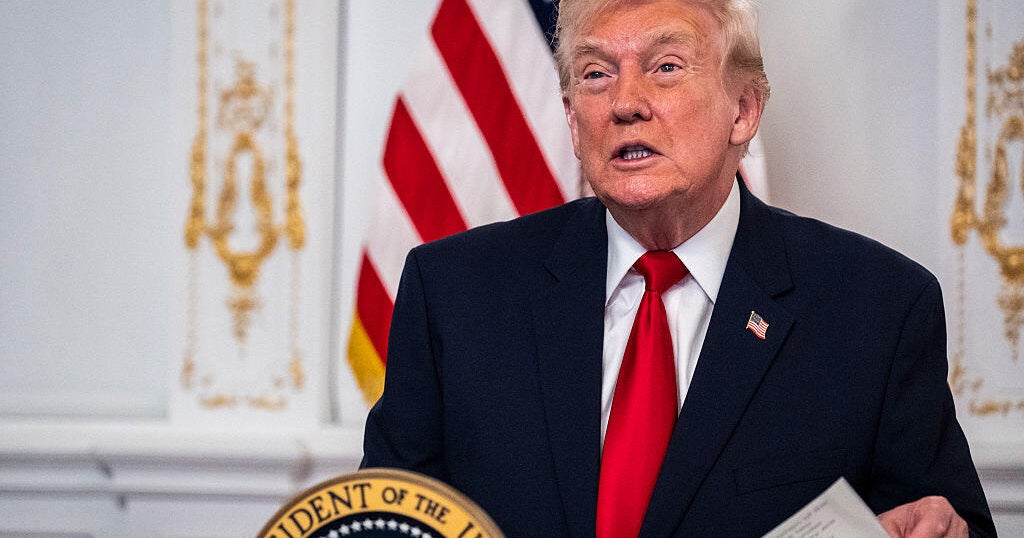
President Trump made a controversial announcement late Thursday night that sent shockwaves through the nation. In a post on the social media platform Truth Social, Mr. Trump declared that he would be suspending immigration from developing nations to the United States. The reason behind this decision, as stated by the former president, was to allow the U.S. system to fully recover from the recent challenges it has faced.
This declaration came on the heels of a tragic event that unfolded in downtown Washington, D.C., just blocks away from the White House. A National Guard member was killed, and another was critically injured in a shooting incident. The suspect responsible for this heinous act was identified as a 29-year-old Afghan national who had been admitted to the U.S. in September 2021, along with thousands of other Afghan refugees. This admission occurred a month after the U.S. withdrew its troops from Afghanistan, raising questions and concerns about the screening process for refugees entering the country.
Following the shooting, the Trump administration took a strong stance on U.S. immigration policies, blaming them for allowing the suspect to enter the country. President Trump vowed to make significant changes to these policies to prevent such incidents from occurring in the future. However, details about the implementation of these changes, including when they would take effect and which countries would be affected, were not provided by the former president.
The White House was contacted by CBS News for clarification on President Trump’s statements, but no response was immediately available. In addition to suspending immigration from developing nations, Mr. Trump also announced plans to terminate the status of millions of migrants admitted under the Biden administration and remove those who were considered not beneficial to the United States. This included ending federal benefits and subsidies for noncitizens and deporting foreign nationals deemed to be a security risk or incompatible with Western civilization.
In a separate development, the Trump administration revealed that it would conduct a thorough reassessment of all green cards issued to immigrants from 19 countries of concern. These countries included Afghanistan, Cuba, Haiti, Iran, Somalia, Libya, Sudan, Yemen, and Venezuela. Furthermore, the White House confirmed that it was reviewing all asylum cases approved under the Biden administration, signaling a comprehensive review of immigration policies and practices.
Prior to the shooting incident, the Trump administration had directed U.S. Citizenship and Immigration Services to review the cases of all refugees admitted under the Biden administration. The suspect in the shooting, Rahmanullah Lakanwal, had immigrated to the U.S. from Afghanistan in 2021 on humanitarian grounds and had been granted asylum earlier this year. U.S. Attorney Jeanine Pirro revealed that the suspect had lived in Washington state with his family and had traveled to D.C. before carrying out the attack.
President Trump stated that the suspect was in serious condition after being shot by a National Guard member during the ambush attack. Additionally, it was disclosed by the CIA that Lakanwal had previously worked with the U.S. government, including the CIA, as a member of a partner force in Kandahar. This revelation raised further questions about the screening process for individuals entering the country and their potential ties to extremist groups or activities.
The events surrounding the shooting in Washington, D.C., and President Trump’s subsequent immigration announcement sparked a heated debate across the country. Supporters of the former president praised his efforts to tighten immigration policies and protect national security, while critics raised concerns about the impact on refugees and immigrants seeking safety and asylum in the U.S.
As the nation grappled with these complex issues, calls for bipartisan cooperation and comprehensive immigration reform grew louder. The need to balance national security concerns with humanitarian values and the protection of vulnerable populations became increasingly apparent. The Biden administration faced mounting pressure to address gaps in the immigration system and enhance screening procedures to prevent individuals with malicious intent from entering the country.
In the midst of these challenges, the American people looked to their leaders for guidance and reassurance. The tragic events in Washington, D.C., served as a stark reminder of the threats facing the nation and the importance of maintaining a robust and effective immigration system. As the debate raged on, the need for unity and collaboration in addressing these issues became more urgent than ever before.