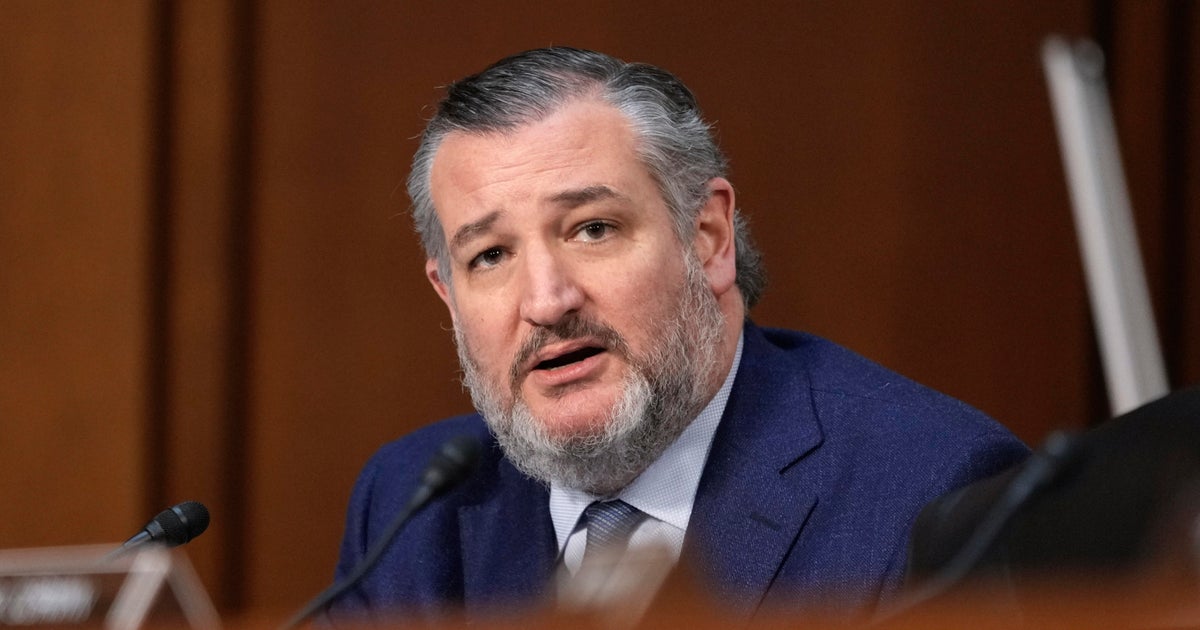
In an intense unfolding of events, Republican Senator Ted Cruz from Texas launched a scathing critique against Brendan Carr, the Chairman of the Federal Communications Commission (FCC) and an appointee of former President Donald Trump. Carr had recently called on ABC, a Disney-owned network, to take stern action against late-night host Jimmy Kimmel in light of his controversial remarks. Cruz lambasted Carr’s approach as “dangerous as hell,” likening it to a coercive tactic reminiscent of mob movie scenes.
This turbulent sequence began when “Jimmy Kimmel Live!” was indefinitely pulled off the air by ABC on a Wednesday, following Kimmel’s contentious commentary on conservative activist Charlie Kirk’s assassination. Kimmel’s monologue on the prior Monday had ignited a firestorm among conservatives after he described the assailant of Kirk as a part of the MAGA group, criticizing their attempt to distance themselves from the attacker and politicize the incident. Furthermore, Kimmel took a jab at President Trump’s reaction to the event.
Only a few hours before ABC’s dramatic resolution to suspend the show, FCC Chairman Carr publicly advocated for the network to respond to Kimmel’s monologue during an interview in which he ambiguously threatened, “We can do this the easy way or the hard way.” This swiftly propelled Senator Cruz to voice his concerns over the implications of such government interference in media content during his podcast on Friday. Mimicking a mob boss, Cruz remarked on Carr’s comments, equating them to a threatening scenario where a gangster implies harm to coerce control or compliance, thereby endangering the principles of free speech and setting an alarming precedent.
Despite recognizing Carr as a “good guy,” Senator Cruz was unequivocal in his criticism, asserting that Carr’s actions could potentially lead to a perilous slope where government power could be misused to stifle dissenting voices. He pointed out that such an overreach could have dire repercussions not just for conservatives but for anyone who could fall out of favor with powerful governmental figures.
Meanwhile, former President Trump, diverging from Cruz’s opinion, lauded Carr as “courageous” for his stance. Trump has had a historical pattern of challenging the media on grounds of unfavorable coverage, even suggesting that media licenses should be scrutinized or revoked for negative reporting which he believed bordered on illegality.
In support of Carr’s position, major media entities like Nexstar and Sinclair Broadcast Group, both of whom own numerous ABC affiliate stations, also decided to preempt “Jimmy Kimmel Live!” from their schedules, citing the unacceptable nature of Kimmel’s remarks about the assassination. This decision was notably made as Nexstar is awaiting FCC approval for its acquisition of competitor Tegna, although a Nexstar spokesperson clarified that the decision was taken without prior government consultation.
In stark contrast, the FCC’s sole Democratic appointee, Commissioner Anna Gomez, criticized ABC’s decision as a capitulation to corporate pressure that threatened the foundation of the First Amendment. She firmly stated that the FCC lacked the authority and the constitutional mandate to police content based on its palatability to governmental interests.
As the week proceeded, the issue evolved into a broader national dialogue concerning free speech, particularly in light of Kirk’s death, with various factions calling for penalties against those perceived to be making light of such severe incidents. Countering this, advocates for free speech warned against the erosion of fundamental rights under the guise of maintaining public decorum or sensitivity.
In this high-stakes clash of perspectives, the core issues of governmental reach into media content, corporate responsibilities, and individual rights to free speech have been thrust into the spotlight, suggesting that the resolution of such conflicts will redefine boundaries and establish precedents with far-reaching implications for the political landscape and the fabric of societal norms. As developments unfold, stakeholders from across the political and social spectra continue to watch closely, each advocating for outcomes that they believe will best serve the interests of justice, freedom, and democracy.