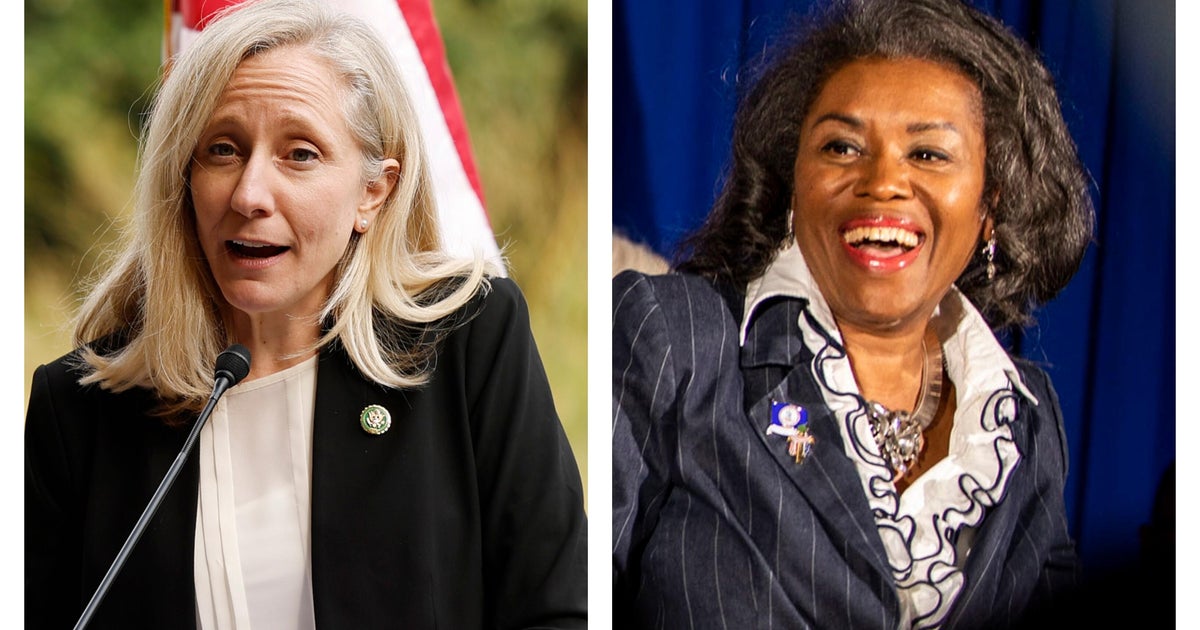
In Virginia, a notable early wave of voters began casting ballots in person for the state’s gubernatorial election, a race that has captured national attention as a potential litmus test for the political climate following last year’s presidential contest. The election pits Republican Lt. Gov. Winsome Earle-Sears against former Democratic Rep. Abigail Spanberger, each vying to lead a state uniquely positioned as a bellwether in off-year elections.
The commencement of in-person voting was marked by numerous public events from both campaigns, signaling a shift into the high-stakes closing phase before the general election on November 4. Initial polls have shown varying leads for Spanberger, suggesting a tight race looms ahead. She took the opportunity to cast her vote early on Friday at a polling station in West Henrico, a suburban area close to Virginia’s capital, Richmond. Post-voting, Spanberger shared insights into her campaign’s focus with CBS News, emphasizing her commitment to issues of financial concern for Virginians: housing affordability, healthcare costs, and day-to-day economic hardships — things that resonate deeply with middle-class families.
Simultaneously, Earle-Sears spearheaded a vibrant get-out-the-vote rally accompanied by notable figures such as Virginia Governor Glenn Youngkin and former Republican presidential hopeful, entrepreneur Vivek Ramaswamy. A key element of her speech was her alignment with Governor Youngkin’s economic policies, suggesting a continuity in governance that would prioritize deregulation and job creation. Earle-Sears framed her campaign as an extension of the work needing completion, leveraging Youngkin’s popularity to bolster her own political standing in Virginia.
Central to this year’s gubernatorial battle are the broader implications of the Trump administration’s legacy, particularly the sweeping personnel cuts dubbed by the Department of Government Efficiency (DOGE). This initiative has had a profound impact, especially in Virginia, which hosts the nation’s second-largest civilian federal workforce after California. Recent figures anticipate a significant downturn in government employment within the state, projecting a loss of thousands of jobs by the end of 2025—a point of contention in the electoral debate.
Spanberger has vocally positioned herself against the lingering Trump-era policies, critiquing their detrimental economic impacts and advocating for robust plans to counteract these effects on the Commonwealth. In contrast, Earle-Sears praises the former president’s initiatives, although Trump himself has displayed a noncommittal stance towards actively campaigning for the Republican candidate. Earle-Sears has faced criticism from her opponent for her alliances with figures like Ramaswamy, with Spanberger linking these connections to adverse job cuts impacting many Virginians.
Moreover, immigration reform has surfaced as a divisive issue, with Earle-Sears targeting Spanberger’s proposed rollback of cooperative measures between state and federal immigration authorities. Each candidate crafts their narrative, attempting to sway a deeply polarized electorate.
The campaign trail is under a pall following the recent assassination of conservative commentator, Charlie Kirk, during a college debate in Utah—an event that has stoked fears of escalating political violence. Both candidates have expressed their horror at the violence, with Spanberger deploring the attack on fundamental democratic norms, and Earle-Sears emphasizing the tragedy of a life lost over political expression.
Security concerns have consequently intensified, with the Earle-Sears campaign ramping up protective measures at public events. Each candidate navigates the intricate dynamic of advocating robust political debate while addressing growing concerns about safety and civility in public discourse.
Virginia’s gubernatorial election thus operates on multiple levels. As a potential precursor to broader national shifts in the upcoming midterms, the outcome could signal the prevailing political winds in a post-Trump era, setting the tone for future electoral battles. Both candidates continue their fervent appeals to voters, underscoring Virginia’s critical status as a battleground state with national implications. The weeks leading to the November election promise intense campaigning as each side seeks to secure a gubernatorial victory that could have far-reaching consequences beyond the borders of the Old Dominion.