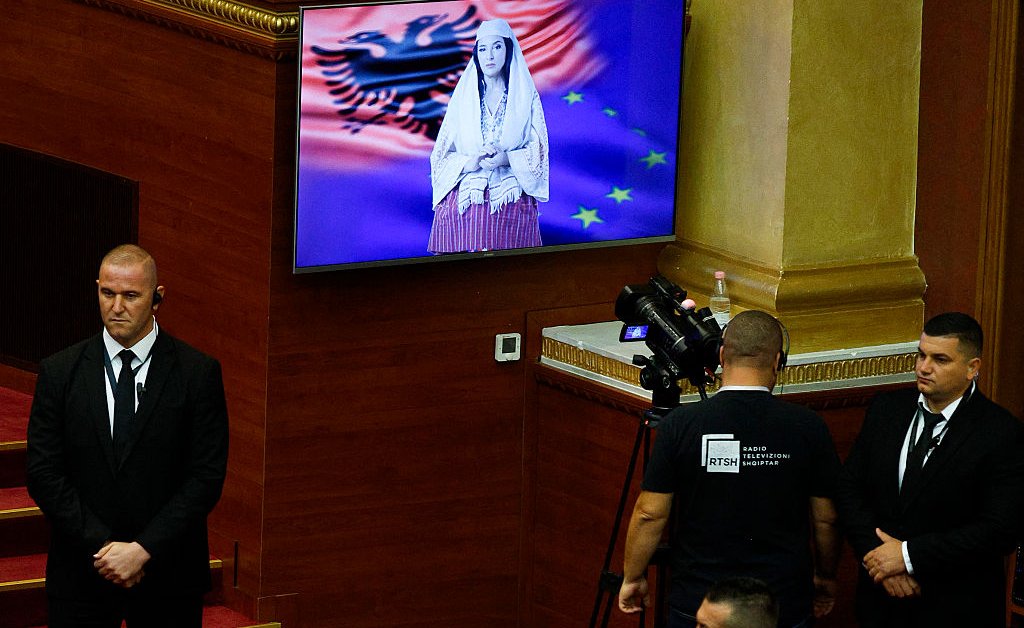
In September, Albania made history by appointing an AI system named Diella as the world’s first “Minister of State for Artificial Intelligence.” Diella was tasked with addressing corruption in government contracting by Albania’s Prime Minister. However, this move sparked outrage, with the opposition party calling it a “propaganda fantasy” and challenging its appointment in court. Despite the controversy, this appointment reflects a global trend of governments integrating AI into their operations to improve efficiency and decision-making.
The real question raised by Diella’s appointment is whether AI systems will eventually move beyond assistance and begin making decisions in government themselves. Cary Coglianese, a law professor at the University of Pennsylvania and an expert on AI use in government agencies, believes this shift is inevitable. As the public becomes more accustomed to AI in private settings, such as choosing movies on Netflix or assisting with homework, there may be a growing acceptance and demand for AI in government decision-making.
By the end of 2024, U.S. federal government agencies reported over 1,700 ways they were using AI for various tasks, such as note-taking, summarizing documents, and reviewing regulatory comments. This number has more than doubled from the previous year, indicating a significant increase in AI integration. Coglianese’s database now tracks over 3,000 AI use cases, highlighting the widespread adoption of AI in government operations.
While many of these AI applications involve traditional machine-learning techniques rather than generative AI systems that produce novel content, the potential for AI to make autonomous decisions in government remains a topic of debate. Some experts believe that as AI technology advances and becomes more sophisticated, it may eventually play a more significant role in decision-making processes. However, concerns about accountability, transparency, and ethical considerations must be addressed as AI systems take on more responsibilities in government.
Overall, the appointment of Diella as a cabinet-level AI system in Albania reflects a broader trend of governments worldwide incorporating AI into their operations to streamline processes and improve efficiency. While the idea of AI making decisions in government may be met with skepticism and opposition, the increasing use of AI in various government tasks suggests that this shift is inevitable. As technology continues to evolve, the role of AI in government decision-making will likely become more prominent, raising important questions about governance, accountability, and the ethical implications of AI integration.