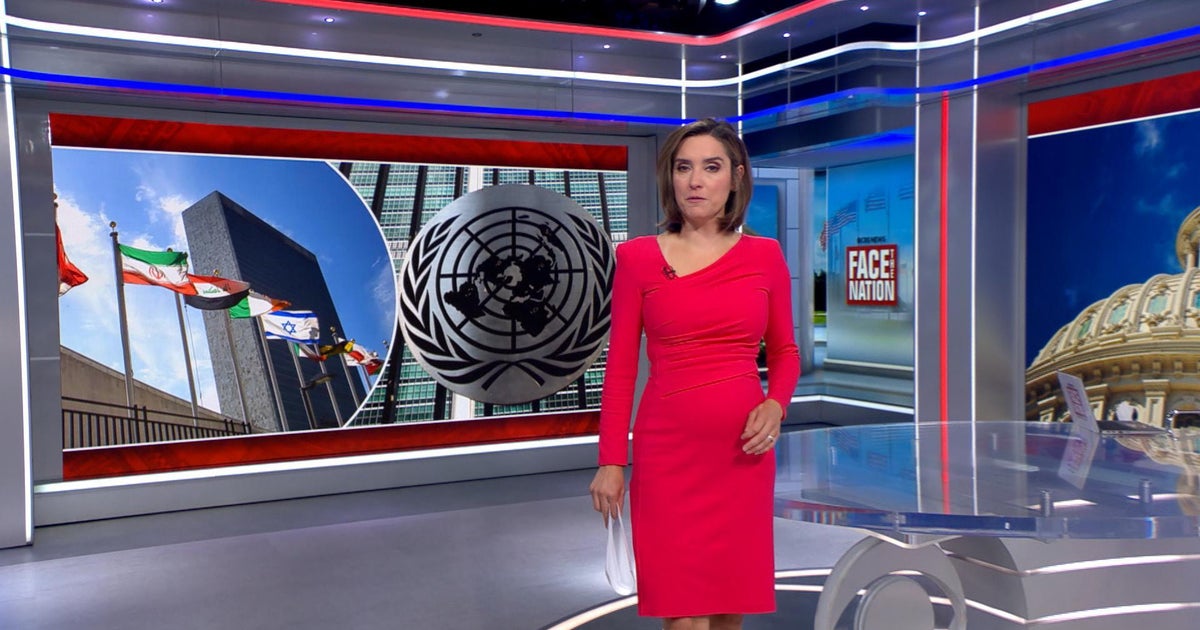
The upcoming session of the United Nations General Assembly in New York is poised to command global attention, bringing together leaders from around the world to discuss critical international issues. Amidst the myriad of topics expected to dominate discussions, French President Emmanuel Macron’s recent announcement stands out as particularly significant. In an exclusive interview on “Face the Nation with Margaret Brennan,” President Macron disclosed his intentions to use the platform provided by the U.N. General Assembly to seek formal acknowledgment of France’s decision to recognize a Palestinian state.
This move by France, led by President Macron, is anticipated to add a layer of diplomatic complexity to the already intricate dynamics of international relations concerning the Middle East. The recognition of a Palestinian state has long been a contentious issue, with various nations taking differing stances that often reflect broader geopolitical interests and alliances. President Macron’s planned request to the U.N. underscores a proactive approach to foreign policy, signaling a willingness to both lead and challenge existing paradigms.
In the interview with Margaret Brennan, President Macron emphasized the importance of this step towards ensuring peace and stability in the region. By advocating for the formal recognition of a Palestinian state, Macron is likely looking to stimulate dialogue and negotiation frameworks that could eventually lead to a sustainable resolution of the Israeli-Palestinian conflict. This development would undoubtedly invoke responses from various international actors, each calibrated according to national strategies and the overarching goals of regional stability and security.
Moreover, President Macron’s statement comes at a time when the global community faces numerous crises and challenges, ranging from humanitarian conflicts to climate change. The French President’s initiative might also be seen within the broader context of France’s efforts to assert its influence on the global stage, particularly in matters pertaining to diplomacy and international law. It reflects an ambition not only to engage with pressing global issues but also to mold the frameworks within which they might be addressed.
Apart from the geopolitical dimensions of the U.N. General Assembly, the gathering is also expected to provide a venue for discussions on economic and technological cooperation. Adding to the significance of the event, IBM Vice Chairman Gary Cohn will be joining discussions at the Assembly. Cohn’s presence highlights the increasing importance of technology and business perspectives at high-level diplomatic gatherings.
Gary Cohn, who has extensively commented on the implications of technological advancements on global economies, is likely to discuss topics related to economic recovery post-pandemic, the role of technology in modern conflicts, and the critical importance of cybersecurity in an era of digital globalization. His insights will contribute to a rounded discussion of how nations can cooperate on economic fronts, particularly in utilizing technology to foster collective growth and resilience.
The participation of figures like Macron and Cohn underscores the multifaceted nature of challenges that the United Nations General Assembly aims to address. The session is not only a conduit for resolving longstanding political conflicts but also a forum for deliberating on the intersection of technology, economy, and governance. The outcomes from such discussions can potentially shape international policies and influence the global economic landscape significantly.
In summary, the forthcoming U.N. General Assembly in New York will serve as a critical platform for debates and decisions that will have wide-ranging effects on international relations, economic policies, and technological cooperation. President Macron’s intention to seek formal recognition of a Palestinian state could catalyze a new phase of diplomatic engagement on the Israeli-Palestinian conflict, while discussions facilitated by leaders like Gary Cohn will illuminate the role of technology and economics in shaping our collective future. The world will be watching closely as these leaders converge in New York to navigate through the complexities of today’s most pressing global challenges.