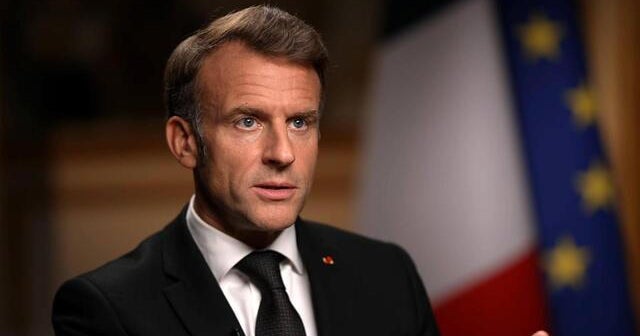
As the prestigious United Nations General Assembly gears up to commence next Monday in New York, an air of anticipation and strategic discussions are already shaping global headlines. Amid the preparatory dialogues and international policy alignments, French President Emmanuel Macron has taken a bold step that is sure to reverberate through the halls of diplomacy. In a revealing conversation with Margaret Brennan on the esteemed political interview show “Face the Nation,” President Macron articulated his intention to champion a significant agenda at the upcoming assembly: advocating for U.N. formalization of France’s decision to recognize a Palestinian state.
The U.N. General Assembly, an annual event marked by its high-profile congregation of global leaders, serves as a pivotal platform for discussing international issues and setting the course for multilateral diplomacy. It’s here that world leaders propose, debate, and shape policies that will impact international relations and global governance. President Macron’s announcement is particularly groundbreaking as it addresses one of the most contentious and prolonged disputes in international politics—the recognition of Palestinian statehood.
In his interview with Margaret Brennan, President Macron emphasized that France’s decision to recognize a Palestinian state was not made in isolation but is a reflection of a broader commitment to seeking peace and stability in the Middle East. By bringing this matter to the U.N. General Assembly, he aims not only to uphold France’s sovereign decision but to also encourage a unified and constructive approach towards resolving the Israeli-Palestinian conflict. This strategy, according to Macron, is aligned with France’s long-standing foreign policy that advocates for dialogue, democracy, and human rights.
The implications of Macron’s proposal are complex and multifaceted, touching on diplomatic, political, and societal layers across international landscapes. The recognition of a Palestinian state has historically been a subject of intense debate and division among countries. While some nations support such recognition as a step towards peace, others view it as premature or potentially escalative. Macron’s move might rekindle discussions on this topic at the U.N., urging member states to re-evaluate their positions and the broader implications of their stance on Middle East peace processes.
Moreover, Macron’s discussion points towards a changing geopolitical climate where national leaders are increasingly willing to leverage international forums to assert their foreign policy agendas. This dynamic could lead to shifts in alliances and strategies, as countries respond to France’s call with their own policies and diplomatic gestures.
Meanwhile, adding to the gravity and diversity of discussions anticipated at this year’s U.N. General Assembly, IBM’s Vice Chairman, Gary Cohn, is also reported to join “Face the Nation.” Cohn, known for his sharp insights on global economic trends and technology impacts, will likely provide a different yet critical perspective on global affairs. His participation underscores the significance of integrating economic and technological viewpoints into discussions traditionally dominated by geopolitical considerations.
Technology and economy are increasingly becoming inseparable from global politics, influencing everything from national security to international collaborations and conflicts. Leaders like Cohn bring an essential dimension to the table, highlighting how digital advancements and economic interdependencies are reshaping global interactions and policies.
The combination of Macron’s political bombshell and Cohn’s economic acumen illustrates the multifaceted nature of contemporary international discourse. As nations face an ever-more interconnected and complex world, the issues presented at the U.N. General Assembly reflect the myriad challenges and opportunities that define our current global landscape. From longstanding conflicts like the Israeli-Palestinian dispute to emerging issues brought forth by technological progress and economic shifts, the discussions in New York are set to shape the international agenda in profound ways.
In conclusion, as world leaders, diplomats, and influencers converge on New York for the U.N. General Assembly, all eyes will be on figures like President Emmanuel Macron and Gary Cohn, whose initiatives and insights could define future steps in international diplomacy and global policy-making. Macron’s potential call for the formal recognition of a Palestinian state by the U.N. could catalyze a significant shift in international relations regarding the Middle East, while Cohn’s perspectives will likely illuminate the crucial role of economic strategies and technological advancements in shaping a balanced, sustainable global future. The outcomes of this assembly could very well influence the direction of global politics in the coming years, highlighting once again the essential role of the United Nations in fostering dialogue and decisions that transcend national boundaries and impact the world at large.