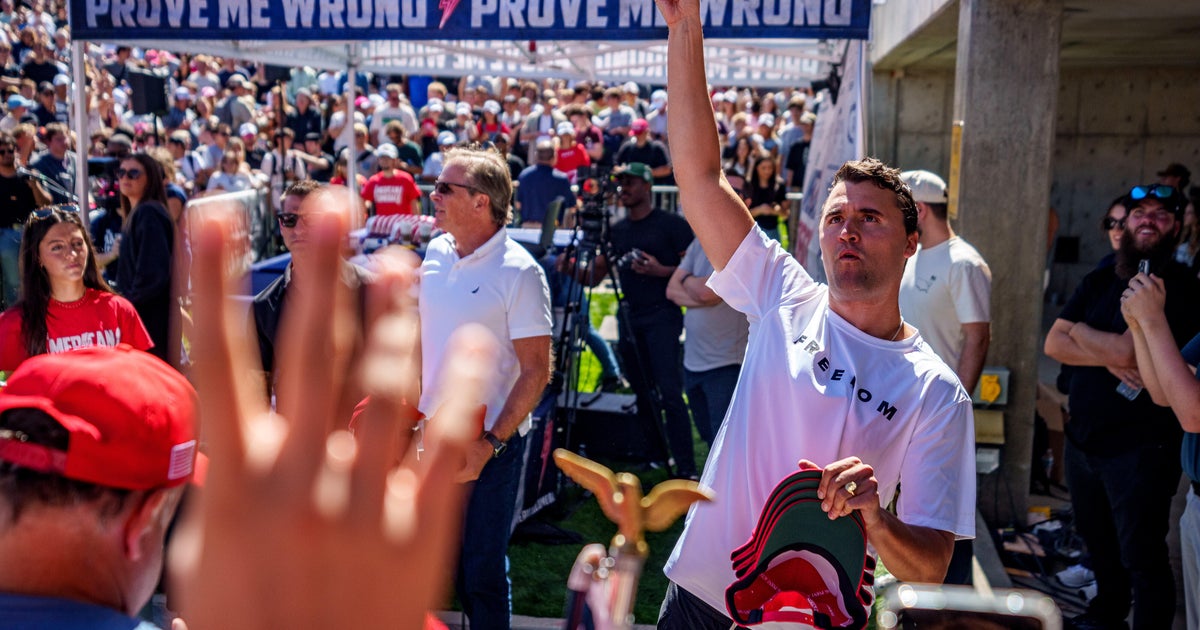
In the light of the tragic assassination of conservative commentator Charlie Kirk, a palpable tension has swept through the halls of Congress as members reevaluate their security protocols, especially concerning public and outdoor engagements. Charlie Kirk, a prominent conservative voice and media personality, was fatally shot at a public event, generating a ripple of concern across the political spectrum and bringing the issue of political violence to the forefront of national discourse.
Following this significant and unsettling event, several members of Congress have openly expressed their apprehensions and have taken measures to safeguard themselves and their staff. For example, Democratic Representative Alexandria Ocasio-Cortez of New York decided to postpone a planned rally in Raleigh, North Carolina. This event, which was to be held in collaboration with the North Carolina Democratic Party, was expected to draw significant crowds. However, given the current climate of uncertainty and fear, it was deemed prudent to delay the event. An advisor to Ocasio-Cortez stated that the postponement was a precautionary move, made in the hope that the rally could be rescheduled for a later date once the tension has subsided.
Similarly, Senator Ruben Gallego of Arizona, another Democrat, opted to delay a town hall that was scheduled in Las Vegas. Expressing his concerns in a statement, Gallego emphasized that the decision was made out of an “abundance of caution”, reflecting the heightened sense of vigilance that many lawmakers now feel compelled to adopt.
In Washington D.C., the setting itself of political gatherings has come under scrutiny. Representatives Delia Ramirez of Illinois and Sydney Kamlager-Dove of California, both Democrats, shifted their press conferences from outdoor venues to the relative safety of indoor environments, an adjustment that underscores the growing wariness of open, public spaces where security cannot be tightly controlled.
Across the political aisle, Republican Representative Nancy Mace of South Carolina voiced her concerns quite starkly, declaring her intention to refrain from public events in the near future. The gravity of the situation has even led her to resume carrying a firearm for personal protection when she is in her home state and in other states where the law permits such measures. Her declaration, “I am deeply concerned for my safety,” encapsulates the sentiment that seems to pervade amongst many public officials. Mace’s statement that one’s vocal presence in the political arena, regardless of party affiliation, could put one at risk, punctuates the pervasive anxiety that has gripped lawmakers.
The assassination of Charlie Kirk bears chilling resemblances to other recent incidents of political violence, including an attempted assassination of President Trump during an outdoor rally. These events have prompted serious discussions about security strategies for public officials, seen in the words of House Oversight Chairman James Comer of Kentucky, who pointed out the inadequacy of traditional security measures against certain types of threats such as a sniper attack from a rooftop.
In the immediate aftermath of Kirk’s assassination, House Speaker Mike Johnson spoke of a palpable shift in the atmosphere among his colleagues on Capitol Hill. He stressed that the assassination was a targeted attack, motivated by Kirk’s beliefs, and called on lawmakers to uphold their convictions but to temper them with the correct spirit, reflective of American values.
Meanwhile, Republican Senator John Curtis of Utah, where the Kirk assassination took place, shared his personal apprehensions during an interview. Admitting that he would think twice before attending significant public events like parades, Curtis echoed a sentiment likely shared by many of his colleagues: the need to find a balance between public engagement and personal security.
This tragic event has indeed forced a pivot in how political figures engage with the public and manage their visibility. While the immediate reaction has been to increase security measures and reduce the frequency of public appearances, there is a broader imperative to address the underlying issues that give rise to such acts of violence. As the shockwaves of this incident continue to reverberate, it remains to be seen how lawmakers will navigate these turbulent waters, balancing their duty to be accessible to the constituents they serve with the imperative to ensure their own safety and that of their teams. Such decisions will likely reshape the operational landscape of political engagement in the U.S. for years to come.