In Washington, D.C., a heated debate is unfolding as a group of Democratic legislators attempts to block employees of the Department of Government Efficiency (DOGE) from transitioning into permanent roles within the federal government. This pushback has gained traction after the departure of Elon Musk, who left his position in late May. Despite his departure, his influence and the actions of DOGE continue to ripple through various federal agencies, raising concerns among lawmakers.
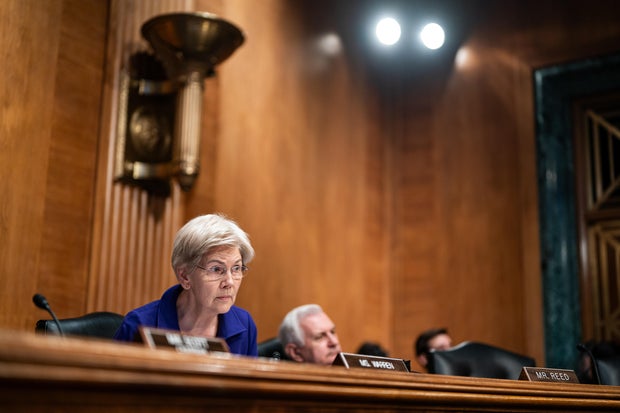
Senators Elizabeth Warren of Massachusetts and Richard Blumenthal of Connecticut, along with Representative Robert Garcia of California, have expressed their concerns through a detailed letter directed to Scott Kupor, Director of the Office of Personnel Management (OPM), and Russell Vought, Director of the Office of Management and Budget (OMB). The letter, which was leaked to CBS News, highlights apprehensions that the presence of DOGE within these agencies may sabotage critical governmental functions from within. The senators and congressman are alarmed that DOGE’s roots in the government could potentially threaten the capacity of these agencies to serve American citizens effectively.
In response to the allegations made by these Democratic legislators, Scott Kupor has defended the integrity of the civil service hiring process. In a statement to CBS News, Kupor pointed out that the OPM rigorously reviews all requests to appoint current or former political appointees to career roles, ensuring compliance with merit systems principles and civil service laws. Furthermore, he clarified that no individuals associated with DOGE have unlawfully transitioned into permanent federal positions, emphasizing that all federal hires are subject to necessary background checks, ethics reviews, and suitability screenings.
The Democratic lawmakers’ concerns originate from the transformation of DOGE’s role in Washington following Elon Musk’s exit. President Trump at the time commended Musk and his team, noting that many from his team were expected to remain and continue their contributions. Musk himself described his departure not as an end but as the beginning of DOGE’s future endeavors.
Musk initiated DOGE as a cost-cutting crusade with an ambitious target of reducing government spending by $2 trillion, a figure later adjusted to $1 trillion. Upon his exit, the White House claimed that DOGE had managed to save approximately $170 billion. However, these figures have been subject to scrutiny and have been reported to possibly contain numerous errors and miscalculations.
Since Musk’s departure, DOGE has sustained its focus on reducing costs. A recent review by CBS News revealed that claims regarding these savings might be significantly exaggerated. Despite this, Musk assured that DOGE’s philosophy would continue to permeate throughout the government, aiming for $1 trillion in savings over time.
Russell Vought, in a House Appropriations Committee meeting in June, shared that the vision for DOGE going forward would be more institutionalized within the agencies themselves. He explained that many DOGE employees are now serving almost as in-house consultants, becoming integral to the agencies’ leadership structures. Vought described the current leadership of DOGE as being much more decentralized than under Musk’s tenure.
The concerns raised by Senators Warren and Blumenthal, along with Representative Garcia, extend beyond the mere presence of DOGE employees in the federal government. They are particularly worried about the transition of DOGE appointees to career federal service roles, which they argue could potentially violate laws that strictly prohibit political considerations and loyalty tests in hiring practices. The lawmakers have pointed out the ambiguous accountability of these newly embedded DOGE staff and their alignment within the agencies’ command structures.
Within their communications to Kupor and Vought, the Democratic members of Congress have requested detailed information regarding the current leadership of DOGE and the broader presence of its employees across the federal government. They have urged OPM to strictly enforce civil service regulations that prohibit political patronage in government hiring, to preserve the integrity of the civil service.
These unfolding events underscore a complex debate about the influence of DOGE in the federal government, the legality and ethics of hiring practices, and the broader implications of political appointments on the functioning of the government. As this situation develops, the forces at play will necessitate a careful balance between effective government administration, adherence to legal frameworks, and the oversight responsibilities of entities like OPM and OMB.
This scenario reflects ongoing tensions and challenges within the mechanisms of U.S. governance, particularly concerning the intersections of political influence, public administration, and the principles underlying the civil service. The outcome of this debate will likely have significant implications for the future role of political appointees in the federal government, the operational ethics of federal agencies, and the overall trust of the American people in their government’s ability to function without partiality and with absolute integrity.