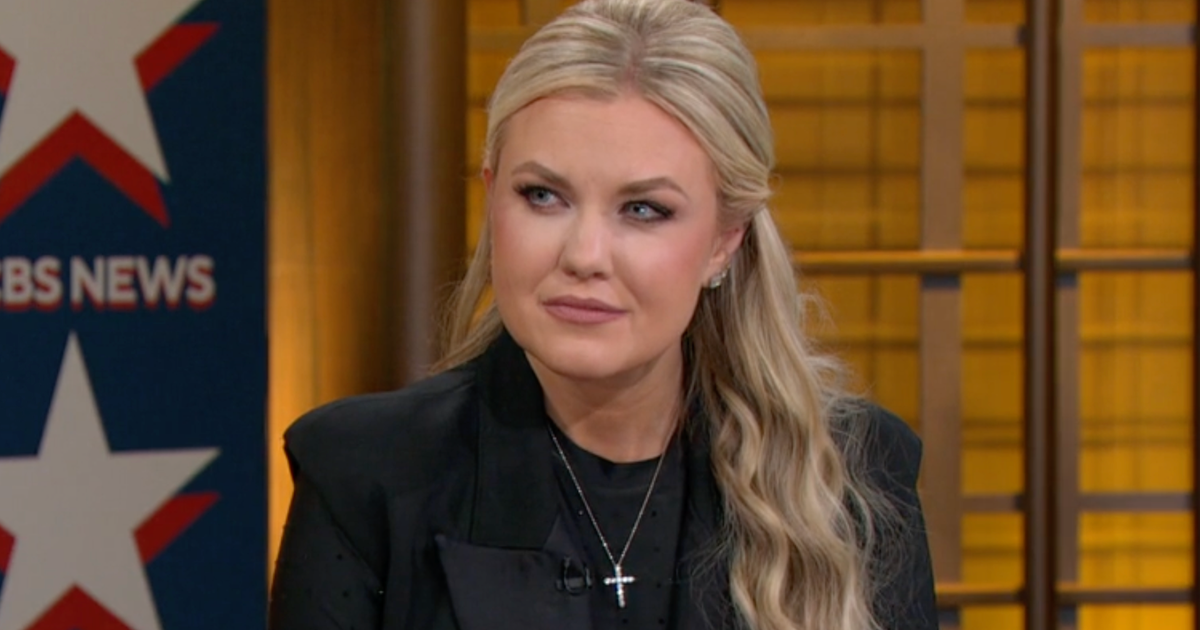
Charlie Kirk, the influential figure in American conservative circles known for his nonprofit Turning Point USA, was assassinated three months ago at an on-campus event in Utah. His widow, Erika Kirk, is now at the helm of Turning Point and recently participated in a CBS News town hall where she reflected on her loss, defended her husband’s controversial comments, and explained her decision to publicly forgive the man accused of her husband’s murder.
The town hall, moderated by CBS News editor-in-chief Bari Weiss, is the first in a series of planned CBS News town halls and debates. Among the guests who contributed to the conversation were Utah Valley University student Hunter Kozak, the last person to speak to Charlie Kirk, and Robert Milgrim, the father of Israeli Embassy staffer Sarah Milgrim, who was tragically killed in a shooting in May.
In one of the most poignant moments of the event, Erika Kirk addressed those who sought to justify her husband’s assassination. She referred to them as “sick” and accused the internet of dehumanizing people. “He’s a human being. You think he deserved that? Tell that to my three-year-old daughter,” she said.
Erika Kirk didn’t stop there. She further challenged those who took pleasure in watching the video footage of her husband’s brutal murder in high resolution, laughing and claiming he deserved it. “There’s something very sick in your soul, and I’m praying that God saves you,” she declared.
Charlie Kirk was well-known for his engagement with college students, often inviting them to a microphone to challenge his views, a strategy he encapsulated in the phrase “prove me wrong.” Erika Kirk explained how her husband encouraged people of varying political beliefs and backgrounds to present their perspectives. He was always open to hearing different viewpoints and engaging in a constructive debate.
A recent poll conducted by the Foundation for Individual Rights and Expression and College Pulse revealed that 91% of undergraduates believe that “words can be violence.” However, Erika Kirk insisted that her husband never incited violence. He always offered a platform for different voices to be heard. He was not about silencing people, but about encouraging dialogue. Tragically, instead of responding with words, someone chose to respond with a bullet.
Erika Kirk believes that her husband saw conversation as a tool for change, a theme he explores in his posthumously published book, “Stop, in the Name of God: Why Honoring the Sabbath Will Transform Your Life.” The book emphasizes the importance of inner peace as a prerequisite for effective communication with others.
However, in the wake of Charlie Kirk’s assassination, certain controversial comments he made have been widely shared, often without the full context. Erika Kirk argues that these snippets do not accurately represent her late husband’s views or character.
In response to questions about some of these comments—that some gun deaths are “worth it” to protect the Second Amendment; that the Civil Rights Act of 1964 was a mistake; and that if he sees a Black pilot, he’s “going to be like, boy, I hope he’s qualified”—Erika Kirk stressed the importance of viewing these comments in their complete context. She insisted that her husband was not a person who judged others based on their skin color or religion, but valued hard work and excellence.
Hunter Kozak, the last student to engage in a debate with Charlie Kirk before his assassination, also attended the CBS News town hall. A self-identified liberal, Kozak has been an advocate for civil political discourse. He asked Erika Kirk if she would condemn the violent rhetoric of Donald Trump, arguably one of the most influential figures in the world. He referenced a specific instance where President Trump accused six Democratic lawmakers of “SEDITIOUS BEHAVIOR, punishable by DEATH!” and reposted, “HANG THEM, GEORGE WASHINGTON WOULD!” Erika Kirk responded by saying the problem is deeper than any one individual and that it starts in the home. She urged parents to reflect on the values they are instilling in their children.
Robert Milgrim, whose daughter Sarah was one of the victims in the Capitol Jewish Museum shooting in Washington, D.C., asked Erika Kirk to condemn antisemitism. She responded by saying that hate is evil and that she and her late husband were always clear on their stance on Israel and the Jewish people. She questioned what healing could possibly come from hatred towards any group of people, emphasizing that hate brings no good.
Weiss also asked Erika Kirk about Candace Owens, a former Turning Point USA employee and friend of Charlie Kirk, who has been promoting conspiracy theories about his assassination and making unfounded allegations of fraud regarding the nonprofit. Erika Kirk’s message to Owens and others making these unfounded claims was simple: “Stop.”
In a moment that surprised many, Erika Kirk announced at her husband’s memorial service that she forgave his accused killer. She explained to Weiss that it was a “game-time decision,” one made out of genuine feeling, not an attempt to stir up more conflict. She clarified that forgiveness does not mean forgetting or condoning, but rather releasing herself from the grasp of hatred and resentment. She added that there is a difference between forgiveness and justice, expressing her faith in a just God to handle the latter.
When asked if she had any words for her husband’s accused killer, Erika Kirk responded, “Nothing. I have nothing to say to you. Nothing.”
The town hall provided a platform for Erika Kirk to share her perspectives, defend her husband’s legacy, and advocate for civil discourse in a time of increasing polarization. It also served as a reminder that behind political figures are often families who are deeply affected by the public’s words and actions. As Erika Kirk put it, her husband was a human being, not a mere symbol of a political ideology, and is survived by a family that continues to mourn his loss.