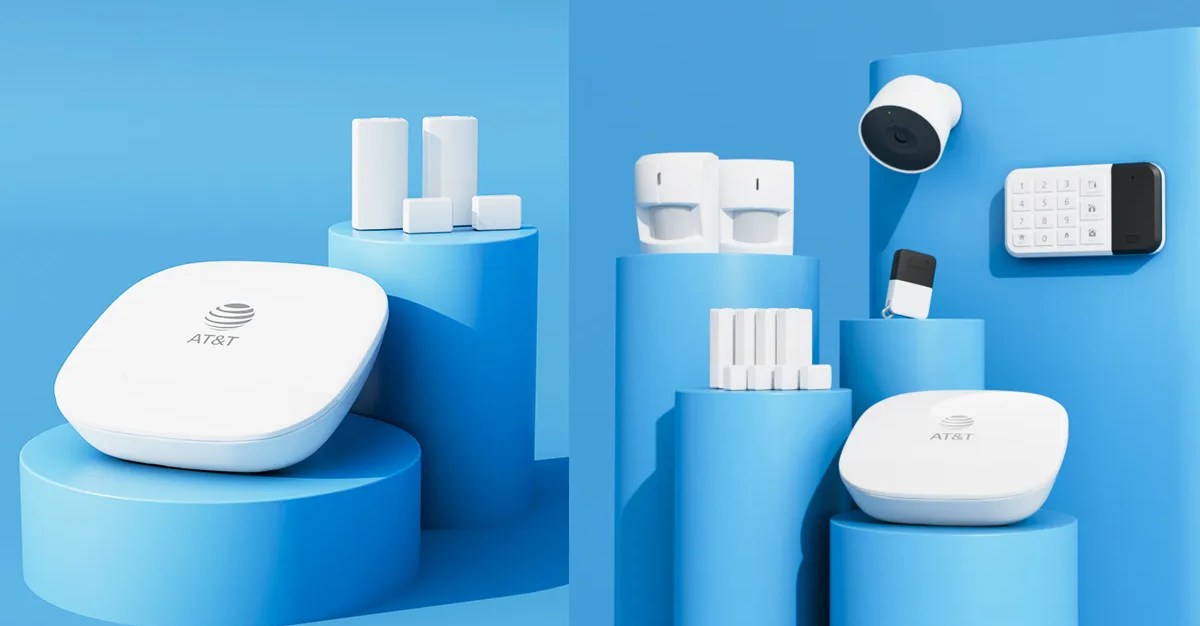
AT&T’s Connected Life Security System Now Works With Gemini for Home, Adding AI-Powered Summaries and Natural-Language Video Search
AT&T has announced that its Connected Life smart home security system is now integrated with Gemini for Home, the AI-powered assistant built into Google’s smart home ecosystem. In an announcement posted on its corporate blog, AT&T said the Connected Life system is the first home security product to integrate with Google Home Premium, and the update brings a variety of Gemini-powered features that can summarize home events, search recorded video history, and provide detailed descriptions of what security cameras capture around the home.
The integration represents a meaningful step for both consumer home security and the broader adoption of AI in everyday smart home devices. Instead of simply sending alerts when a motion sensor is triggered or a camera detects activity, the new system aims to give users a more conversational way to understand what is happening at home. Those who subscribe to AT&T’s professional Connected Life monitoring plan can now ask questions about their video footage in plain language, review summaries of activity throughout the day, and gain access to a new geolocation-based arm and disarm feature that will automatically adjust the system based on how close the user is to home.
According to AT&T, the Gemini for Home integration allows the security system to generate descriptive explanations of events captured by cameras. For example, the system can tell a user who delivered a package, how many items were dropped off, and perhaps even describe what the delivery person looked like or what kind of vehicle they were driving. This is a significant upgrade over traditional motion detection notifications, which simply alert users to movement or offer a short video clip. With the new AI capabilities, users can get a more complete picture without needing to watch the footage themselves.
The natural language search function is another headline feature. Users can ask questions about their recorded video history in everyday conversational language, and the system will attempt to pull relevant footage or provide an answer. AT&T offered a couple of examples in its announcement: a user might ask, “What dug up the yard last night?” or “Who let the dogs out?” and the system would search through the camera history to provide a useful response. This kind of query differs from traditional security camera search, which usually requires a person to scroll through time-stamped clips or sort through a generic list of motion events. By allowing users to search with natural language, the system makes it easier to find a specific moment or understand what happened while the home was empty.
Daily summaries are also part of the update. The system can compile a review of home activity inside and outside the house, giving subscribers a convenient overview of their day without requiring them to check each camera individually. For someone who owns a busy household, the daily summary could serve as a quick digest of who came and went, what deliveries arrived, and whether any unusual activity was noticed. It is a practical way to use the reams of video data that smart home security systems collect on a routine basis.
However, these Gemini-powered features are not available to every AT&T Connected Life customer. AT&T has made it clear that they are only available to customers who subscribe to the company’s professional monitoring plan, which costs $29.99 per month. That plan includes what AT&T describes as professional monitoring, meaning a central station team is available to respond to alarms and dispatch emergency services when necessary. The plan is positioned as a higher tier than a basic self-monitoring option, and the new AI features appear to be part of AT&T’s effort to make that premium plan more attractive to homeowners who want more than just alarm notifications.
Alongside the Gemini integration, AT&T is also adding a proximity-based automation feature to Connected Life. This feature allows the security system to automatically arm or disarm itself based on the user’s proximity to the home. In practice, that might mean the system knows when you have left the neighborhood and arms itself accordingly, or it disarms as you approach the driveway so you do not have to fumble with a keypad or mobile app. It is a classic smart home geofencing capability, but its addition here suggests AT&T is trying to make the system more convenient for people who want their security system to adapt to their daily routines without requiring manual intervention. The proximity feature, like the AI features, is intended to simplify the user experience and reduce the number of steps needed to manage a home security system.
The announcement highlights how artificial intelligence is beginning to reshape the home security industry. For years, smart security cameras have generated enormous amounts of footage, but most of that footage has gone unwatched. Users typically only scroll through video when they receive an alert or when they need to investigate a specific event. With AI-powered tools like Gemini for Home, that relationship is changing. Instead of being a passive recorder that waits for someone to look, the system can actively interpret what it sees, answer questions about past events, and provide summaries that help users stay informed.
The use of Gemini is particularly notable because it shows a major telecom company like AT&T building on Google’s AI platform rather than developing its own virtual assistant from scratch. It also underlines the growing importance of Google Home as a hub for connected devices. Google has been expanding the capabilities of its smart home software in recent years, and the integration with a professionally monitored security system gives Google Home Premium another kind of real-world footprint. By working with AT&T, Google has effectively placed Gemini into a home security product that carries the trust and backing of a major national carrier. That could open the door to more partnerships between Google and other security companies.
At the same time, the use of generative AI in home security raises questions about privacy and data handling. Security cameras already capture sensitive footage of a user’s home, family, visitors, and neighborhood. When AI systems are used to analyze that footage, create summaries, and answer questions about who did what, it inevitably changes how that data is processed and stored. Users may need to consider what information is being shared with Google and AT&T, how long video footage is retained, and whether the AI’s interpretations of events are accurate. In a security context, accuracy is especially important. A mistaken summary or a missing event could potentially cause a user to overlook something important.
AT&T has not publicly detailed exactly how the Gemini-powered analysis is processed, nor has it explained whether the footage used for AI summaries is handled differently from ordinary video footage. The company’s announcement focuses on the benefits and convenience of the new features, which is typical for a consumer product launch. Still, the integration is likely to generate discussion among privacy advocates and security researchers, especially as AI-powered video analysis becomes more common in homes.
The broader smart home security market is becoming more crowded, with companies such as Ring, SimpliSafe, ADT, and Abode all competing for customers. Each company has been trying to differentiate itself by adding new features, improving hardware, or lowering prices. AT&T’s decision to integrate with Gemini for Home may be an attempt to position Connected Life as a more intelligent, forward-looking option. While other security systems have offered voice control through Amazon Alexa or Google Assistant for years, the ability to have an AI assistant summarize events and search video with natural language is less common. AT&T’s claim that it is the first home security product to integrate with Google Home Premium underscores the company’s desire to be at the front of that trend.
The examples provided by AT&T are also worth close attention. The question “What dug up the yard last night?” suggests the system can handle somewhat open-ended queries rather than just basic commands. It implies that the AI is capable of matching a natural language question to the relevant video footage and then generating an answer that makes sense to the user. The other example, “Who let the dogs out?” is similarly casual and common in everyday speech. By choosing these examples, AT&T seems to be signaling that users do not need to learn any special commands or technical language. They can simply talk to the system the same way they would talk to a person.
The integration could be especially useful for people who travel frequently or divide their time between multiple homes. For those users, keeping a mental model of what happened around the house during their absence can be difficult. A daily summary offers a chance to catch up quickly. A natural language search gives them the ability to ask specific questions without knowing exactly when an event occurred. If the system works as described, it could save subscribers a significant amount of time and make the security system feel less like a tool and more like a helpful digital assistant.
Still, the $29.99 monthly price tag means the new features will not be available to everyone. AT&T connected life customers who have opted for a less expensive monitoring option will need to upgrade if they want to use Gemini for Home. The company did not say whether the AI features would eventually be offered on lower-tier plans or as a standalone add-on. For now, the decision to tie the features to the professional monitoring plan suggests AT&T is aiming them at homeowners who want both comprehensive security coverage and the latest smart home technology.
The automatic arm and disarm feature based on proximity should also appeal to existing subscribers. Many traditional security systems rely on the owner to set the alarm before leaving the house. If the owner forgets, the house may remain unsecured. With a proximity-based system, a phone can act as a key that tells the security system whether the homeowner is home or away. That kind of automation is not new in the broader smart home world, but it is a useful addition to the Connected Life package. Combined with the Gemini AI features, it means the system is moving toward a more anticipatory model, where the security system understands context and user behavior rather than simply waiting for a door sensor to open.
There are also potential technical challenges. Natural language AI models are not infallible. They can misunderstand accents, ambiguous phrases, or complicated scenes in video. A user who asks “Who let the dogs out?” might receive an answer based on a fragment of footage that the AI interpreted incorrectly. The system may sometimes struggle to distinguish between a visitor and a family member, or between a delivery person and a stranger. For that reason, the AI features should probably be viewed as convenient supplements to traditional security monitoring rather than as a replacement for human judgment and professional response.
Looking ahead, the integration between AT&T and Google could represent a turning point for the smart home industry. AI models like Gemini are becoming more capable and more widely available. As they continue to improve, consumers will likely see more security systems that can talk, answer questions, and provide meaningful analysis of camera feeds. The days of scrolling through endless video clips may eventually feel as old-fashioned as flipping through a paper photo album. AT&T’s move to bring Gemini into the Connected Life system is an early sign of that future, and other companies will be watching closely to see how users respond.
For now, AT&T subscribers with a professional monitoring plan can begin using the new Gemini-powered features. The ability to summarize events, search video with natural language questions, and rely on proximity-based automatic arm and disarm gives Connected Life a distinct set of capabilities in the home security market. It remains to be seen how accurately the AI performs in real-world conditions and how users will adjust to the new privacy trade-offs. But the direction is clear: home security is becoming less about alarms and cameras alone, and more about intelligent systems that can understand and explain what is happening inside and outside the home. AT&T appears to be betting that the future belongs to those who can offer that intelligence first.