In a significant legal confrontation that spotlights the contentious issue of transgender rights in military service, a federal appeals court issued a ruling on Monday indicating that the Trump administration’s enaction of a policy preventing transgender individuals from serving in the military possibly violates the U.S. Constitution. This ruling emanates from the U.S. Court of Appeals for the D.C. Circuit, where the decision saw a division among the panel judges.
This court, notable for its influence as it often handles cases involving federal policy, observed a split decision in the evaluation of the ban initiated under the direction of Secretary of Defense Pete Hegseth in the previous year. The majority opinion from the panel, which included Judges Judith Rogers and Robert Wilkins, highlighted concerns that the policy directed at transgender service members is probably unconstitutional under the equal protection clause of the Constitution.
As per the findings, the court agreed to maintain a preliminary injunction. This injunction crucially protects transgender troops already serving from being expelled from the military based on this policy. However, it is important to note that the scope of this injunction is specifically limited, extending only to the active-duty plaintiffs involved directly in the lawsuit.
Delving deeper, Judge Wilkins, in his written opinion, expressed that the purported rationale behind the Hegseth Policy—citing medical concerns tied to gender dysphoria—was a pretext. He strongly argued that, in reality, the policy was based on intentions that were not legally justifiable, effectively aiming to discriminate against a politically vulnerable group of transgender persons. He cited explicit comments from President Trump, who had declared transgender individuals categorically unfit for military duty solely due to their gender identity.
The debate over the administration’s policy reflects broader national conversations about gender identity and the inclusion of transgender individuals in various aspects of public life, including military service. The administration’s stance, as outlined by Wilkins, places significant emphasis on the supposed incapacity of transgender troops to meet military standards, a point contested by many within and outside the judiciary.
On the dissenting side of the panel, Judge Justin Walker, a Trump nominee from 2020, upheld parts of the administration’s policy, particularly those affecting potential new transgender recruits from entering the military under the current framework.
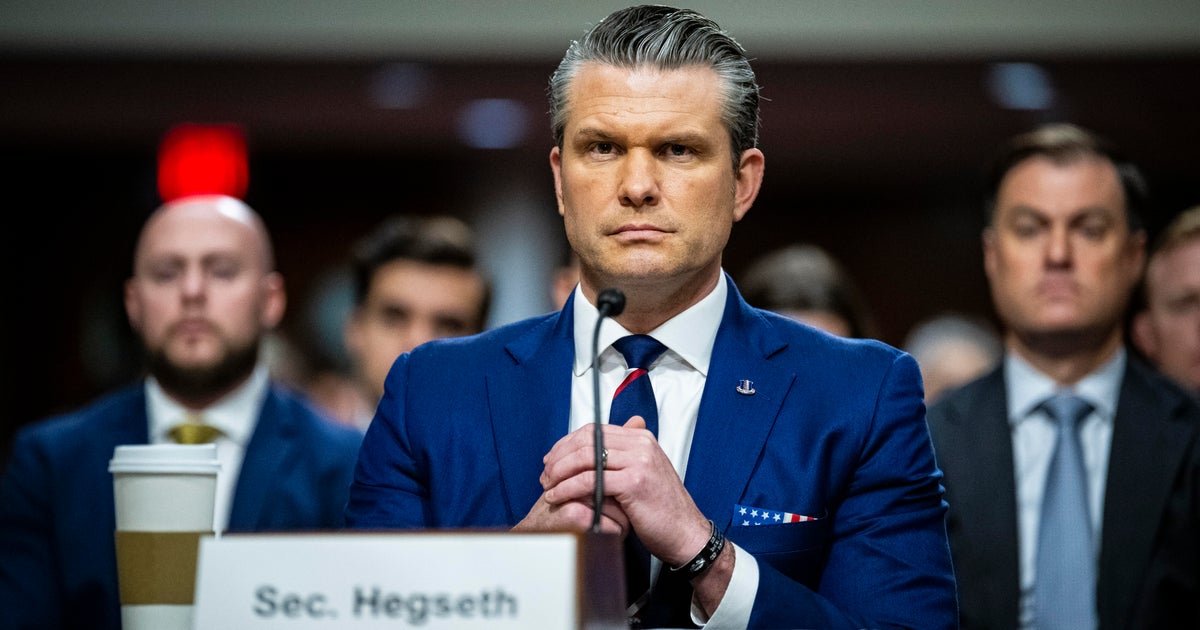
Adding to the legal drama, Secretary Hegseth shared a provocative statement on social media following the ruling, simply stating, “See you at SCOTUS,” implying a determined push to escalate the matter to the Supreme Court.
The legal director of the National Center for LGBTQ Rights, Shannon Minter, who represented the plaintiffs, labeled the decision as a pivotal shift from the previous status quo. Prior to this court decision, according to Minter, the Trump administration had actively pursued efforts to discharge these brave service members. The court’s decision thus presents a significant roadblock to the administration’s actions, emphasizing no legitimate basis for such a ban, as earlier articulated in the meticulous findings by the District Court.
In the broader context, at the onset of his second term, President Trump had signed an executive order specifically targeting individuals with gender dysphoria, arguing that the existing military standards for readiness and cohesion were incompatible with the medical and psychological profiles of individuals experiencing gender dysphoria.
Following the president’s directive, Secretary Hegseth was quick to actualize this order, directing the Pentagon to halt new enlistments from people diagnosed with gender dysphoria and suspending all medical treatments related to gender transition for serving troops. This led to a series of legal challenges lodged against the policy, both in Washington D.C. and Tacoma, Washington, asserting that it unlawfully discriminated based on sex and transgender status.
Adding another layer to this legal struggle, the Supreme Court previously permitted the Trump administration to maintain its transgender military service policy while the cases progressed through the legal system, a decision echoed later in other circuit rulings. Judge Ana Reyes, handling the initial district level proceedings, granted an injunction against the policy, which Judge Wilkins’ ruling sought to uphold, underscoring the judicial recognition of potential constitutional violations in the administration’s policy.
Further discussing the policy’s impact, Judge Wilkins pointed out the arbitrary and broad nature of the Hegseth Policy, which disqualified anyone diagnosed with gender dysphoria, regardless of the diagnosis timing or the present condition of the individual. This sweeping disqualification, according to Wilkins, failed to consider the effective and honorable service rendered by the plaintiffs, who collectively have served over 130 years in the military, earning more than 80 commendations. Wilkins criticized the government’s broad, undifferentiated classifications, invoking a poignant reflection on the evidence of bias and animus in crafting such policy measures.