Kansas Legislature Enacts Sweeping Ban on Transgender Female Athletes, Delivering a Decisive Blow to Inclusion in School Sports
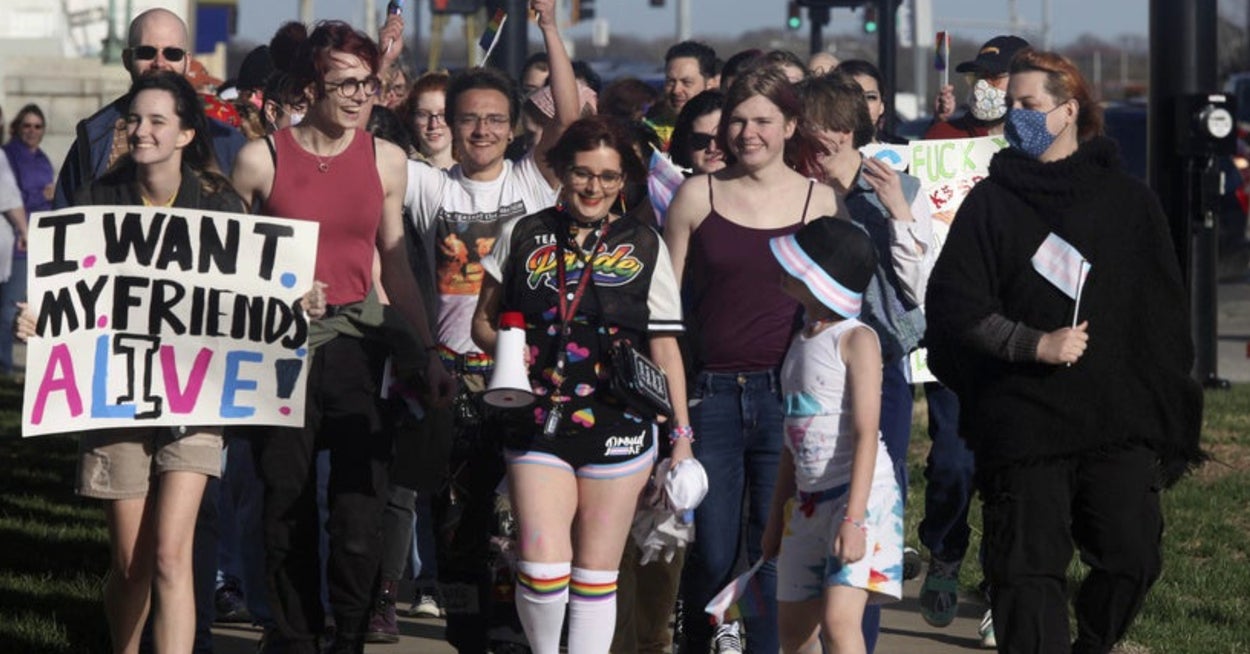
TOPEKA, KS – In a move that has sent shockwaves through the state’s educational and civil rights communities, the Kansas Legislature has successfully overridden Governor Laura Kelly’s veto of a controversial bill that effectively bans transgender girls and women from participating in female school sports. The legislative action, which took place on Tuesday, is part of a broader, highly contentious national trend targeting transgender youth, and it marks a significant escalation in the state’s culture wars.
The bill, known as the Fairness in Women’s Sports Act, was passed with a supermajority in both the Kansas House of Representatives and the Senate, rendering the governor’s executive objection moot. The override, a procedural move that requires a two-thirds majority in both chambers, demonstrates the formidable political strength of the Republican party in the state, which has made LGBTQ+ issues a central pillar of its recent legislative agenda.
The ban specifically prohibits transgender female athletes—those who were assigned male at birth but identify as female—from competing in girls’ and women’s sports at both the K-12 and collegiate levels. The legislation goes beyond mere participation, however. It contains deeply invasive provisions that have drawn fierce criticism from medical professionals, legal experts, and civil rights advocates, who argue the law is a solution in search of a problem.
Critics point to the bill’s requirement for athletes to verify their sex, which could, in theory, involve invasive genital inspections or the forced disclosure of private medical records. When pressed on these specific enforcement mechanisms, the bill’s author, Republican state Representative Barbara Wasinger, declined to answer direct questions regarding the potential for such inspections. Instead, she issued a statement defending the bill’s necessity and framing it as a matter of common bureaucratic practice.
“Sports physicals are done for every athlete participating in schools sports,” Wasinger said. “Every child in Kansas must provide a birth certificate to attend school in Kansas. Both should be enough for any student.”
This assertion, however, does little to quell the concerns of opponents who note that birth certificates can be amended, and that the bill’s language regarding verification protocols is vague and stringent. The law explicitly creates a legal definition of sex as “either male or female, at birth,” a definition that does not account for the nuanced medical realities of intersex individuals or those who have undergone gender reassignment procedures.
The practical impact of the ban, supporters argue, is to preserve the integrity and fairness of competitive athletics by ensuring that biological males do not have an unfair physical advantage over their cisgender female peers. This argument, which has been a rallying cry for conservative groups nationally, has been the primary justification for similar legislation in more than a dozen other states.
However, the actual data regarding the prevalence of transgender athletes in Kansas paints a starkly different picture from the one proponents describe. According to the Kansas State High School Activities Association (KSHSAA), the governing body for high school sports in the state, there are currently only three transgender girls competing in sports at the high school level. The law, in effect, addresses a problem that does not practically exist, a point that opponents have hammered repeatedly during debate.
“These three kids just want to go to school, play the sport they love, and be a part of a team,” said a spokesperson for the American Civil Liberties Union (ACLU) of Kansas. “Instead, the legislature has chosen to single them out, demonize them, and write discrimination into state law.”
The sports ban is not an isolated incident but rather the culmination of a coordinated legislative effort to curtail the rights of transgender individuals across the state. On that same Tuesday, Kansas lawmakers also passed a separate, even more expansive piece of legislation, Senate Bill 180, which has been dubbed the “Women’s Bill of Rights” by its Republican proponents.
SB 180 is a comprehensive omnibus bill that ties together a broad array of restrictions on how transgender people of all ages can navigate public life. Among its most consequential provisions, the bill bans transgender individuals from using public restrooms and locker rooms that align with their gender identity. This means that a transgender woman who has lived as female for years would be legally forced to use men’s facilities in public buildings, schools, and government institutions.
Furthermore, SB 180 explicitly prohibits the recognition of a person’s gender identity for the purposes of legal documentation. It mandates that a person’s sex is fixed at birth and cannot be changed, effectively blocking transgender individuals from altering their name and gender markers on their driver’s licenses and other state-issued identification. For many trans people, this creates a “documentation trap” where their ID does not match their appearance, leading to harassment, denial of services, and difficulties in employment, housing, and travel.
The bill is written to legally define sex in a rigid, binary framework—”either male or female, at birth”—a definition that advocates say will lead to what they describe as the legal erasure of transgender, gender-nonconforming, and intersex people from public recognition. By codifying this definition into state law, the legislature effectively rescinds all other state-level protections that may have recognized gender identity as a protected class.
With the Republican supermajority holding a two-thirds majority in both chambers, the veto override of the sports ban was a foregone conclusion, highlighting the ability of the GOP to push through their agenda despite the objections of the Democratic governor. Governor Kelly, a Democrat, had previously vetoed the bill, citing her opposition to government overreach into private matters and her commitment to keeping Kansas “open and welcoming.”
Her veto, however, was swiftly dismantled. The legislature’s action sends a clear message that the state’s policy priorities are aligned with the conservative movement’s focus on biological determinism, a shift that has profound implications for the more than 1,000 transgender residents who call Kansas home.
Kansas’s sweeping legislative package is the latest in a wave of anti-trans bills being considered and passed across the country. While many states have passed individual restrictions—such as banning gender-affirming care or restricting access to school sports—Kansas is increasingly part of a trend toward “omnibus” legislation that bundles multiple restrictions into a single, comprehensive bill.
“The strategy is becoming clear,” noted a political analyst specializing in state-level policy. “Instead of fighting these battles one by one, these legislatures are bundling everything into one bill to maximize impact and make it harder to overturn. It’s a full-frontal assault on the rights of a very small, marginalized community.”
Last week, Kentucky’s Republican-controlled legislature provided a stark example of this phenomenon. Lawmakers there successfully overrode the Democratic governor’s veto of an omnibus anti-trans bill that banned gender-affirming care for trans youth, barred them from using bathrooms that align with their gender identity, and gave school officials the legal right to refuse to use students’ preferred pronouns. The similarities between the Kentucky and Kansas bills underscore a coordinated, multi-state effort to establish a legal framework that does not recognize transgender identities.
The immediate future for the Kansas legislation is now in the hands of the judicial system. Unless a judge issues an injunction to block the law, the sports ban is slated to go into effect on July 1. Legal challenges are expected immediately, with civil rights organizations like the ACLU and Lambda Legal prepared to argue that the law violates the Equal Protection Clause of the U.S. Constitution and Title IX, the federal law that prohibits sex-based discrimination in education.
As the legal battles loom, the human cost of these legislative victories is being felt acutely in communities across Kansas. The three transgender girls currently playing sports in Kansas high schools are now faced with an impossible choice: stop competing, or risk being outed and harassed in a highly public and humiliating process to “prove” their gender.
Supporters of the bill argue that the law is a necessary shield for cisgender girls, protecting their scholarship opportunities and athletic achievements from what they view as an unfair biological advantage. But to the opponents, the law is not about protecting sports; it is about stripping away the humanity and civil rights of a vulnerable population. As the clock ticks down to July 1, the eyes of the nation remain fixed on the Sunflower State, watching to see how this legal and cultural battle will unfold. The decision made in Kansas courts will not only determine the fate of three athletes but will likely serve as a precedent for the dozens of other states considering similar restrictive measures, shaping the landscape of American education and civil rights for years to come.