ULA’s Decades-Long Streak Ends in Catastrophic Failure, Jeopardizing Amazon’s Satellite Internet Ambitions
In a stunning turn of events that has sent shockwaves through the aerospace industry, United Launch Alliance (ULA) suffered what is being reported as the first total mission failure in its two-decade history. The incident occurred late Sunday evening when a Vulcan Centaur rocket, embarking on its highly anticipated inaugural commercial mission, lost control and was destroyed approximately ten minutes into its flight, taking with it 40 state-of-the-art internet satellites intended for Amazon’s ambitious Project Kuiper constellation.
The loss represents not only a major technological setback for ULA but a potentially seismic disruption to Amazon’s multi-billion-dollar plan to challenge SpaceX’s Starlink dominance in the low-Earth orbit (LEO) broadband market. The launch, designated LV-01, was supposed to mark the beginning of a massive, blockbuster partnership between the two American giants—a partnership that Amazon hopes will eventually see more than 3,200 satellites deployed to bring high-speed internet to underserved communities across the globe.
This latest failure underscores the brutal reality of space travel, where even the most meticulous engineering can succumb to the unforgiving laws of physics. For ULA, a joint venture between Boeing and Lockheed Martin, the setback tarnishes a pristine safety record that was the company’s primary selling point in a market increasingly dominated by the rock-bottom pricing of its chief rival, SpaceX.
A Launch That Was Supposed to Mark a New Era
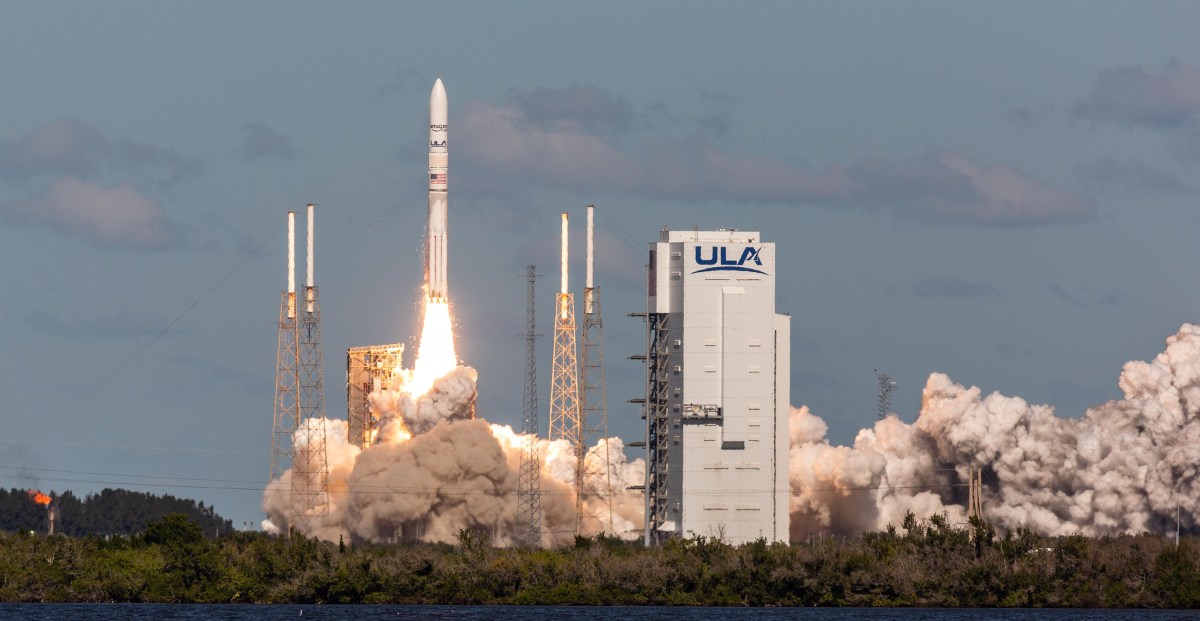
The mission got off to a flawless start against a backdrop of anticipation from Space Launch Complex 41 (SLC-41) at Cape Canaveral Space Force Station in Florida. The Vulcan Centaur, a next-generation heavy-lift vehicle designed to replace the workhorse Atlas V and Delta IV rockets, thundered into the darkening Florida sky, its twin Blue Origin BE-4 engines burning methane and liquid oxygen with a brilliant blue flame that pierced the dusk.
For the first ten minutes, telemetry indicated a nominal ascent. The vehicle successfully executed its core stage separation and ignited the Centaur upper stage as planned, a sequence that had been refined over the course of two successful test flights earlier this year. Spectators and mission managers within the Integrated Operations Center at Cape Canaveral were initially optimistic, with early trajectory data suggesting the spacecraft was precisely on course to deploy the 40 Kuiper satellites into their designated orbit at roughly 590 kilometers above Earth.
However, jubilation quickly turned to alarm when the live video feed suddenly cut to a static screen, and the mission clock froze. The optimistic chatter over the intercom was replaced by a tense, heavy silence. Moments later, the official confirmation arrived via a subdued, solemn announcement from the launch director, followed by a brief public statement posted to social media platform X.
“Based on data received by our Launch Director, we confirm that the Vulcan vehicle launched from Space Launch Complex 41 suffered an anomaly 10 minutes into the flight and failed to deliver the Amazon mission to orbit,” the statement read. The company, which had previously boasted of an unbroken streak of over 100 successful missions since its formation in 2006, acknowledged that the situation is currently unclear but promised a data-driven, transparent investigation moving forward.
Investigative Silence and the Search for Answers
The immediate reaction from ULA leadership was one of profound disappointment but also resolve. The company indicated that it would immediately activate its Failure Review Board, a standard procedure in the aftermath of any catastrophic space mishap. This board, comprising top engineers from ULA, Boeing, Lockheed, and external independent experts, will spend the coming weeks and months combing through millions of data points, analyzing telemetry, and consulting with hardware suppliers to isolate the root cause.
According to eyewitness reports from maritime vessels near the downrange landing zone, the Centaur upper stage appeared to detonate in a massive fireball just before the satellite deployment sequence was scheduled to begin. Videos circulating online, later verified by analysts, appear to show a sudden catastrophic release of propellant, suggesting a possible unprecedented structural failure of the Centaur stage or a violent malfunction of its RL10 engine. The RL10, manufactured by Aerojet Rocketdyne, is one of the most reliable engines in aerospace history, having been in service for over 60 years.
If the failure is traced to the Centaur stage, it would be a devastating blow for ULA, as the cryogenic upper stage is the critical component responsible for inserting payloads into their precise orbital slot. Unlike the Atlas V, which used a similar but distinct hydrolox stage, the newly designed Vulcan Centaur utilizes a wide-body variant of the Centaur outfitted with a new insulation system and flight software. ULA had previously touted this new “CIS” (Centaur Intermediate eXploration) stage as 30% more efficient than its predecessor, but the complexities of handling super-cold liquid hydrogen have historically been a point of vulnerability in launch vehicles.
Amazon’s Project Kuiper: A Critical Challenge
While ULA scrambles to understand the anomaly, the immediate fallout is felt acutely by Amazon. Project Kuiper, Amazon’s massive LEO satellite network, has faced a series of hurdles ever since it was first announced in 2019. The project has been criticized internally and externally for being years behind SpaceX, which has already placed over 5,000 Starlink satellites into orbit and has a vast constellation operating commercially across the globe.
Project Kuiper has struggled to “get off the ground” effectively, as the source material notes. Prior to this launch, Amazon had only managed to deploy a handful of test satellites, far short of the hundreds needed to begin providing even preliminary internet services. The company is operating under strict regulatory deadlines issued by the Federal Communications Commission (FCC), which requires Amazon to deploy 50% of its constellation by 2026 and 100% by 2029 to retain its spectrum license.
Today’s launch was supposed to be the lightning rod that finally kickstarted the Kuiper network’s rapid expansion. The flight was the first of 38 missions Amazon had purchased from ULA—a massive contract worth several billion dollars—in a bid to accelerate deployment. With an envisioned fleet of more than 3,200 satellites, Project Kuiper intended to offer service that is fast, affordable, and accessible to schools, hospitals, and businesses operating in areas without reliable connectivity.
The loss of 40 satellites in a single evening represents a substantial financial hit—an estimated loss of tens of millions of dollars—and directly consumes a significant chunk of Amazon’s launch manifest without any net gain in orbital capacity. While Amazon could have anticipated a failure rate due to the inherent risks of space, losing an entire manifest payload on the first operational flight is a nightmare scenario for their corporate supply chain.
Amazon’s Public Resilience and the Path Forward
Despite the catastrophic loss, Amazon has publicly moved to shore up confidence in its launch partner. In an immediate reaction posted on X (formerly Twitter), Amazon’s Kuiper team exhibited a calm, calculated posture, stating decisively: “There is risk with any launch, and that’s especially true for inaugural missions like LV-01. ULA has been a trusted partner for Amazon, and we believe they’ll learn from this mission and deliver on their long-term plans for Vulcan.”
This statement from Amazon is strategic on multiple levels. The tech giant has essentially tied its satellite execution goals to the success of multiple launch providers, including ULA, Blue Origin, and Arianespace. Amazon cannot afford for its launch partners to perceive a lack of trust, nor can it appear financially or operationally unstable while it seeks to integrate such massive amounts of infrastructure. By voicing support for ULA, Amazon is effectively betting on the resilience of the American aerospace industrial base and signaling to investors that this event, while significant, is not an existential crisis for Project Kuiper, provided the launch manifest can be adjusted.
The Broader Industry Impact
However, this anomaly carries implications far beyond the corporate balance sheets of Amazon and ULA. ULA has been a vital partner for the U.S. Space Force and the National Reconnaissance Office, handling the most sensitive national security payloads in the country’s arsenal. The Vulcan rocket was recently certified for the second phase of military launches, a process that took years and required rigorous testing.
The government will now scrutinize the upcoming investigation intensely. Anxiously, they will ask: Is the failure isolated to this specific payload adapter or stage configuration, or is there a systemic defect in the Vulcan rocket’s design? The Pentagon typically requires multiple successful launches of a new vehicle before certifying it for use on national-security launches. If the root cause of this failure is fundamental, it could delay the launch of higher-priority military spy satellites, which are critical to the US defense posture in a highly contested space environment.
Furthermore, the failure throws the entire projected timeline of the space launch market into chaos. ULA’s business strategy rested on phasing out the Atlas V (which uses the Russian-supplied RD-180 engines) as soon as possible, replacing it with the Vulcan. With the Vulcan now grounded pending an investigation—which could last months—ULA’s launch capacity is effectively crippled. This leaves a secondary but crucial concern: if ULA is unable to fulfill its commercial launch obligations, the bottleneck creates further pressure on the already congested global launch manifest, potentially driving launch prices up in the short term.
For SpaceX, competition remains fierce, but the news is a boon. The company has long been the workhorse of US space delivery, and with its Falcon 9 rocket launching almost weekly, it is uniquely positioned to absorb or offer reliability checks to customers looking for launch assurances. SpaceX founder Elon Musk hasn’t publicly commented on the failure yet, but given the trajectory of the space economy, the failure is likely to only consolidate his company’s market share.
Investigating the “Anomaly”
As the sun rises over Cape Canaveral today, the mood at SLC-41 will be somber. The scorched pad and the remnants of a rocket and payloads that are likely scattered in the Atlantic Ocean serve as a stark reminder of the risks involved. ULA Chief Executive Officer, Tory Bruno, who has championed Vulcan as the “most complex and powerful” rocket ever built by the company, is expected to address the public later this week.
Ultimately, this mission failure on such a critical debut flight creates an existential paradox. If ULA cannot confidently recover from this failure quickly, Amazon’s entire Kuiper timeline will slip, potentially triggering FCC license penalties. However, if the industry pressures them into a premature return-to-flight without solid answers, the result could be even more catastrophic for a company whose credibility hinges on its safety record.
As the investigation begins, the aerospace world waits with bated breath, trapped between hope and despair. While ULA has the financial backing and technological might to survive this crisis, the hard truth remains: space does not care about legacy or promises. It only demands perfection. And in a single, fiery ten-minute burst on Sunday evening, the untouched perfection of ULA’s storied history was erased, forever altering the trajectory of America’s 21st-century space race.