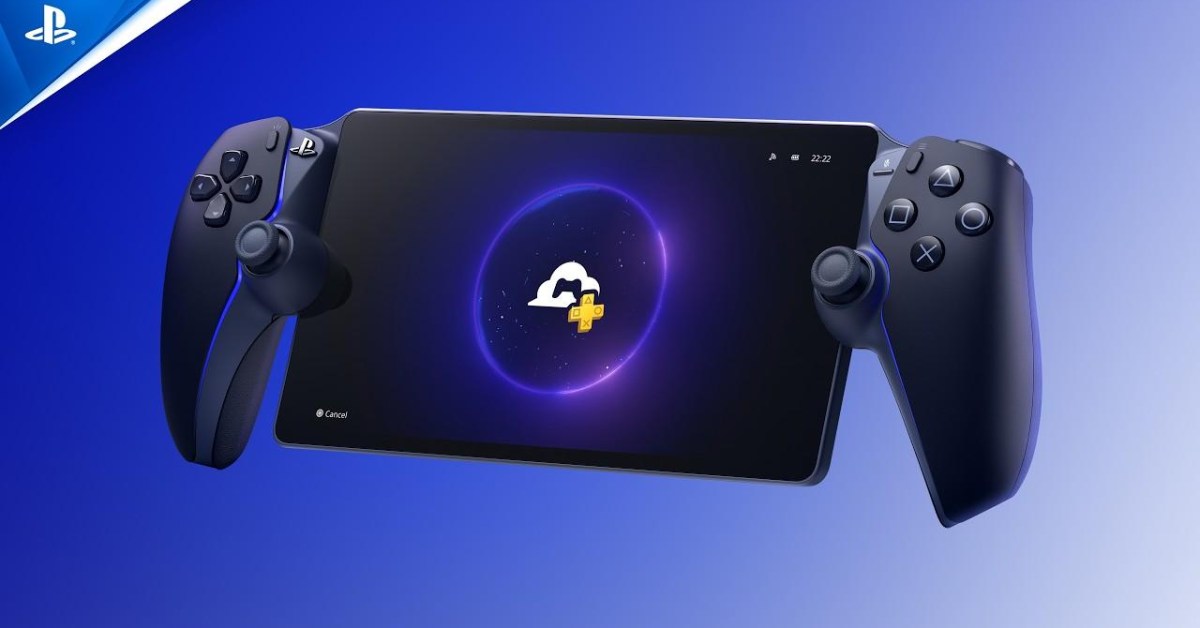
Sony Announces Japan-Only Midnight Black PlayStation Portal With Extra Storage and a Surprising Name Change
Sony is making a quiet but intriguing addition to its PlayStation Portal lineup. The company has announced a new version of the handheld device that will launch exclusively in Japan next month, and while the new Midnight Black colorway was already expected by those who had been following Sony’s recent accessory waves, the rest of the announcement is a genuine surprise. The updated Portal will come with additional internal storage, a region lock that ties it to Japanese PlayStation accounts, and a new name that could hint at a broader role for the device beyond its traditional remote-play focus.
The new model, now called the PlayStation Portal Player rather than the PlayStation Portal Remote Player, is scheduled to arrive in Japan on December 10th. It will be priced at 39,980 yen, which works out to roughly $253 at current exchange rates. That is a noticeable premium over the original PlayStation Portal’s launch price, and it suggests that the added storage and future-facing capabilities are a major part of what buyers are paying for. Sony has not yet specified exactly how much additional storage is included, nor has the company explained precisely what that storage will be used for. In the official Japanese announcement, Sony simply says the extra space is being added for “future functionality” that will be revealed once the relevant features are finalized. That vagueness has naturally led to a wave of speculation about what Sony has planned for the Portal platform.
The original PlayStation Portal, which launched in late 2023, was always a peculiar product. It is essentially a DualSense controller split in half, with an eight-inch LCD display mounted between the two grips. It is designed to stream games from a PlayStation 5 console over Wi-Fi, allowing players to continue their sessions in another room or on the go. Later, Sony added cloud streaming support for PlayStation Plus Premium members, meaning the device could stream select PS5 games directly from Sony’s servers without requiring a nearby console. But for all of its strengths, the Portal was never a standalone portable gaming machine like the Steam Deck or Nintendo Switch. It could not run games locally, and it lacked support for popular entertainment apps. There was no Netflix, no YouTube, no Disney Plus, and no web browser. For many users, the Portal was a very focused remote-play peripheral rather than a general-purpose handheld.
That may be about to change. The decision to drop the word “Remote” from the device’s name is significant. It signals that Sony wants to position the Portal less as a companion accessory and more as an independent player in the PlayStation ecosystem. The addition of extra internal storage strengthens that interpretation. After all, if the Portal were only ever going to stream games from a console or the cloud, there would be little reason to load it with more storage. Streaming video and game content generally relies on a live connection rather than on-device storage. Extra storage only becomes useful if the device is expected to hold apps, downloaded media, cached content, or other locally stored data.
The most obvious possibility is that Sony is preparing to bring popular streaming apps to the Portal. The original Portal’s lack of support for services like YouTube, Netflix, and Disney Plus was one of the most common criticisms from reviewers and early adopters. A device with a beautiful LCD screen, comfortable controls, and the ability to stream games seems like a natural candidate for video streaming as well. The addition of internal storage could allow those apps to cache video data, store user preferences, or even download entire movies and TV episodes for offline playback. If Sony is serious about turning the Portal into a more complete entertainment device, adding a few streaming apps would be the quickest way to make that pitch to consumers.
Offline media is another tantalizing possibility. The Portal is already a strong choice for travelers who want to keep playing PlayStation games while away from home, but it has always required a stable internet connection. Extra storage could solve that problem by allowing users to sync media files to the device ahead of time. Imagine downloading a few hours of video content from a companion app on the PlayStation 5, then taking the Portal on an airplane and watching those videos without any connection. That kind of feature would make the Portal much more useful as a travel companion and would justify the new “Player” branding. It would also explain why Sony is being so vague about the future functionality: the company may not want to promise a major new feature until the legal and technical groundwork is complete.
Of course, the extra storage could also be intended for more ambitious gaming features. The Portal’s hardware is not powerful enough to run PlayStation 5 games natively, so there is little chance of the device becoming a true standalone console. But additional storage could be used to improve the cloud gaming experience by caching game assets, saving progress data, or enabling faster resume from suspended sessions. It could also support downloadable content that does not require a constant connection, such as curated game clips, trailers, or companion material. The phrase “future functionality” is deliberately open-ended, and Sony is unlikely to offer more details until it is ready to roll out whatever new system or service it has been building.
The Japan-only nature of this new Portal is another fascinating detail. The device will be locked to Japanese language options and will only work with a PlayStation Network account registered in Japan. That means international players who are tempted to import the Midnight Black Portal will not be able to use it normally with their existing accounts. Sony does not usually region-lock its accessories so aggressively, so this restriction suggests that the new features were designed with the Japanese market in mind, at least at first. It is possible that Sony is planning a phased rollout: test the new functionality in Japan, prove that it works, and then expand to other regions with a global version. It is also possible that the new streaming services or media features are tied to agreements with Japanese companies, and Sony cannot offer them elsewhere yet. Either way, the region lock is a strong hint that this hardware is more than just a cosmetic variant.
The Japanese market has a long history of embracing portable gaming devices, and the Portal could find a particularly eager audience there. Handheld consoles have remained popular in Japan even as mobile gaming has grown, and there is a strong culture of gaming on the train, in cafés, and in small apartments where the main television is often occupied. A Portal that can do more than remote-play games could be a much easier sell in that environment. Sony may also be responding to feedback from Japanese players who bought the original Portal and were disappointed that it could not access local streaming services or media apps. The Midnight Black color, meanwhile, fits with the premium aesthetic of the PS5 accessory lineup. Sony had previously shown off a Midnight Black version of the Portal as part of a broader collection of black accessories, so the color itself is not new to anyone who has been following official PlayStation social channels. But pairing that color with extra storage and a new name makes this Japan-only model a more meaningful release than a simple special edition.
There are also potential downsides to this announcement. The higher price may make the new Portal a tough sell in a market where the standard model is already relatively expensive. The extra storage must be paid for, and the mysterious “future functionality” has no confirmed launch date. Buying a more expensive Portal based on the promise of features that Sony has not yet shown is a leap of faith. It is also possible that the new functionality will remain exclusive to Japan for a long time, which means players in North America, Europe, and other regions will be left waiting. Existing Portal owners may feel particularly frustrated if the new features cannot be delivered to their current hardware due to insufficient storage. Sony has not said whether the future functionality will ever come to the original Portal, but the fact that the new model includes additional storage suggests otherwise. That would be a disappointing outcome for the millions of players who have already bought into the Portal ecosystem.
Despite those concerns, the announcement is genuinely exciting because it represents a rare acknowledgment that the Portal needs to evolve. The original device was praised for its comfort, its high-quality display, and its excellent implementation of DualSense features, but it was often dismissed as a niche accessory with a narrow purpose. Sony’s decision to add storage, change the name, and promise future functionality is a clear sign that the Portal is not being abandoned. The company sees a longer and broader life for the device, and it is willing to release new hardware to make that vision happen. Whether that vision is about streaming apps, offline media, or something else entirely remains to be seen. But for now, the Midnight Black PlayStation Portal Player is one of the most intriguing pieces of PlayStation hardware news in months.
The new Portal launches in Japan on December 10th. For those who live in Japan and are willing to trust Sony’s promise of future features, the 39,980 yen price tag may be a reasonable investment in the device’s potential. For everyone else, the announcement is less of a purchase recommendation and more of a signal that Sony is thinking carefully about what the Portal could become. The success of this Japan-only experiment could determine whether a more capable, more open, and more useful PlayStation Portal eventually reaches the rest of the world. It may not be a full-blown next-generation handheld, but it could be the next step in turning a niche remote-play gadget into a true portable player.