The LeapPad was America’s hottest toy. It was also a strange prophecy about the future of learning.
For multiple years, the hottest toy in the United States was a book. But not just any book: a smart book that could play sounds and respond to taps and help kids learn to read. It was the kind of gadget seemingly any parent could get behind, but it came with a high price — and some unexpected parenting questions.
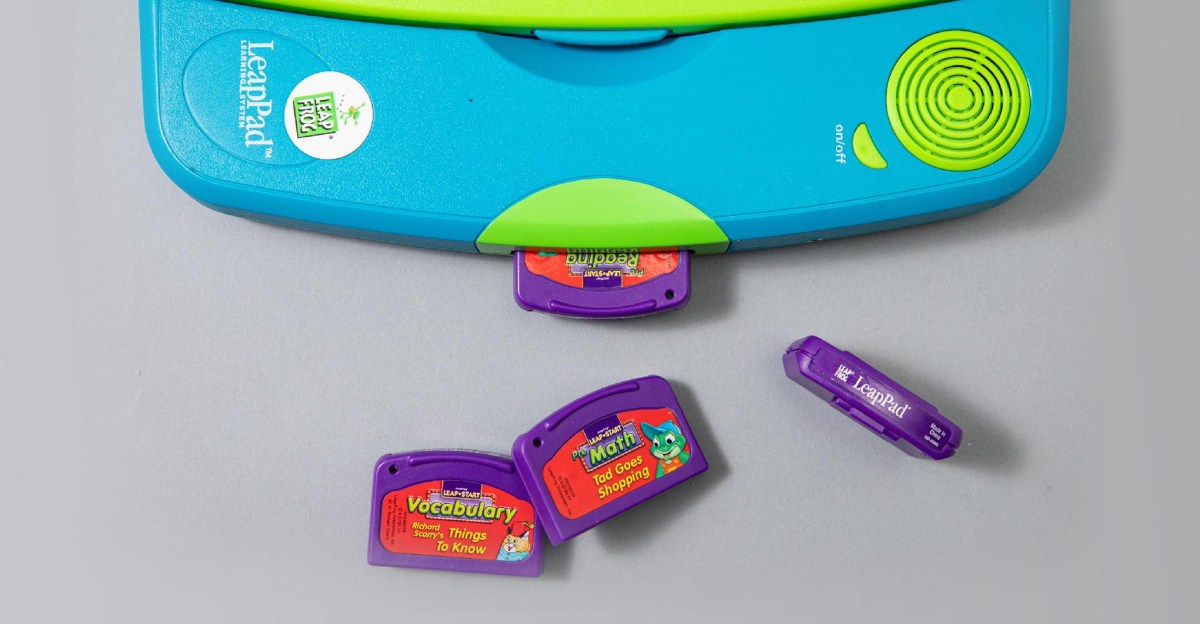
That book was the LeapPad. It was a hunk of plastic, a stylus, and a set of illustrated storybooks with cartridges hidden in their spines. It was not the first educational toy to make noise, nor the first to talk, but it was the first to make a generation of parents believe that a child could learn to read by touching a page. And for a few years, it worked — commercially, if not always pedagogically.
On this episode of Version History, David Pierce is joined by The Verge’s Andru Marino and Jennifer Pattison Tuohy to explain how the LeapPad worked, why it was so enticing to both kids and adults, and why the company that made it could never quite follow it up. The conversation arrives near the end of Version History’s fifth season, which has been devoted to the most iconic school technology. Earlier episodes have already dug into the generational phenomenon of Oregon Trail, the forgotten Chromebook that started it all, the idealistic One Laptop Per Child program, and the hidden monopoly behind Texas Instruments calculators. The LeapPad belongs in that group not because it was a classroom computer, but because it was the first educational machine many children ever touched.
What made the LeapPad special wasn’t the hardware. The hardware was simple: a thick, book-shaped plastic board with a speaker and a magnetic slot for cartridges. The software was a series of colorful books, each with a cartridge that contained audio data. When a child placed a book on the LeapPad and pressed the stylus to a page, the device would read the page in a way that felt almost impossible. Press a word, and it said the word. Press a letter, and it made the letter’s sound. Press a picture, and a character would speak or sing. The pages were not buttons in the traditional sense, but the device was clever enough to know where the stylus was touching and respond instantly with sound, music, and encouragement.
It was a book, but it was also a toy, and it was also a computer. For children in the early 2000s, the LeapPad felt like a magical object: a storybook that could read itself. For parents, it felt like an answer to a question that was just beginning to form: How do we raise children who love reading in a world full of screens? The LeapPad seemed to split the difference. It offered the tactile, durable comfort of a printed book while adding the audio feedback and interactivity of a video game. It didn’t require a television, a computer, or an internet connection. It ran on batteries. It could be used in the back seat of a minivan, in a waiting room, or on the living room floor. It was a screen-free “screen” at a time when parents were starting to worry about screens.
The parental appeal was easy to understand. LeapFrog marketed the LeapPad as a tool that would teach phonics, vocabulary, reading comprehension, and even basic math. It was a toy that parents could feel good about buying, because it promised measurable educational outcomes. The high price tag was a feature, not a bug. It made the LeapPad feel like an investment, not an indulgence. Grandparents bought it for birthdays. Teachers put it in classroom reading corners. Parents bought extra books, extra cartridges, and extra accessories, turning the LeapPad into an ecosystem long before the word “ecosystem” was part of the technology lexicon.
But the LeapPad also raised unexpected parenting questions. If a child was learning to read by tapping a word and hearing it pronounced, was that really reading? Or was the child simply learning to recognize patterns and wait for the machine to supply the answer? Parents began to worry that the LeapPad was teaching children to be passive consumers of audio, not active readers of text. The sound effects and songs were delightful, but they were also a form of reward. A child who tapped a word and heard a cheerful voice might be more interested in the game than in the actual meaning of the word. Was the LeapPad teaching literacy, or was it teaching engagement? Was it helping children learn to read, or was it training them to expect every book to talk back?
There was another, quieter concern: The LeapPad was a solitary activity. Reading, for most young children, is a social experience. It involves sitting in a grownup’s lap, asking questions, pointing at pictures, and hearing the same story a hundred times until it can be recited from memory. The LeapPad replaced that shared experience with a private interaction between a child and a machine. It never got tired, never asked a child to slow down, and never said, “Let’s turn the page together.” It was a patient teacher, but it was also a substitute. For some parents, that was exactly the point. For others, it was the beginning of an uncomfortable realization: In trying to make learning more efficient, the LeapPad was also making it more isolated.
LeapFrog, meanwhile, found itself trapped by its own success. The LeapPad was so good at what it did that every subsequent product had to measure up to it. The company released new versions of the LeapPad, added more books, and expanded into other subject areas. It even attempted to move onto touchscreens with kid-friendly tablets and reading pens. But the world changed faster than LeapFrog could. The iPad arrived in 2010, and with it came an app store full of educational apps that did many of the same things the LeapPad did — without any special hardware. A generic tablet could read a book aloud, pronounce a word on request, play phonics games, and hold a child’s attention with animations and video. It was more powerful, more flexible, and often cheaper than a LeapPad plus a stack of cartridges.
LeapFrog’s proprietary hardware became a liability. The company had built a closed system of specialized books and cartridges, but the rest of the technology industry was moving toward open platforms and software downloads. Parents no longer needed to buy a dedicated device to get an educational experience. They could hand a child a tablet, open an app, and get something just as compelling. The LeapPad’s magic was no longer magical. In 2016, LeapFrog was acquired by VTech, another company in the kids’ electronics space. The brand survived, but the era of the LeapPad as a cultural phenomenon was over.
Looking back, the LeapPad was both a triumph and a warning. It anticipated the tablet by almost a decade. The idea of touching a word and hearing it spoken would become a core feature of every e-reader and educational app. But the LeapPad also foreshadowed the complicated relationship children would have with digital devices. It trained a generation to expect interactivity from every object in their environment. It blurred the line between a toy and a teacher. And it proved that a smart device could be both an incredible learning tool and a source of genuine worry for parents.
That is why the LeapPad still matters, and why Version History decided to spend an episode on it. The podcast has spent its fifth season exploring the technology that shaped how we learn, from the terrifying diseases of Oregon Trail to the calculator that became an unlikely classroom monopoly. The LeapPad fits into that story as a reminder that educational technology is never just about education. It is about trust, marketing, parenting, and the strange way children fall in love with machines.
We’re almost finished with the fifth season of Version History. If you missed any part of it, you can find the full collection of episodes above, including the deep dive into Oregon Trail, the original Chromebook, One Laptop Per Child, and the Texas Instruments graphing calculator. And if you want to learn more about the LeapPad, the episode’s show notes include links to some of the best writing and interviews about LeapFrog’s history. The LeapPad may no longer be the hottest toy in America, but its influence is still visible whenever a child taps a screen to hear a story.