Vurt Wants to Bring Vertical Microdramas From Your Phone to Your Big-Screen TV
The streaming industry’s obsession with vertical video is no longer a niche curiosity. From Disney Plus to HBO Max, nearly every major entertainment service has spent the last couple of years experimenting with ways to integrate vertical content into its platform. These companies clearly view video-focused social media networks like TikTok and Instagram as existential threats, and in the arms race for viewer attention, it has often felt as though everyone is scrambling to find new ways to live inside our phones. But one startup believes that the next big step in the evolution of vertical series is not going to happen on a phone at all. Vurt, a new streaming platform, is betting that the future of vertical microdramas belongs on the wide-screen television.
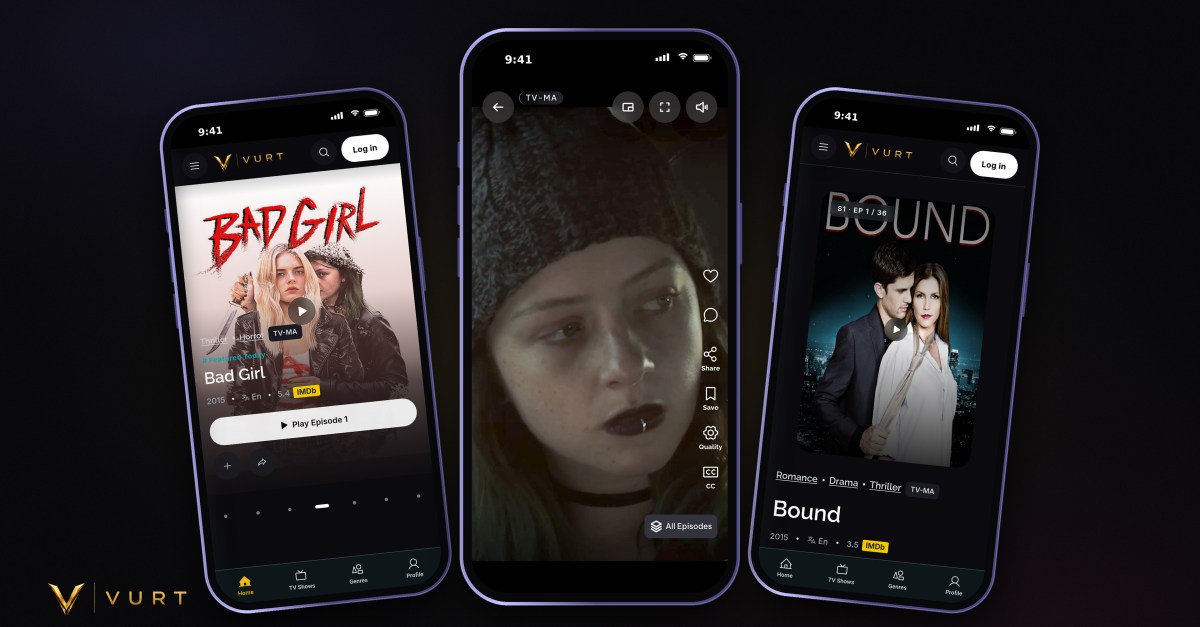
Unlike most vertical microdrama platforms on the market, which have built their entire user experience around mobile viewing, Vurt has made a decisive pivot into smart TVs. The company recently launched dedicated apps for Apple TV and Android TV, giving users access to a library of more than 3,500 episodes across over 100 different shows. The move appears to be paying off. Since launching in March, Vurt’s user base has exploded from 10,000 to 675,000 users, a growth trajectory that suggests there may be real demand for vertical storytelling beyond the small screen.
Vurt’s content is largely made up of the kind of soapy, melodramatic microdramas that have made rival platforms like DramaBox and ReelShort popular. These are short, punchy episodes filled with heightened emotions, sudden plot twists, and cliffhangers designed to keep viewers hitting “next.” However, unlike those competitors, which have become increasingly cluttered with AI-generated content, the vast majority of Vurt’s series are produced with human casts and crews. That distinction matters to a growing number of viewers who are tired of the uncanny, low-effort visuals that have come to define so much of the microdrama boom. Vurt also monetizes its content through advertising partnerships, which means viewers can watch the entire catalog for free rather than wrestling with confusing microtransaction systems. In a streaming landscape where everything seems to require a subscription or a pay-per-episode fee, that free-to-watch model is a significant selling point.
Vurt cofounder and angel investor Hilmon Sorey recently explained that the company’s push into dedicated TV apps was driven by direct feedback from users. People wanted to be able to cast the vertical shows they were already watching on their phones to bigger screens. But Vurt’s development team quickly realized that a simple casting feature was not going to be enough. They wanted to offer something more polished, something that took full advantage of the hardware already sitting in people’s living rooms. “At first, we developed the ability for folks to cast to smart TVs,” Sorey said. “But we decided that wasn’t the best experience because we could leverage all of the technology in those large-screen devices to bring features like HD / 4K video, and the ability to do really high-quality audio.”
Building out a library of that size is no small feat. Vurt signs licensing agreements with production studios and creators, splitting revenue down the middle with a 50/50 model. Independent creators can submit their projects directly for distribution on the platform, and once approved, their shows can be available to stream in just a few days. Sorey emphasized that being fair to creators and taking creative cues from them are core tenets of Vurt’s corporate philosophy. He also pointed to Vurt’s “free-to-finish” model as the primary way the company works to be fair to its users. In an era when many streaming services have turned to virtual currencies and in-app purchases, Vurt wants to stand apart by eliminating those barriers entirely. “If you are a platform that’s doing your own original content and you don’t have creators to pay, then ‘give us $20 and we’ll give you 500 coffee beans’ kind of gamification is intentional,” Sorey insisted. “It’s a ruse that they can use to boggle your mind because they control that entire content ecosystem.”
Vurt’s move into television comes at a time when more established vertical-focused platforms are also starting to look beyond phones. This past June, Instagram beefed up its TV app to include Reels, disappearing Stories, and horizontally oriented videos — all of which felt like attempts to keep pace with YouTube and the changing habits of viewers. Vurt, meanwhile, says it is staying focused on vertical content, but the company is also developing new kinds of programming, including original series and livestreamed sporting events. That ambition suggests Vurt sees itself as more than just a microdrama hub. It wants to become a destination for a new kind of entertainment that doesn’t fit neatly into the traditional categories of television or social media.
Before launching its TV apps, Vurt consulted content creators about how they like to watch films and television shows. Many of them said they preferred watching things in movie theaters or on large screens because of how immersive those experiences felt. But according to Sorey, the creators also insisted that vertical microdramas can feel just as engaging whether they’re watched on a phone with earbuds in or on a television screen. “You can have a different kind of immersive experience — even on a wide screen in vertical format — because verticals tell their stories in a very different way,” Sorey said. “You’ve got to have your hook to begin and at the tail end of that, you’ve got to thrust them into the next episode by virtue of a cliffhanger.”
It’s an interesting argument. Vertical microdramas have developed a very specific set of stylistic conventions: formulaic plots, sometimes questionable acting, and exceedingly short episodes that are built around quick emotional hits rather than slow-burn character development. Those qualities are part of what makes some people dismiss vertical content as unwatchable. But they are also part of what keeps viewers coming back. The format is designed to hook you immediately and then push you into the next episode before you have time to question what you just watched. On a phone, that can feel like an addictive scrolling experience. On a television, it becomes something closer to a binge-watching session, with all the visual and audio upgrades that come with a bigger screen.
That difference may help explain why Vurt has seen overall engagement time increase among viewers using the company’s TV apps. The experience is more comfortable for long viewing sessions, and it eliminates the temptation to switch to another app every few minutes. Instead of holding a phone in your hand, you can sit back on a couch, pick up a remote, and let the episodes play one after another. The vertical format still leaves large blank spaces on either side of the screen, but Vurt seems to believe that those visual quirks are acceptable trade-offs for the convenience and comfort of watching on a television. For many viewers, the familiar black bars or empty margins are a small price to pay for the chance to enjoy microdramas in a more relaxed setting.
Of course, there is still a big question hanging over Vurt’s strategy: is there really a broad appetite for vertical videos on television? The format is so closely tied to phones and social media that it can feel strange to see it on a living room screen. Yet the wider industry is already moving in a similar direction. From Instagram’s expanded TV app to YouTube’s push toward short-form content, the boundaries between social video and traditional television are becoming increasingly blurry. If Vurt can position itself at the intersection of those two worlds, it may be onto something. The company is not trying to replace the cinematic experience of a prestige drama or the communal excitement of a live sporting event. It is trying to carve out a space for a new kind of storytelling that is fast, addictive, and designed for the way people actually consume entertainment today. Whether that means vertical microdramas will become a permanent fixture on our televisions remains to be seen, but Vurt is clearly willing to find out.
With its growing catalog, creator-friendly revenue splits, and free, ad-supported model, Vurt has managed to stand out in a crowded and often confusing market. The platform’s rapid growth suggests that there is real demand for the kind of content it offers, and its willingness to listen to both creators and viewers has helped it build a loyal audience. The next test will be whether that audience is ready to trade their phones for their televisions. If Vurt’s numbers are any indication, the answer may already be yes. The vertical video format may have started as a mobile-first phenomenon, but it is quickly becoming something more. And if Vurt has its way, the future of microdramas will be written in tall, narrow frames on the biggest screen in the house.