Vertical Microdramas Are Coming to Your TV, and Vurt Is Betting Big
For years, the battle for viewers’ attention has been fought primarily on the small screens we carry in our pockets. Streaming services, social media platforms, and traditional media companies have all watched the rise of TikTok and Instagram with a mixture of awe and anxiety. These platforms did not just change how people consume video; they changed what kind of video people want to watch. Short, punchy, vertically oriented clips became the default language of a generation, and the entertainment industry has been scrambling to adapt ever since.
From Disney Plus to HBO Max, nearly every major streaming service has experimented with vertical content in some form. The message from these companies is clear: they see video-first social media platforms as existential threats. In an arms race for finite viewer attention, the industry has often felt like it is trying to find new ways to live inside our phones. But one startup believes the next major step in the evolution of vertical series is not going to happen on a phone at all. It is going to happen on the biggest screen in the living room.
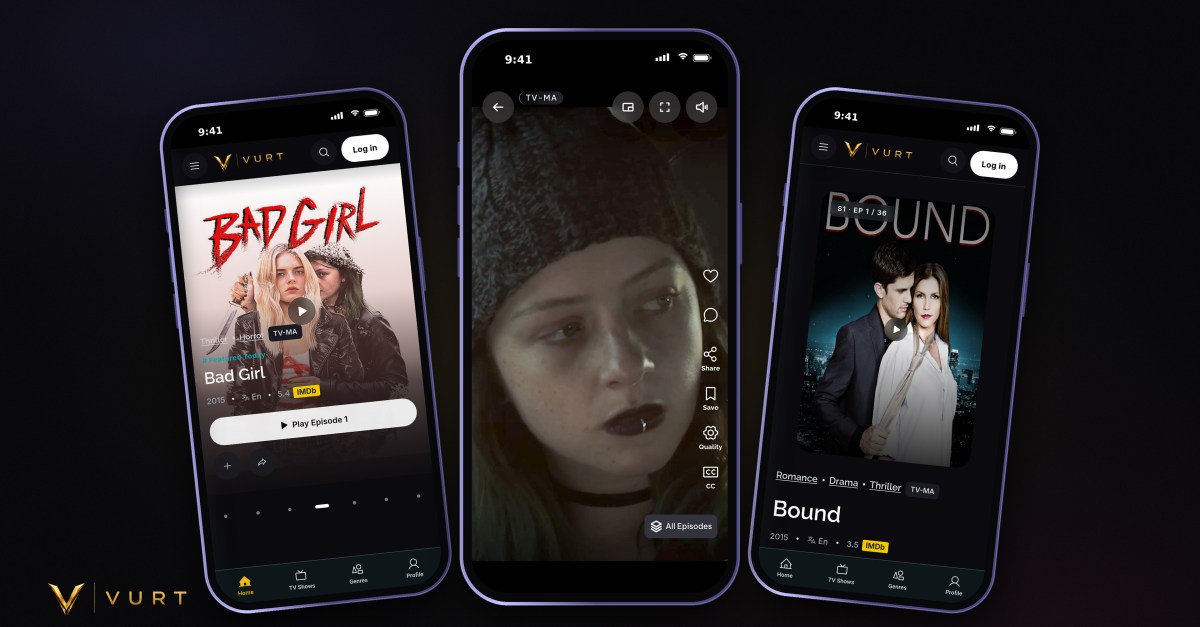
That startup is Vurt, a platform that is making a bold pivot into smart televisions. Unlike most vertical microdrama and series streaming platforms that have focused almost exclusively on mobile viewing experiences, Vurt has launched dedicated apps for Apple TV and Android TV. These apps give users access to a library of 3,500 episodes spread across more than 100 different shows. The company’s growth since launching in March has been notable, with its userbase expanding from 10,000 to 675,000 users in a relatively short period.
Vurt’s content library is built around the kind of soapy, melodramatic microdramas that have made rival services like DramaBox and ReelShort popular. These are bite-sized stories filled with heightened emotions, sudden betrayals, secret identities, and rapid-fire plot twists. They are designed to be consumed in short bursts, often in just a few minutes per episode. But while other platforms have become flooded with AI-generated content, Vurt has taken a different approach. The vast majority of its series are produced with human casts and crews, giving the content a more grounded and authentic feel. Additionally, Vurt monetizes its content through ad partnerships, which means viewers can watch everything for free. There are no convoluted microtransactions, no confusing virtual currency systems, and no paywalls blocking the next episode. It is a model that stands in stark contrast to some of the industry’s more aggressive monetization strategies.
I recently spoke with Vurt cofounder and angel investor Hilmon Sorey, who explained that the company’s push into dedicated TV apps was driven by direct feedback from users. People wanted a way to beam the vertical content they were already watching on their phones onto bigger screens. At first, Vurt’s development team considered simply enabling casting functionality. But they quickly realized they could do something much more ambitious.
“At first, we first developed the ability for folks to cast to smart TVs,” Sorey said. “But we decided that wasn’t the best experience because we could leverage all of the technology in those large-screen devices to bring features like HD / 4K video, and the ability to do really high-quality audio.”
That decision set Vurt apart from the crowd. Rather than treating the television as a secondary screen or a simple mirror of the phone experience, Vurt built native apps that take full advantage of what modern smart TVs can offer. The result is a vertical video experience that feels more polished and immersive, even with the unusual aspect ratio.
To build out its library, Vurt signs licensing agreements with production studios and creators that give them a 50/50 revenue split. Independent creators can directly submit their projects for distribution on the platform, and once approved, their content can be available to stream in just a few days. Sorey emphasized that being fair to creators and taking cues from them are core tenets of Vurt’s corporate philosophy. He also pointed to the company’s decision to rely on a “free-to-finish” model as the main way it works to be fair to its users.
“If you are a platform that’s doing your own original content and you don’t have creators to pay, then ‘give us $20 and we’ll give you 500 coffee beans’ kind of gamification is intentional,” Sorey insisted. “It’s a ruse that they can use to boggle your mind because they control that entire content ecosystem.”
Sorey’s critique speaks to a growing frustration among viewers who have grown tired of platforms that make them jump through hoops just to finish a story. Microtransaction-heavy models can feel exploitative, especially when the content is designed to end on a cliffhanger every few minutes. Vurt’s ad-supported approach is a deliberate attempt to offer a more user-friendly alternative.
Vurt’s foray onto televisions comes at a time when more established vertical-focused platforms have also been looking for ways to exist beyond people’s phones. In June, Instagram beefed up its TV app to include Reels, disappearing Stories, and horizontally oriented videos. These changes felt like attempts at keeping pace with YouTube, which has long been the dominant force in living-room streaming. Vurt told me that the company is staying focused on vertical content, but it is currently developing new kinds of programming, including original series and livestreamed sporting events. That expansion could help the platform attract a wider audience beyond the core microdrama fanbase.
In the buildup to launching its TV apps, Vurt consulted content creators about how they like to watch films and TV shows. Many reported preferring to view things in movie theaters or on big screens because of how immersive those experiences felt. But according to Sorey, the creators also insisted that vertical microdramas can feel just as engaging whether they are watched on a phone with earbuds in or on a television screen.
“You can have a different kind of immersive experience — even on a wide screen in vertical format — because verticals tell their stories in a very different way,” Sorey said. “You’ve got to have your hook to begin and at the tail end of that, you’ve got to thrust them into the next episode by virtue of a cliffhanger.”
That storytelling structure is a key part of why vertical microdramas have become so addictive. Each episode is built around a hook that grabs the viewer immediately and a cliffhanger that makes it nearly impossible to stop watching. On a phone, this format is perfect for a quick break or a commute. On a television, it creates a different kind of binge-watching experience, one that encourages viewers to keep going through episode after episode without ever needing to reach for their remote.
Sorey believes that the stylistic elements vertical microdramas have become known for — formulaic plots, questionable acting, and exceedingly short episodes — make them a specific kind of entertainment that is distinct from traditional TV shows and films. Those qualities are what tend to make some people see vertical content as unwatchable, but they also seem to be part of what is keeping Vurt’s users engaged. Sorey says that Vurt has seen overall engagement time increase for viewers using the company’s TV apps. That is likely because those viewers now have a convenient way to consume Vurt’s content without having to pick up their phones.
Still, there are open questions about whether this experiment will pay off. Though a service like Vurt might make sense for people already hooked on microdramas, what is far less clear is whether there is really a broader appetite for vertical videos flanked by blank spaces on a wide-screen television. For many viewers, the idea of watching a tall, narrow video on a large horizontal display may feel awkward or visually unappealing. The empty space on either side of the frame can be distracting, and it is easy to imagine mainstream audiences rejecting the format as a gimmick.
But the industry as a whole seems to be moving in the direction of vertical video. With so many platforms experimenting with ways to turn everything into endless feeds of vertical videos, Vurt may be onto something. The company is betting that viewers who have grown up on TikTok and Instagram will not think twice about watching vertical content on a television, especially if the storytelling is compelling enough. And with its creator-friendly model, free access, and expanding library, Vurt is positioning itself as a leader in this emerging space.
Whether vertical microdramas on TV become a lasting trend or a passing curiosity remains to be seen. But Vurt’s rapid growth and ambitious vision suggest that the format has more staying power than many skeptics might expect. As streaming services continue to fight for attention in an increasingly crowded market, the platforms that are willing to take risks on new formats and new business models may be the ones that ultimately survive. Vurt is taking that risk, and for now, it seems to be paying off.