Kansas Lawmakers Pass Transgender Sports Ban and Sweeping “Women’s Bill of Rights” in Coordinated Conservative Push
Kansas is now at the center of the country’s escalating battle over transgender rights, after state lawmakers advanced legislation that would ban transgender girls and women from competing in female school sports. The sports measure, which is expected to face a veto from Democratic Governor Laura Kelly, is one of two major anti-trans bills to clear the Republican-controlled Legislature this week. Together, the bills represent a broad, coordinated effort to define sex in strictly binary terms and restrict the rights of transgender, nonbinary, and intersex people across nearly every aspect of public life.
The sports ban would require student athletes to participate in sports based on the sex they were assigned at birth, effectively excluding transgender girls and women from female teams. Supporters of the legislation say it is necessary to protect what they describe as fairness in women’s athletics and to ensure that cisgender girls and women are not forced to compete against athletes who may have physical advantages due to male puberty. Opponents, however, argue that the bill is a discriminatory solution to a problem that barely exists. According to the Kansas State High School Activities Association, there are currently only three transgender girls competing in high school sports in the entire state.
Wasinger, a Republican lawmaker and one of the measure’s leading proponents, did not answer questions from BuzzFeed News about whether the bill could lead to genital inspections or other invasive forms of gender verification for student athletes. Instead, Wasinger issued a statement defending the legislation’s reliance on existing documents. “Sports physicals are done for every athlete participating in schools sports,” the statement said. “Every child in Kansas must provide a birth certificate to attend school in Kansas. Both should be enough for any student.”
That response did little to calm critics, who point out that sports physicals are medical clearance forms meant to assess a student’s readiness to play, not to verify their gender. Birth certificates, meanwhile, are often amended or updated in states across the country, and some transgender people have been able to change the sex marker on their birth certificates to reflect their gender identity. In Kansas, however, the separate bill passed this week would make it harder for transgender people to change their legal documents, including driver’s licenses and, potentially, other forms of identification.
The sports ban is just one piece of a much larger legislative package moving through the Kansas Capitol. On Tuesday, lawmakers also passed SB 180, a wide-ranging bill that Republicans have branded the “Women’s Bill of Rights.” That legislation ties together multiple restrictions on how transgender people of all ages can move through public spaces. Among its most significant provisions, SB 180 would ban transgender people from using public restrooms and locker rooms that align with their gender identity. It would also prohibit transgender people from changing their name and gender markers on driver’s licenses. The bill defines sex in strictly binary terms as “either male or female, at birth,” and advocates warn that the legal effect would be the erasure of transgender, gender-nonconforming, and intersex people from state law.
The term “Women’s Bill of Rights” has been used in recent years by conservative groups and lawmakers across the country as a way to frame anti-trans legislation as protective of cisgender women. But civil rights organizations and LGBTQ advocacy groups say the bills are designed to strip transgender people of legal recognition and to exclude them from public life. By defining sex as immutable and determined solely at birth, SB 180 would have far-reaching consequences beyond bathrooms and locker rooms. It could affect how state agencies handle discrimination complaints, how schools treat transgender students, how prisons house incarcerated people, and how courts interpret family law, child custody, and even basic records like birth certificates and death certificates.
The timing of the two bills is notable. The sports ban and SB 180 are advancing at the same time that Kansas Republicans are flexing their legislative power. The GOP holds more than a two-thirds majority in both chambers of the Kansas Legislature, which means they have enough votes to overturn a veto from Governor Kelly. Kelly, a Democrat, has not indicated whether she will sign the sports ban, but she has previously expressed support for transgender rights and has vetoed similar legislation in the past. If she vetoes either bill, Republican lawmakers can override her without needing a single Democratic vote.
This is not the first time Kansas has been at the forefront of the anti-trans legislative wave. Last year, the state legislature overrode Kelly’s veto of a bill banning transgender girls and women from school sports, but that measure was later blocked by a judge and remains tied up in litigation. The new sports ban is designed to withstand legal challenges, but advocates say it will almost certainly face another lawsuit. Unless blocked by a judge, the Kansas sports ban is scheduled to go into effect on July 1.
The Kansas bills are part of a broader national pattern. Across the country, Republican state legislatures have passed a wave of anti-trans legislation in recent years, targeting everything from health care to sports participation to bathroom access. The approach in Kansas, however, stands out because it bundles multiple restrictions into a single sweeping bill. SB 180 is not narrowly focused on one issue. Instead, it combines bathroom restrictions, driver’s license changes, and a legal definition of sex into one package, making it harder to challenge any single provision in court without attacking the entire structure.
Last week, Kentucky’s Republican-controlled legislature similarly overrode the veto of Democratic Governor Andy Beshear to pass what critics described as an omnibus anti-trans bill. That bill banned gender-affirming care for transgender youth, barred transgender students from using bathrooms that align with their gender identity, and gave school officials the right to refuse to use students’ chosen pronouns. The Kentucky legislation was one of the most comprehensive anti-trans measures in the country, and Kansas is now following a similar playbook.
Advocates for transgender rights say the cumulative effect of these bills is devastating for a community that already faces high rates of discrimination, violence, and mental health struggles. Studies have shown that transgender youth who are supported and allowed to participate in sports and use facilities consistent with their gender identity have better mental health outcomes. Banning them from those spaces, advocates argue, sends a message that they do not belong and that their identities are not valid.
Supporters of the Kansas legislation, however, argue that the bills are about protecting women and girls, not targeting transgender people. They say that allowing transgender women and girls to compete in female sports could deprive cisgender girls of scholarships, medals, and opportunities. They also argue that allowing transgender people to use bathrooms and locker rooms that match their gender identity could create safety risks for cisgender women and girls. Those claims have been disputed by civil rights organizations, which point out that there is no evidence of increased safety risks and that transgender people have been using public facilities for decades without incident.
The Kansas bills also raise serious questions about enforcement. If the sports ban becomes law, schools will need to determine which students are eligible to compete in girls’ sports. That could require students to provide birth certificates, as Wasinger suggested, or other documentation. But critics worry that the law could also lead to invasive scrutiny of students whose gender identity or appearance does not conform to expectations. The phrase “genital inspections” has been raised by opponents as a real possibility, especially in cases where a student’s birth certificate does not match their gender presentation. Wasinger did not directly address those concerns, insisting instead that the current documentation requirements should be sufficient.
The legal landscape around transgender athletes is already complicated. In 2021, the Biden administration issued an executive order affirming that transgender students are protected under Title IX, the federal law that prohibits sex discrimination in education. The Department of Education has since proposed rules that would explicitly protect transgender students from discrimination, including in sports. But those rules have not been finalized, and courts have issued conflicting rulings in cases involving state bans. Some federal judges have blocked anti-trans sports laws, while others have allowed them to take effect.
In Kansas, the outcome may ultimately depend on the courts. If the sports ban is signed into law or passed over Kelly’s veto, civil rights organizations are likely to file an immediate lawsuit. They will argue that the law discriminates on the basis of sex and gender identity, that it violates the Equal Protection Clause, and that it runs afoul of Title IX. Similar lawsuits have been successful in other states, but the Supreme Court has not yet definitively ruled on the issue, leaving the door open for continued legal battles.
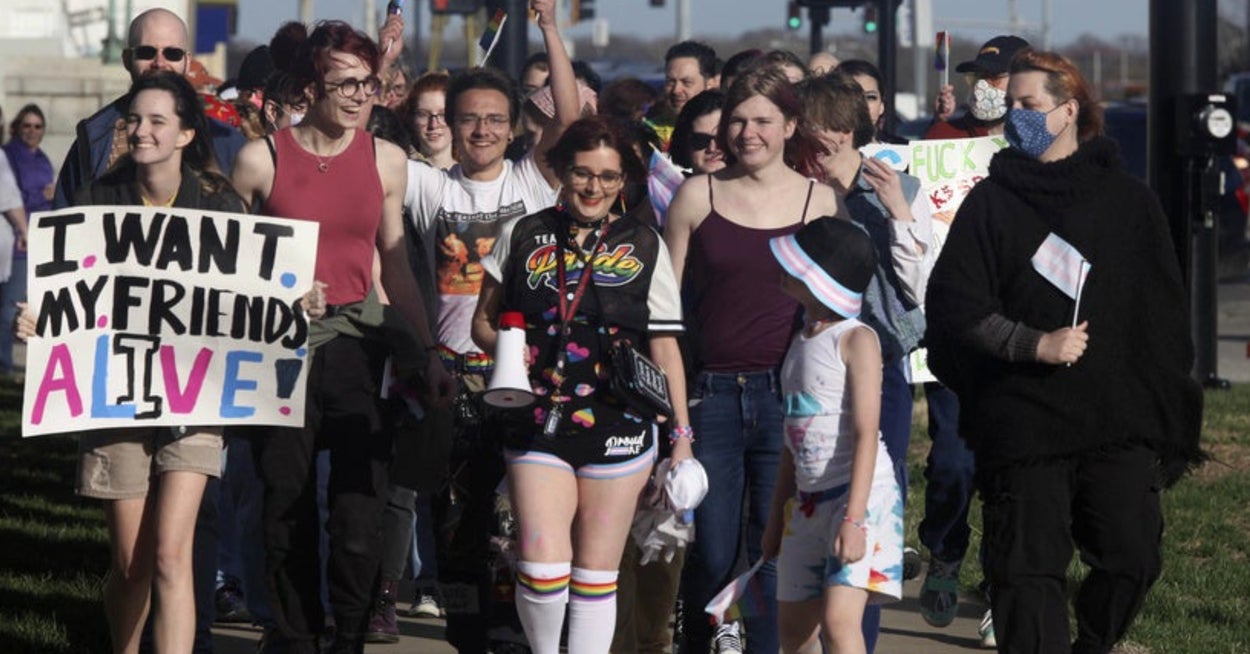
For now, the mood in Kansas is tense. Transgender advocates, students, and parents have packed the statehouse in recent weeks, testifying against the bills and sharing personal stories. Many of them have described the legislation as an attack on their very existence. They point to the phrase “Women’s Bill of Rights” as particularly painful, arguing that it uses the language of civil rights to strip rights away from a vulnerable minority. They also note that the bills target transgender people at a time when anti-trans rhetoric has been linked to a rise in hate crimes and harassment.
The national implications are significant. Kansas and Kentucky are now part of a growing list of states where Republican lawmakers have used their majorities to enact sweeping anti-trans legislation. More than a dozen states have passed laws banning transgender girls from school sports, and many more have restricted gender-affirming health care. The debate has also become a major issue in the 2024 presidential campaign, with Republican candidates using anti-trans messaging to energize their base.
But for the three transgender girls currently competing in Kansas high school sports, the political debate is deeply personal. They are real students with real teammates, real coaches, and real dreams. If the sports ban takes effect on July 1, they will no longer be allowed to compete on girls’ teams, even if they have been playing and practicing with those teams for years. Their futures, and the futures of countless other transgender students across the state, now rest in the hands of the courts, the governor, and a legislature that has shown little willingness to compromise.
As the July 1 effective date approaches, all eyes will be on Kansas. Will Governor Kelly veto the sports ban? Will Republican lawmakers override her? Will a judge step in and block the law before it takes effect? Those questions remain unanswered. What is clear, however, is that the fight over transgender rights in Kansas has only just begun, and the outcome will have consequences far beyond the playing fields and locker rooms of the state’s schools.