Cat-and-Mouse Over Surveillance: Elgin Community College Staff Say They Covered Flock Cameras, Only to Have Covers Removed
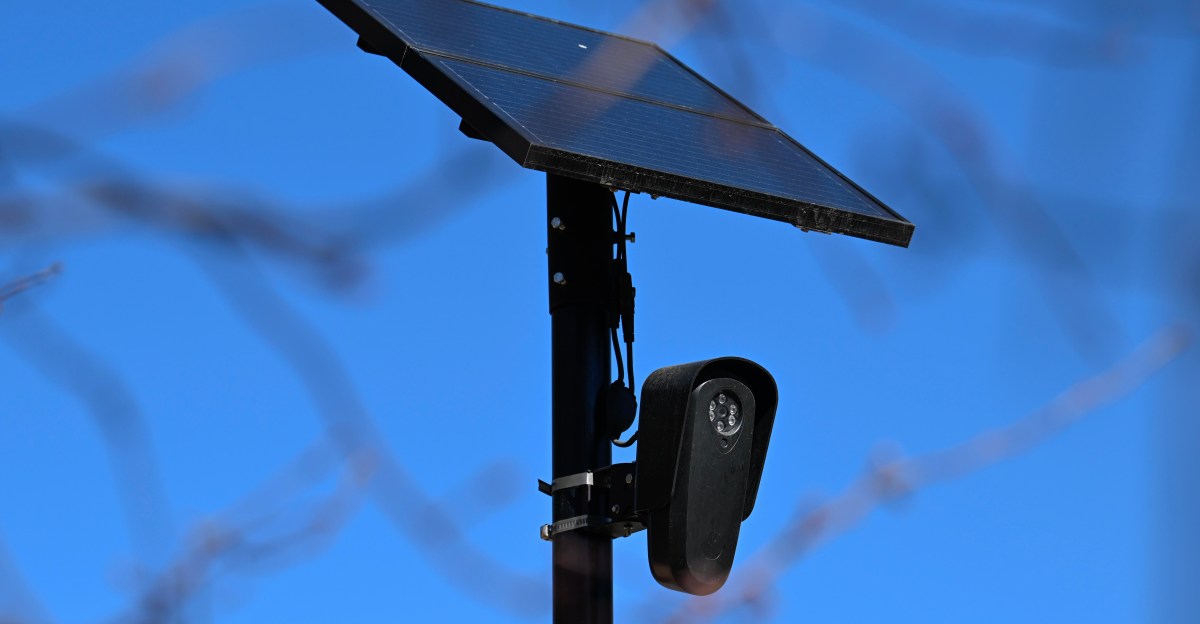
At Elgin Community College, a quiet battle over surveillance has unfolded in the parking lots and walkways where Flock Safety cameras are mounted. According to Heinrich, a person with direct knowledge of the situation, college staff began covering the cameras with black trash bags and zip ties in an effort to prevent them from recording. But the effort was repeatedly undone by workers in an unmarked vehicle, which Heinrich believed belonged to Flock, the Atlanta-based company that makes the license plate recognition cameras.
Heinrich described a strange, almost absurd cycle: staff would cover a camera, then a service worker would arrive and remove the covering. Staff would cover it again, and the worker would come back and remove it again. “We were kind of in a back and forth for a bit where we’d cover, and then when they’d come to service, they’d remove,” Heinrich said. “Then we’d cover and then they’d remove.”
The episode raises deeper questions about the use of automated license plate recognition technology on college campuses, the power of private surveillance companies, and what happens when members of a community decide they no longer want to be watched.
Flock Safety is one of the largest providers of ALPR cameras in the United States. The company sells its cameras to homeowners associations, businesses, law enforcement agencies, and schools. The cameras are designed to capture license plates and vehicle characteristics, not faces or driver identities. Flock says the data helps solve crimes and deter criminals. The company has often described its mission as making neighborhoods safer by giving law enforcement a network of “eyes” that can quickly identify vehicles connected to wanted persons or missing persons cases.
But critics have raised concerns about the proliferation of Flock cameras. Privacy advocates point out that a network of ALPR cameras can create a searchable database of where people have been, when they were there, and how often they return. Even if the data is not immediately tied to a person’s name, a license plate can be linked to a registered owner, and the location history can reveal sensitive information about a person’s habits, relationships, medical appointments, and more.
At Elgin Community College, the decision to cover the cameras appears to have been a form of protest or resistance by staff who did not want the surveillance to continue. Heinrich did not say exactly why the staff began covering the cameras, but the act itself is a powerful statement. Trash bags and zip ties are not sophisticated tools. They are ordinary materials that anyone can find in a maintenance closet. But in the context of a high-tech surveillance system, they became a symbol of grassroots resistance.
The fact that workers in an unmarked vehicle removed the coverings adds another layer of concern. If the vehicle belonged to Flock, as Heinrich assumed, then the company was actively ensuring that its cameras remained operational, even if the people on the ground did not want them to be. That raises questions about the relationship between the college and the company. Who has the authority to turn off or disable a camera? If staff members cover a camera, should the company respect that decision, or is the company contractually obligated to keep the cameras running?
Heinrich’s account suggests that there was no clear answer. The back-and-forth continued for a while, with no resolution. Each time the coverings were removed, the message was clear: the cameras would stay on. Each time the coverings were replaced, the message was equally clear: some people did not want to be watched.
The use of an unmarked vehicle is also notable. Flock Safety vehicles are not always branded, and service workers may not wear uniforms. For the people covering the cameras, this made the situation even more unsettling. They could not be sure who was removing the coverings or why. They only knew that someone was watching the cameras closely enough to notice when they had been covered.
This is not the first time that Flock cameras have been the subject of controversy. In communities across the country, residents have protested the installation of Flock cameras, citing privacy concerns and the fear of mass surveillance. Some cities have passed ordinances restricting the use of ALPR data. Others have demanded that cameras be removed entirely. In some cases, activists have covered or disabled cameras as a form of civil disobedience.
But a college campus is a unique setting. Students and staff spend hours there every day. Their vehicles are parked in the same lots, often at the same times. A network of ALPR cameras on a campus can create a detailed record of a person’s daily routine. For staff members who may not have been consulted about the cameras, the presence of the devices can feel invasive.
Heinrich’s remarks also highlight the importance of transparency in surveillance decisions. If a college decides to install Flock cameras, it should explain why the cameras are needed, how the data will be used, who will have access to it, and how long it will be retained. Without that transparency, members of the community are left to guess, and some may take matters into their own hands.
The standoff at Elgin Community College may seem like a small incident, but it is part of a larger national conversation about surveillance, privacy, and power. Technology companies are building vast networks of cameras and sensors, often with little public input. The people who live, work, and study in the areas covered by those cameras are not always given a say. When they do push back, they may find themselves in a back-and-forth with a company that has the resources and the incentive to keep the cameras running.
Heinrich’s quote captures the frustration of that situation. “We were kind of in a back and forth for a bit where we’d cover, and then when they’d come to service, they’d remove,” he said. “Then we’d cover and then they’d remove.” The repetition in the quote mirrors the repetitive nature of the conflict. It is a cycle that could continue indefinitely unless someone with authority steps in to resolve it.
What would a resolution look like? It could involve a public meeting where the college community discusses the cameras. It could involve a formal policy on when cameras can be covered or disabled. It could involve a review of the contract with Flock Safety, including the terms that require the company to maintain the cameras. It could even involve the removal of the cameras altogether.
But none of that has happened yet, at least not publicly. For now, the cameras remain, and the staff members who covered them are left with a choice: keep trying to cover them, or accept that the cameras are there to stay. Heinrich did not say what the staff would do next. But the fact that he spoke out suggests that the issue is not going away.
The situation at Elgin Community College is a reminder that surveillance is not just a matter of technology. It is a matter of human relationships. It is about who gets to decide what happens in a shared space. It is about whether the people who are watched have any say in the watching. And it is about what happens when those people use something as simple as a black trash bag and a zip tie to say no.
In the end, the back-and-forth between the staff and the workers in the unmarked vehicle is a small but telling example of how power works in the age of surveillance. The company has the cameras, the data, and the service teams. The staff have trash bags and zip ties. The odds are not equal. But the staff have something else: the ability to tell their story. And that, perhaps, is the first step toward change.