Prosecutor in Collapsed Broadview Six Case Resigns, Accuses U.S. Attorney of ‘Scapegoating’ Her
A veteran federal prosecutor has resigned from the Department of Justice with a blistering resignation letter accusing the U.S. Attorney for the Northern District of Illinois of forcing her to take the fall for the collapse of a high-profile prosecution against six protesters arrested outside a suburban Chicago immigration detention facility.
Sheri Mecklenburg, who served as the lead prosecutor during grand jury proceedings in the case known as the Broadview Six, announced her departure this week. In a letter obtained by CBS News, she said U.S. Attorney Andrew Boutros “personally directed” the prosecution and then abandoned her when allegations of misconduct surfaced, destroying her career and reputation in the process.
The case, which began as a sweeping federal operation called Operation Midway Blitz, drew national attention in 2025 when six demonstrators were arrested outside the Broadview ICE facility. The protesters were initially charged with felony conspiracy and misdemeanor obstruction. But the prosecution unraveled over several months, culminating in the dismissal of all charges with prejudice just days before trial.
The first blow came when the felony charges were dismissed. Then, as Boutros’s office prepared for what would have been a rare federal misdemeanor trial, new allegations of “gross misconduct” involving the grand jury process emerged. Court filings and closed-door hearings revealed accusations that the lead prosecutor had improperly vouched for the strength of the case before the grand jury and had engaged in inappropriate communications with grand jurors outside official proceedings. There were also revelations that grand jurors who disagreed with the government’s case had been dismissed.
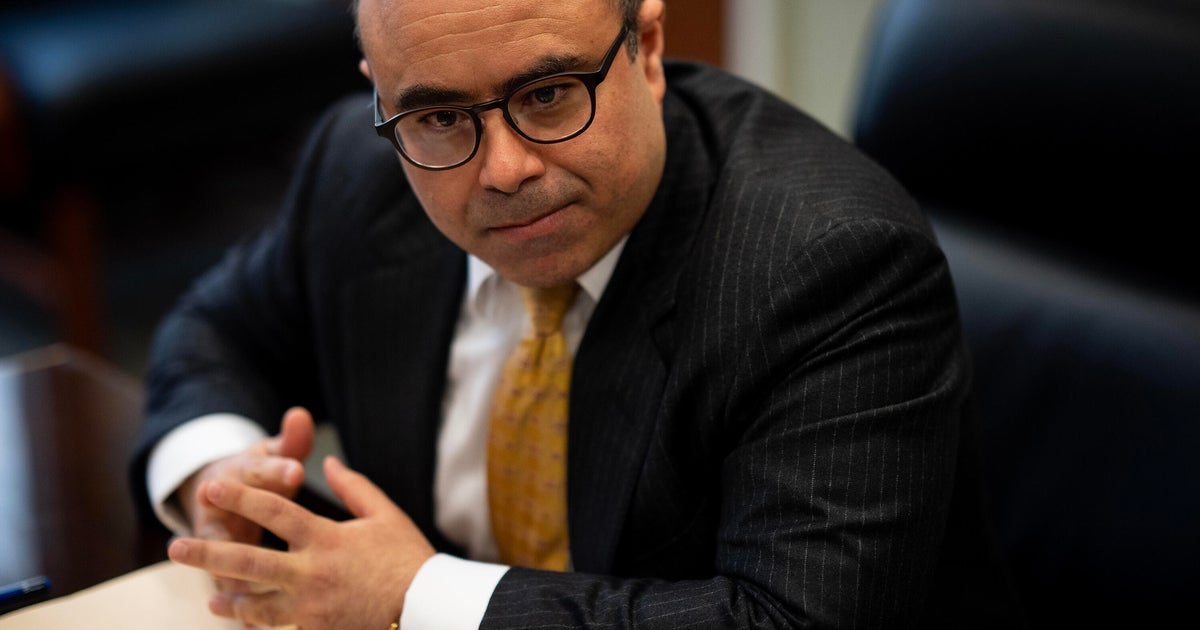
Boutros himself appeared in court to announce the dismissal of the remaining misdemeanors, a highly unusual step. He acknowledged that his office had known since the fall that dissenting grand jurors had been removed and said he had taken steps to correct the issue. But he said he only learned in late April of additional alleged misconduct, including the prosecutor’s statements vouching for the case and improper grand juror communications.
Boutros did not dispute the allegations. He called the conduct upsetting and said it was the reason the case was being dismissed.
Now Mecklenburg, in a letter addressed to Boutros, is fighting back. She claims she was made a scapegoat for a prosecution that he personally oversaw. She wrote that Boutros and his office kept her and her attorneys in the dark about the proceedings involving the misconduct allegations, including hearings over redacted grand jury transcripts. She said she was not even aware of the redactions or the related hearings, accusing Boutros of intentionally failing to inform her.
“You recklessly agreed in court that I had committed misconduct without even asking for my account, fully reviewing the record or briefing the law,” she wrote. “That evening, you sent an office-wide email laying responsibility at my feet for a felony prosecution that you personally directed over my objection that the case was better suited to misdemeanor charges.”
Mecklenburg said Boutros’s “inexplicable actions” have damaged her decades-long career, her reputation, and her future employment prospects. She also alleged that Boutros threatened to fire her if she tried to rebut the false allegations or bring additional matters to the court’s attention, though she did not specify what those additional matters were.
She said she is retiring under protest because it is the only way to preserve the healthcare benefits she earned through years of government service, which she would lose if she were fired.
The letter paints a picture of a prosecutor who was abandoned by her superiors. Mecklenburg said Boutros and his office used her as “a convenient target to be scapegoated and publicly vilified” while the leadership who directed or approved the prosecution accepted no responsibility.
“I still expect a full and fair opportunity to address the allegations against me and restore my reputation,” she wrote. “I also would have expected, at some point during the past four months, that the leaders who directed or approved the prosecution would accept responsibility for their own roles and decisions rather than assigning the consequence to me alone.”
The collapse of the Broadview Six case began to take a personal toll on Mecklenburg earlier this year. In February 2026, she left the Broadview case and took an assignment in Washington, D.C., serving as counsel for the Senate Judiciary Committee while representing the Justice Department. But shortly after the case fell apart, Illinois Sen. Dick Durbin, the ranking Democrat on the committee, announced that she had been terminated from that position.
CBS News Chicago reached out to Mecklenburg’s attorney about the resignation letter. He said he could not share it directly at the time because “the matter is in litigation.” He also said neither he nor Mecklenburg had any further comment.
The Justice Department, for its part, pushed back on one key claim in Mecklenburg’s letter: that Boutros instructed her to pursue felony charges against her will. In a statement, a DOJ spokesperson denied that Mecklenburg proposed a misdemeanor and was overruled.
“The claim that Mecklenburg proposed a misdemeanor and was told instead to file a felony charge is false,” the spokesperson said. “Mecklenburg’s recommendation in writing to the supervisory chain of the U.S. Attorney’s Office included the section 372 felony as the strongest charge.”
The statement was the only response so far from the Justice Department to Mecklenburg’s letter.
The Broadview Six case has had significant repercussions for the U.S. Attorney’s Office in Chicago. In the wake of the dismissal, Boutros announced a series of “sweeping” grand jury reforms designed to ensure the problems in the case never happen again. He said the reforms would set “very bright lines” about when prosecutors must turn over grand jury material to the defense.
His office also announced it would review more than 1,000 other grand jury cases handled by Mecklenburg and other prosecutors in the office. That review, which is ongoing, has cast a shadow over years of federal prosecutions in the Northern District of Illinois.
The original charges against the six protesters stemmed from demonstrations outside the Broadview ICE facility in 2025, during a period when federal immigration enforcement was being dramatically expanded. Operation Midway Blitz, the broader initiative, was designed to crack down on immigration-related crimes and protests. But the case against the six defendants quickly became mired in procedural problems.
Defense attorneys alleged that the grand jury process was tainted from the start. They claimed the lead prosecutor had engaged in misconduct by vouching for the strength of the case and by having improper communications with grand jurors. They also alleged that grand jurors who were skeptical of the government’s case were removed, undermining the independence of the grand jury.
Those allegations eventually led to the release of partial grand jury transcripts, which appeared to support some of the defense claims. Judge April Perry, who presided over the case, held closed-door hearings on the redactions and ultimately allowed the case to proceed toward trial. But the mounting evidence of misconduct proved too much for the government to overcome.
Days before the trial was set to begin, Boutros appeared in court to announce that the remaining misdemeanor charges were being dismissed with prejudice, meaning they could never be refiled. He said the decision was made after a thorough review of the grand jury record and in light of the seriousness of the alleged misconduct.
The dismissal was a rare and public acknowledgment of prosecutorial error. It also raised broader questions about the culture of the U.S. Attorney’s Office in Chicago and the level of oversight exercised by senior officials.
Mecklenburg’s resignation letter is likely to intensify those questions. In it, she portrays herself as a career prosecutor who was hung out to dry by political appointees who were more concerned with protecting themselves than with pursuing justice. She says she was not given a fair opportunity to respond to the allegations, and that her years of service counted for nothing when the pressure mounted.
“I would have expected, at some point during the past four months, that the leaders who directed or approved the prosecution would accept responsibility for their own roles and decisions,” she wrote. “Instead, they assigned the consequence to me alone.”
The case has become a cause célèbre for both supporters and critics of the administration’s immigration enforcement policies. For critics, it is an example of overreach and mismanagement in federal law enforcement. For supporters of the protesters, it is a victory for due process and a reminder that prosecutors are not above the law.
For Mecklenburg, the fight is not over. Her attorney said the matter is in litigation, suggesting that she may take legal action over the circumstances of her resignation and termination. Her letter makes clear that she believes her reputation has been irreparably harmed by Boutros’s actions.
“You recklessly agreed in court that I had committed misconduct without even asking for my account,” she wrote. “That evening, you sent an office-wide email laying responsibility at my feet for a felony prosecution that you personally directed over my objection.”
The full resignation letter was published by CBS News and has been widely shared online. It is a rare, behind-the-scenes look at the pressures and politics of federal prosecution, and it raises uncomfortable questions for the Justice Department about accountability, transparency, and the treatment of career attorneys.
For now, the future of the Broadview Six case remains clear: the charges are dismissed, and the defendants are free. But the fallout is far from over. With a review of more than 1,000 grand jury cases underway and a federal prosecutor now fighting for her reputation, the echoes of the Broadview Six collapse will be felt for years to come.