CNN, MS NOW and Politico Sue Trump Administration Over White House Press Ban
WASHINGTON — Three leading news organizations — CNN, MS NOW and Politico — filed a federal lawsuit Monday against President Trump and several senior administration officials, challenging the White House’s decision to bar them from covering the president. In legal papers, the outlets argue that the ban is a direct violation of the First Amendment and an unconstitutional effort to punish newsrooms for reporting the president does not like.
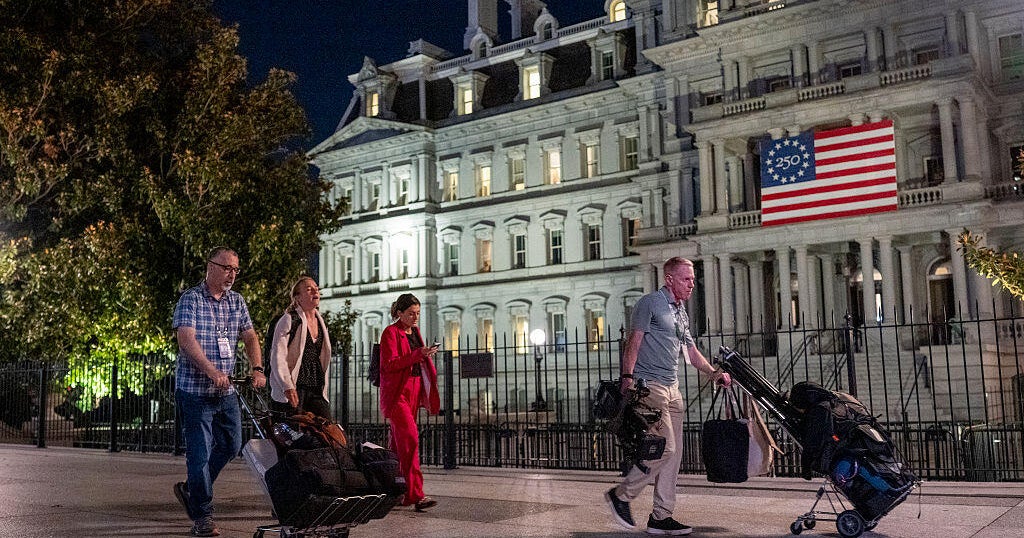
The lawsuit stems from a rapid series of developments that began Friday, when Mr. Trump announced on his Truth Social platform that he was barring CNN, MS NOW, and Politico from the White House. According to the complaint, journalists from the three outlets were denied entry on Saturday and had their press credentials revoked. In response, the organizations filed an emergency motion seeking immediate restoration of their access while the broader legal case is considered.
“There could not be a more direct assault on the First Amendment,” the legal motion said. “Presidents from the earliest days of the Republic have disagreed with and complained about the tenor and content of press coverage of their administrations.” The filing argues that while presidents are free to criticize the media, they may not use the power of the presidency to single out journalists for exclusion simply because of the editorial direction of their reporting.
Mr. Trump pushed back Monday morning on social media, writing that the White House “is not instituting an assault on the Free Press, something which I cherish. It is instituting an assault on the FAKE NEWS, something that has grown like Cancer in our beloved United States of America.” In a separate post, he wrote, “FAKE NEWS IS A THREAT TO DEMOCRACY, and I will do whatever is necessary to make sure that the U.S.A. thrives.”
The case was assigned to U.S. District Judge Timothy Kelly, a judge appointed to the federal bench by Mr. Trump during his first term. Kelly has presided over a similar and closely watched dispute before. In 2018, he handled a lawsuit brought by CNN after the White House moved to revoke the press pass of reporter Jim Acosta. Kelly ruled in Acosta’s favor, determining that the White House had violated Acosta’s due process rights under the Fifth Amendment, and ordered that his credentials be restored. The White House complied with that order at the time.
Now Kelly is scheduled to hear arguments Wednesday afternoon in the new lawsuit filed by CNN, MS NOW and Politico. Late Tuesday, the Justice Department filed a response, arguing that the ban should be upheld, at least in part, on national security grounds. The department said the president had concluded that the outlets “have failed to maintain basic minimum ‘standards of professionalism and decorum expected of those given access to the White House Complex, including’ by ‘publishing sensitive or classified information.’” The government also argued that “access to the White House is a privilege — not a right.”
The Justice Department said the Trump administration is giving the three news organizations until Sept. 25 at 5 p.m. to contest the decision to revoke their access. The administration’s court filing did not identify what specific information the outlets had published that was considered sensitive or classified. The news organizations have denied any basis for the accusation and have argued that the rationale is merely a pretext for punishing unfavorable coverage.
The lawsuit asks the court to move quickly to prevent further action by the White House and to halt what the outlets describe as ongoing harm to their ability to cover the presidency. That urgency was illustrated in a striking way on Monday: CNN had been scheduled to serve as the network television pool for the president’s day, meaning it was responsible for providing video and reporting to other networks. Because CNN was barred and no substitute was arranged, no television network traveled with the president on Monday — a situation the outlets have described as unprecedented.
The lawsuit names Mr. Trump and three of his top aides: White House chief of staff Susie Wiles, White House spokesperson Steven Cheung, and Secret Service chief Sean Curran. The filing also notes that the news organizations notified the administration of their intent to sue before going to court.
Speaking to reporters after announcing the ban on Friday, Mr. Trump suggested the action was not connected to any specific incident. “I don’t think somebody should be allowed to come and write fake stories. They’re fake news. And they have no credibility,” he said. “Now, if they want to write them, that’s fine, but I don’t have to let them into my — into the people’s house.” He said there was “no reason” the ban was issued at that particular moment.
The decision has drawn sharp criticism from press freedom advocates. Bruce Brown, president of the Reporters Committee for Freedom of the Press, called the ban “flatly unconstitutional.” He said that blocking the outlets from White House grounds was “textbook viewpoint discrimination and will be quickly struck down by the courts if challenged.”
The lawsuit is only the latest in a series of clashes between the Trump administration and media organizations over access to government spaces. Last year, the administration sharply limited press access to the Pentagon. The Defense Department required journalists with regular access to the building to sign onto a set of new rules, including a provision suggesting that reporters who “solicit” sensitive information could be considered security risks and removed. Most major news outlets — including CBS News, ABC News, NBC News, Fox News and CNN — declined to sign the agreement and left the Pentagon.
After a federal judge struck down some of those restrictions earlier this year, the Defense Department changed course and began requiring any reporters on Pentagon grounds to be escorted by government personnel. An appeals court later allowed that escort policy to remain in place while the legal challenge continues.
In its response to the new lawsuit, the Justice Department included sworn statements from Kingsley Lewis, the Pentagon press secretary, and another senior Pentagon official. Those statements claimed that leaks have slowed since the Pentagon restricted media access and suggested that similar results could follow if the White House ban is allowed to stand.
The Trump administration has also clashed with The Associated Press. Last year, the White House barred AP reporters from certain events after the outlet refused to use Mr. Trump’s new name for the Gulf of Mexico, which he proclaimed to be the “Gulf of America.” The AP sued on First Amendment grounds. A federal judge in Washington initially ruled that the White House must restore the outlet’s access, but an appeals court later allowed the ban to take effect while the appeal moved forward.
The appellate ruling in the AP case turned on an important legal distinction. The AP had been blocked from restricted spaces such as the Oval Office and Air Force One, which are accessible only to a small subset of the White House press corps. The appeals court said the White House cannot ban journalists from spaces that are “generally open to the press,” like the White House briefing room, based on the content of their reporting. But it suggested that the government has more authority to control access to areas that are tightly restricted and not open to all credentialed journalists.
The ban imposed on CNN, MS NOW and Politico is broader than the restrictions placed on the AP. It covers the White House complex generally, including spaces that have historically been open to the press corps. That breadth may make the administration’s action more difficult to defend in court.
As the AP case moved through the courts, the White House assumed greater control over the press pool — the small, rotating group of journalists who cover the president daily and share information and footage with the broader media. Under the new arrangement, the print press pool rotation was changed, and wire outlets, including the AP, are no longer granted access to Air Force One or the Oval Office as often as they once were.
The new lawsuit represents the latest legal test of how far a president may go in restricting press access in the name of national security, decorum, or the fair treatment of the press. Courts have long recognized that the First Amendment places limits on the government’s ability to exclude journalists from spaces that have been opened to the press generally. Once the government allows journalists into a space, it cannot selectively bar certain reporters simply because of the tone or substance of their coverage.
For now, all attention turns to Judge Kelly’s courtroom, where a hearing is scheduled for Wednesday. The outcome of this case could reshape the relationship between the White House and the reporters who cover it — and could determine whether a president may effectively blacklist news organizations whose journalism he considers hostile.