Late on Monday, an Army AH-64 Apache helicopter crashed near the Strait of Hormuz, a strategically important waterway that connects the Persian Gulf and the Gulf of Oman. The two crew members aboard the aircraft were rescued, according to Pentagon officials. The cause of the crash was not immediately clear, and an investigation into the incident is underway.
The U.S. Central Command, in its brief statement regarding the incident, did not immediately confirm or deny whether Iran had shot down the Apache attack helicopter. Instead, it stated that the investigation into the cause of the incident is ongoing and further details would be shared as they come to light.
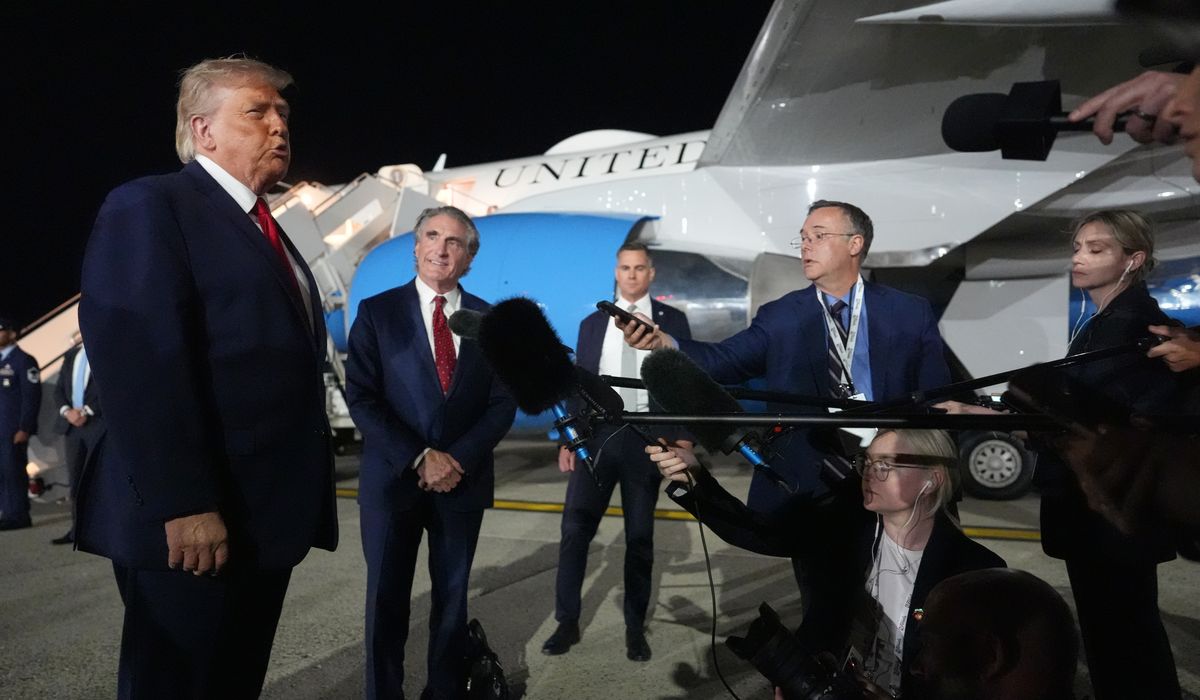
The news of the crash was confirmed by President Trump, who spoke to journalists at John F. Kennedy International Airport in New York. The President had been watching the NBA Finals on Monday night and during his interaction with the press, acknowledged the crash. He stated that the pilots were not injured in the incident.
In his words, “Nobody injured. We are going to issue a report tomorrow. But the pilots are fine,”. This statement served to provide an immediate update on the situation and reassure the public and the media that the crew members were safe.
The crash occurred amidst the ongoing tensions between the U.S. and Iran, a situation that is being monitored closely by the international community. The helicopter was reportedly patrolling regional waters off the coast of Oman when the incident occurred. According to official reports, both crew members are in stable condition and were rescued within two hours of the incident.
This crash comes against the backdrop of a so-called ceasefire between the U.S. and Iran, intended to facilitate diplomacy between the two sides in the hopes of reaching an agreement to end the ongoing conflict. However, despite the ceasefire, U.S. and Iranian forces have been regularly clashing. Iran has been firing missiles and drones at targets across the region and American forces have been responding by bombing key Iranian military sites.
The Strait of Hormuz has emerged as a critical flashpoint in the conflict. Since the early days of the war, Tehran has attempted to shut down commercial maritime traffic through the strait. This waterway is vitally important for moving oil and other goods in and out of the Persian Gulf. In response, the U.S. has enforced a naval blockade to prevent ships from reaching Iran, thereby putting immense economic and political pressure on its leadership.
AH-64 Apache helicopters have been a crucial asset for the American military in enforcing this blockade. Notably, the United Arab Emirates have also used these helicopters to shoot down Iranian drones.
The U.S. has lost a significant number of aircraft during the ongoing conflict with Iran. On June 1, Iran shot down an MQ-1 Predator drone. At least 24 MQ-9 Reaper drones, four F-15E Strike Eagle fighter jets, one F-35, and seven KC-135 refueling tankers are among at least 42 total aircraft lost, according to a recent Congressional Research Service report.
The most notable incident in this context occured in early April, when Iran shot down an F-15E fighter jet over its territory. U.S. forces mounted a daring rescue operation and were able to recover the two crew members before Iranian forces could capture them. This was the first time a U.S. aircraft had been shot down over enemy territory since the early days of the Iraq war in 2003.
The U.S. has also lost other aircraft in incidents that did not involve enemy fire. In the early days of the conflict, Kuwaiti air defenses mistakenly shot down three American fighter jets in a friendly fire incident. Fortunately, none of the crew were killed. In March, a KC-135 refueling aircraft crashed in Iraq after an apparent mid-air collision with another plane, resulting in the unfortunate loss of all six crew members.
This article is based in part on wire service reports, and further updates on the situation are expected to be provided as the investigation into the cause of the Apache helicopter crash progresses. As it stands, the incident adds another layer of complexity to the already tense relations between the U.S. and Iran, and highlights the ongoing dangers faced by military personnel operating in the region.