In the vibrant capital of the United States, a significant concert series named Freedom 250 aimed to throw a grand celebration for America’s 250th birthday. Amidst anticipation and preparations, the event, however, encountered a multitude of challenges and controversies that stirred the music and political communities alike. As artists began to withdraw their participation, rapper Vanilla Ice, born Robert Van Winkle, declared his unwavering commitment to perform, emphasizing the cultural rather than political significance of the event.
Freedom 250 was launched following an executive order from President Trump, marking an attempt to orchestrate a “grand celebration worthy of the momentous occasion of the 250th anniversary of American Independence.” Organized by Trump-appointed task force and separately from a 2016 bipartisan commission, the event sought to unite Americans in a nonpartisan celebration. Despite these intentions, the unfolding of events painted a different picture.
The concert series, scheduled to occur from June 25 to July 10 on the National Mall, promised to be a grand affair with state and territory pavilions representing all 56 states and territories, alongside specialty exhibits, live performances, interactive experiences, and classic fair attractions. Yet, the essence of the celebration was tarnished by politics when several high-profile artists opted out of their scheduled performances.
Morris Day and the Time, Young MC, The Commodores, Bret Michaels, and Martina McBride were among the artists who initially agreed to perform but later withdrew their participation. The artists cited a sense of being misled about the political undertones of the event, with Young MC stating concerns that, despite claims by the organizers that the event was non-partisan, it was being described as Trump-backed by sources like SPIN Magazine.
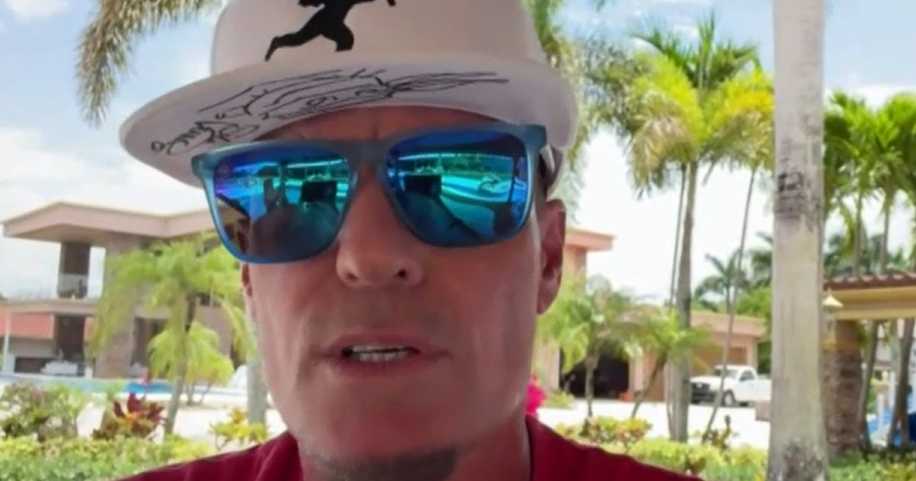
Vanilla Ice, however, took a distinct stance compared to his fellow artists. In an interview with CBS News, Van Winkle expressed his indifference to the political controversies surrounding the event. “It’s the birthday of America,” he said, dismissing the politicization of the event as irrelevant to his decision to perform. Van Winkle, who has never participated in voting, explained his decision with a straightforward analogy: “It’s simple as a pimple for me, there’s nothing to it.”
As the news of artists backing out spread, Vanilla Ice understood their concerns about the political implications and potential social media backlash but reaffirmed his primary motive was to celebrate his country. “For me, I’m just here to celebrate the country I was born in,” he stated, stressing his role as an entertainer over any political affiliation or agenda.
Furthermore, Van Winkle’s view on the role of an artist was starkly clear when he was asked whether it’s possible to separate art from politics. “Heck yeah,” he responded. “They should never be in there,” he remarked, advocating for the freedom of artists to express themselves through their music, independent of political engagements or biases.
Van Winkle’s nonchalant attitude toward the identity of his audience was encapsulated when he mentioned he would perform for anyone, even controversial figures such as Russian President Vladimir Putin or in countries like Iran. “I’d go play for anybody. Putin. Whoever. You want — I’d go to Iran. Don’t matter,” he said. This statement highlighted his philosophy that fans choose the artist, not the other way round, and an entertainer’s job is just to perform without delving into political identities.
His openness also extended to performing at events associated with various political figures, including those from different political spectrums. Previously having performed at Mr. Trump’s Mar-a-Lago club, Van Winkle mentioned he would just as readily perform for Democratic politicians, underscoring his neutral stance as an artist.
As the event continues to prepare for its grand unveiling, the dialogue between art and politics grows ever more intricate. While some artists feel compelled to step away from potential politicization of their art, others like Vanilla Ice embrace the simplicity of performance, viewing their roles as beacons of cultural celebration rather than political commentary. The ongoing saga of the Freedom 250 concert series serves as a reflective canvas illustrating the complex interplay between national pride, artistic expression, and political allegiance in America.