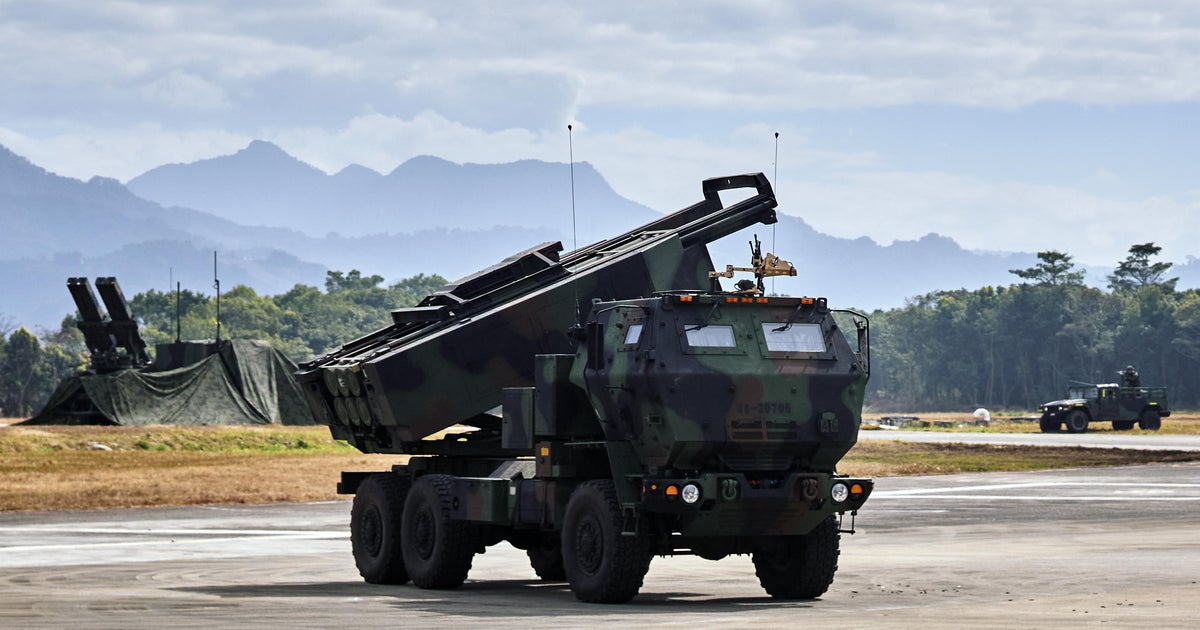
The delicate and often fraught intersections of international diplomacy, national security, and regional stability were once again thrust into the global spotlight following President Donald Trump’s recent summit with Chinese President Xi Jinping in Beijing. The discussions, as reported, included specific discourse on the future of Taiwan—particularly concerning the U.S.’s pending arms sale to the island, which has emerged as a potential flashpoint between the U.S. and China.
Upon departing Beijing aboard Air Force One, President Trump shared with reporters that significant discussions about Taiwan had transpired during the summit. President Xi Jinping was noted to have raised concerns about the arms sale, a topic that underscores the recurring tensions over Taiwan’s status and its defense capabilities. Trump, however, remained non-committal about whether his administration would proceed with the controversial weapons deal and even withheld clear positions on whether the U.S. would defend Taiwan in a military conflict with China.
This ambivalence quickly drew reactions from various quarters back in the United States, especially on Capitol Hill, where Taiwan enjoys robust bipartisan support. Many lawmakers have continually advocated for stronger ties with Taiwan, urging the administration to fulfill a previously approved $14 billion arms sale aimed at bolstering Taiwan’s self-defense capabilities. The deal, approved by Congress in January, remains in a state of political limbo.
Former House Foreign Affairs Committee Chairman, Rep. Michael McCaul (R-Texas), was stark in his assessment. He emphasized the necessity of arming Taiwan to ensure its self-defense and regional deterrence against potential Chinese aggression. Reflecting on the summit discussions, McCaul lamented the absence of a firm commitment from President Trump regarding the arms sale and criticized what he perceived as Xi’s aggressive stance on Taiwan.
According to Chinese sources, President Xi conveyed a stark ultimatum during the summit, suggesting that the handling of the Taiwan issue is central to the future of Sino-U.S. relations. The Chinese spokesperson highlighted the binary outcomes dependent on the U.S.’s maneuvering of the Taiwan question: either continued bilateral stability or severe conflict that could jeopardize overall relations between the two superpowers. Additionally, Xi metaphorically posited that ‘Taiwan independence’ and cross-strait peace are completely incompatible, akin to fire and water.
Further complicating the matter, President Trump described the pending arms sale as a “very good negotiating chip” in an interview with Fox News’ Bret Baier following the summit. His comments, suggesting a strategic ambiguity in his approach, hinted at possible leverage in broader U.S.-China negotiations spanning issues beyond just military sales, including trade and geopolitical strategies concerning regions like the Taiwan Strait.
On the legislative front, expressions of consternation—and urgency—about Taiwan’s defense needs were widespread. House Foreign Affairs Committee Ranking Member Gregory Meeks (D-New York), alongside other senior House Democrats, had fervently called on President Trump to greenlight the arms package ahead of his summit with Xi. Delaying such measures, Meeks argued, might weaken the deterrence against China’s assertive moves in the Taiwan region. He accused Xi of holding undue leverage over President Trump, a notion he vehemently disputed when considering the broader consensus of the American legislature and public opinion.
U.S. House Speaker Mike Johnson and Representative Brian Fitzpatrick (R-Pennsylvania) also reiterated strong support for Taiwan, drawing parallels with Ukraine by calling both “fortresses of democracy” facing considerable external pressures and security threats. They underscored the importance of proactive U.S. support for Taiwan, advocating for bolstering its defensive and international standing.
The discussions and subsequent revelations from Trump’s meeting attest to the complexities and sensitivities involved in managing U.S.-China relations, where Taiwan continues to be a critical factor. The potential ramifications of delaying or aborting the $14 billion arms sale not only affect U.S.-Taiwan relations but also send broader geopolitical signals regarding U.S. commitment and its strategic posture in Asia-Pacific.Nuitkafied with Xi Jinping, President Trump suggested that both Taiwan and China should moderate their stances amidst growing tensions.
This ongoing saga exemplifies the intricate dance of diplomacy where national interests, strategic security commitments, and international alliances collide, with Taiwan caught distinctly at the crossroads of these monumental geopolitical shifts. As Washington mulls its next steps, the world watches closely, recognizing that the decisions made in the coming weeks could recalibrate power dynamics and influence peace and stability across the Asia-Pacific region.