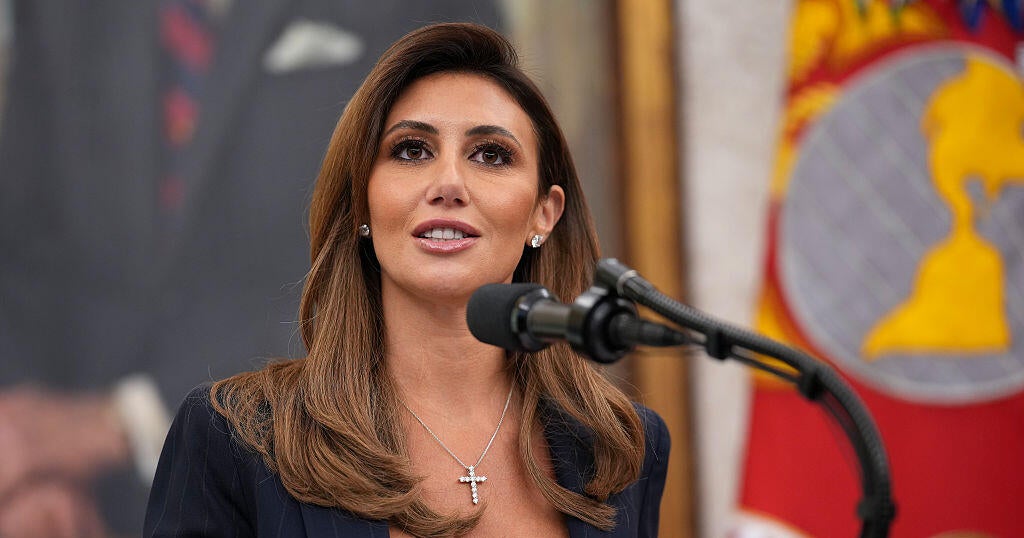
In a significant judicial ruling issued on Monday, the U.S. Court of Appeals for the 3rd Circuit affirmed a lower court’s decision that effectively barred Alina Habba from her position as the acting U.S. Attorney for New Jersey. Habba, a personal attorney for former President Donald Trump, had been serving in this capacity since early July after being appointed under a controversial and relatively novel administrative strategy adopted by the Trump administration.
The 3rd Circuit’s unanimous decision represents a critical examination and subsequent pushback against the Trump administration’s attempts to placate unconfirmed U.S. attorney appointees in authoritative positions across the country. The appeals court’s ruling was precipitated by three defendants currently facing criminal charges in New Jersey. They challenged the legitimacy of Habba’s appointment, asserting that it violated the Federal Vacancies Reform Act (FVRA). They requested the dismissal of their indictments on these grounds.
U.S. District Judge Matthew Brann initially reviewed the case and in August, ruled against Habba’s lawful authority to act in the capacity of U.S. Attorney, determining her service was unconstitutional since her initial appointment in July. Judge Brann’s decision led her to be disqualified from participating in ongoing cases, which prompted the Justice Department to seek an appellate review.
In their appellate argument, Trump administration lawyers positioned Habba’s appointment as a legitimate use of the Vacancies Act. However, their interpretation did not sit well with the appellate panel, who found such an application to potentially undermine constitutional mandates regarding presidential appointments that require Senate confirmation.
The legal team representing the challengers remarked upon the ruling as a landmark victory against the misuse of authority in appointing U.S. attorneys without proper vetting processes in place. Lawyers Abbe Lowell, Gerry Krovatin, and Norm Eisen, associated with the three defendants, issued a joint statement expressing their approval of the ruling and their commitment to continue challenging what they perceive as unlawful appointments by President Trump.
While Habba’s counsel and the Justice Department were initially unresponsive to inquiries for comments, her appointment narrative reveals a complex tug-of-war. Habba was first appointed to act as the interim U.S. Attorney in New Jersey, set to serve for a 120-day interim period. Her confirmation for a prolonged tenure was largely doubted, especially given the opposition from New Jersey’s Democratic senators, Cory Booker and Andy Kim.
As her interim term was about to expire, the U.S. District Court for New Jersey made a decision against extending her tenure, choosing instead to appoint her deputy, Desiree Leigh Grace, as acting U.S. Attorney. This decision did not sit well with Attorney General Pam Bondi, who quickly dismissed Grace and reinstated Habba utilizing a multi-step maneuver aimed at bypassing the district court’s resolution. This reappointment saw Habba resign her interim post only to be reassigned first as Special Attorney and then lifted to fill Grace’s vacated role under the Vacancies Act’s provisions.
These legal gymnastics further complicated the matter as they appeared to circumvent the traditional presidential appointment and Senate confirmation process, effectively allowing Habba to potentially serve indefinitely as the acting U.S. Attorney—a scenario that the appellate court found troublesome.
The interpretation by the 3rd Circuit’s Judge Michael Fisher, joined by judges L. Felipe Restrepo and D. Brooks Smith, highlighted the overarching implications of such an appointment strategy on the prescribed constitutional process. The Trump administration’s attempt to use similar tactics in other jurisdictions, like Nevada and Los Angeles, has been met with legal resistance too, culminating in several noteworthy court decisions, including the dismissal of charges against figures like former FBI Director James Comey and New York Attorney General Letitia James based on similar appointment disputes.
This ruling from the 3rd Circuit in the case of Alina Habba signifies a broader judicial skepticism toward unconventional appointment strategies that bypass established legal and constitutional protocols—a dispute that underscores ongoing tensions between the executive administration’s appointment powers and mandated legislative confirmation processes. As this narrative continues to unfold, the debates it sparks are likely to influence future administrations and could lead to a revisitation or potential revision of the Federal Vacancies Reform Act itself.