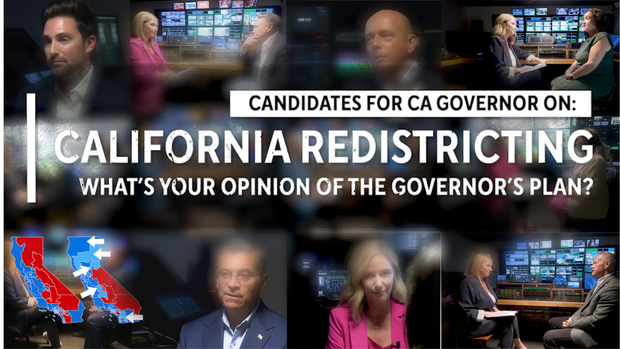
In the midst of a heated gubernatorial election in California set for 2026, a contentious topic looms large over the political landscape—Proposition 50, a proposed measure that could radically alter the state’s congressional districts. This initiative is spearheading debates among candidates and stirring concerns among voters about the integrity of electoral processes and the broader implications for representative democracy.
Proposition 50 was put forward by the California state legislature and scheduled for a special November election. If passed, it would grant the state legislature the authority to redraw congressional districts, a power that was stripped from lawmakers and given to an independent redistricting commission by California voters back in 2020. The proposal, supported by Democratic Governor Gavin Newsom, is framed as a strategic move to increase Democratic representation in Congress, particularly in reaction to similar Republican-led efforts in Texas.
The measure specifically targets redrawing five of the state’s districts to potentially favor Democrats in the upcoming midterm elections. This tactic is presented by Democrats as a necessary counterbalance to what they view as Republican gerrymandering in other states, such as the significant redistricting efforts recently passed in Texas.
However, Proposition 50 has ignited a fierce debate over the ethics of redistricting and the role of partisanship in such processes. Critics argue that permitting lawmakers to manipulate congressional boundaries undermines the principles of fair and impartial electoral representation. The controversy touches on deeper questions about the balance of power, the manipulation of electoral districts, and the integrity of democratic institutions.
As the November ballot approaches, every leading gubernatorial candidate has weighed in on Proposition 50, elucidating their stance on this pivotal issue. The candidates’ positions reflect a spectrum of political ideologies and strategies, each framing their argument around the notion of democracy, fairness, and the rule of law.
Democrat Xavier Becerra, a former Attorney General and Secretary of Health and Human Services under the Biden administration, defends Proposition 50 as a safeguard against Republican dominance in Washington. Becerra argues that the measure is a preemptive strike to ensure that California can maintain its legislative influence, particularly during President Donald Trump’s administration.
Conversely, Republican candidates like Steve Hilton vehemently oppose the proposition, labeling it as corrupt and unconstitutional. Hilton asserts that allowing politicians to craft their own districts is a blatant power grab that jeopardizes the foundational principles of American democracy.
Amid these polarized views, some candidates express a nuanced perspective. Ian Calderon, a Democrat and former state Assemblymember, voiced his support for the proposition, highlighting California’s status as a donor state and the need for strong representation in Congress to secure federal funds. Yet, he also acknowledged concerns about the fairness of manipulating district boundaries for partisan gain.
The debate stretches beyond mere political maneuvering, touching on the philosophical and ethical considerations of governance. Green Party candidate Butch Ware criticizes the proposal as a false solution to the problem of partisan gerrymandering, suggesting that fighting alleged Republican overreach with similar tactics does not serve the interests of Californians.
As the election nears, the implications of Proposition 50 have become a central theme in the gubernatorial race, compelling candidates to articulate their visions for the future of California’s democracy. The discussion has expanded into broader conversations about leadership, representation, and the principles that should guide the state’s governance.
The outcome of this debate will not only determine the shape of California’s congressional districts but also set a precedent for how states can and should respond to national shifts in political power and influence. With the eyes of the nation on California, the decision made by its voters in the upcoming special election will likely resonate beyond the state, influencing discussions about democracy and representation across the United States.
As candidates continue to campaign and make their case regarding Proposition 50, Californians are left to ponder the values and priorities that will guide their decision at the ballot box. This issue encapsulates the ongoing struggle between different visions of governance and the role of partisanship in shaping the mechanisms of state and national political power.