In a landmark judgment that marks a significant moment in Brazil’s political history, former President Jair Bolsonaro was sentenced to a prison term of 27 years and three months by a panel of justices from the Brazilian Supreme Court. The ruling was based on charges that Bolsonaro had attempted a coup to retain power following his defeat in the 2022 elections.
Bolsonaro, who has been a polarizing figure in Brazilian politics, governed the country from 2019 until his electoral loss in 2022. During his tenure, he was known for his far-right policies and robust support base that mirrored a deeply divided nation. Since his electoral defeat, Bolsonaro has consistently denied any wrongdoing, asserting his innocence against all accusations leveled against him. As of now, he is under house arrest in Brasilia, where he continues to live amid ongoing legal challenges.
The verdict was delivered after detailed proceedings in which four out of the five justices on the panel found him guilty on multiple counts, including the grave charge of attempting to overthrow the democratic process. This makes Bolsonaro the first former president of Brazil to be convicted of such a significant crime as attempting a coup.
This decision did not come lightly nor without its share of controversy and debate. Within the international sphere, particularly in the United States, the verdict drew criticism and promises of political repercussions. Former U.S. President Donald Trump expressed his discontent, describing Bolsonaro as “outstanding” and deeming the conviction “very bad for Brazil.” This sentiment was echoed by U.S. Secretary of State Marco Rubio, who labeled the trial a “witch hunt” and hinted at a strong response from the Trump administration.
The case against Bolsonaro was underscored by multiple instances of evidence presented by the Attorney General’s Office. Justice Cármen Lúcia, one of the justices on the panel, labeled Bolsonaro as the “instigator and leader” of a calculated effort to cling to or seize power unlawfully. In stark contrast, Justice Luiz Fux, who provided the lone dissenting voice, argued that the evidence did not substantiate a coordinated coup attempt, describing the need for organized effort, resources, and strategic capability to execute such an endeavor.
The political ramifications of this sentencing are profound, stretching beyond the confines of Brazil’s borders. The trial has not only reaffirmed the deep political divisions within Brazil but has also strained Brazil’s diplomatic relations with the United States. Following the trail, calls for imposing tariffs on Brazilian goods and other sanctions have emerged as potential retaliatory measures, further complicating international relations.
Furthermore, amidst the political tension, members of Bolsonaro’s family and his political allies have been vocally critical of the judicial proceedings. His son, Eduardo Bolsonaro, has actively been campaigning for his father’s amnesty, suggesting political motivations behind the trial and advocating for what he sees as justice.
Meanwhile, the sentence does not imply an immediate imprisonment for Bolsonaro. The court panel has up to 60 days to publish the official ruling. Once published, Bolsonaro’s legal team has a five-day window to file any motions for clarification. Following this, an appeal to the full Supreme Court, made up of 11 justices, is likely, as indicated by his lawyers.
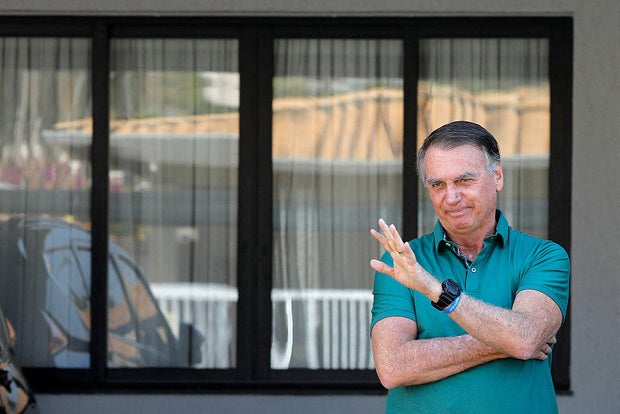
Throughout this legal turmoil, Bolsonaro himself has largely stayed out of the public eye, with limited appearances and minimal interaction with the press. On the day of the verdict, he was seen in his house’s garage but did not make any public statements.
Despite facing significant legal and political hurdles, Bolsonaro remains an influential figure in Brazilian politics. Previously barred from running for public office until 2030 in a separate case, he is not only expected to remain a central figure in Brazil’s political landscape but also to nominate a political successor who may challenge current President Luiz Inacio Lula da Silva in upcoming elections.
This historic trial underscores not only the contentious and polarized nature of Brazilian politics but also highlights the fragile balance of democratic institutions in the region. As Brazil moves forward, the repercussions of this judgment will likely resonate through its political discourse, judicial integrity, and international relations for many years to come.