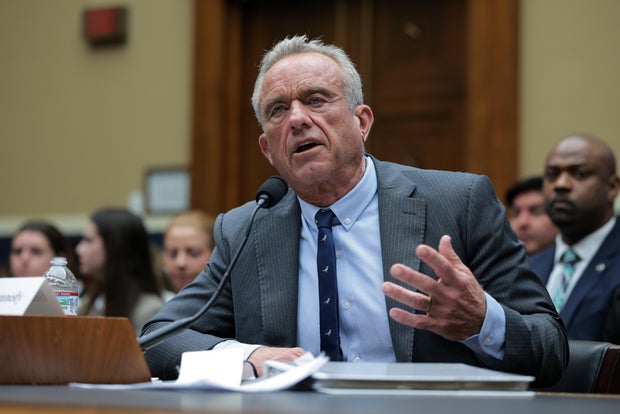
In an event that underscored the deep political divisions over health care policy in the United States, Health and Human Services Secretary Robert F. Kennedy Jr. appeared before the House Committee on Energy and Commerce to discuss the department’s budget for 2026. This high-stakes hearing unfolded amid fervent discourse, with opposing sides of the aisle clashing over funding decisions and their potential impacts on public health.
Secretary Kennedy faced intense scrutiny from Democratic representatives who criticized his handling of the department, particularly focusing on transparency issues and alleged departures from scientifically guided policy-making. Each representative utilized their five-minute allotment for questioning to express concerns and query the Secretary about various aspects of President Trump’s domestic policy legislation, dubbed “one big beautiful bill,” which includes significant modifications to Medicaid. Critics argued these changes would severely reduce coverage for low-income and disabled Americans.
The underlying tone of the opposition was distinctly adversarial. Democratic Rep. Lori Trahan of Massachusetts starkly highlighted the potential real-world consequences of the proposed budget cuts: “Hospitals are going to close. People are going to die. That’s the consequence of your policies.” This sentiment was echoed by Rep. Marc Veasey of Texas, who described the budget as a “death sentence,” particularly blasting the cutbacks aimed at the Substance Abuse and Mental Health Services Administration, which had just announced the termination of a critical part dedicated to LGBTQ+ youth within the 988 Suicide and Crisis Lifeline.
From a different angle, Rep. Troy Carter of Louisiana confronted Kennedy over recent decisions to halt funding for HIV vaccine research. Despite administrative claims that existing strategies were sufficient to combat the virus, significant criticism arose from experts like Dennis Burton, an immunology professor at Scripps Research. These experts believe cutting off research could be detrimental and not easily reversible. Carter emphasized a bundle of studies countering Kennedy’s assertions and questioned his transparency with the public.
However, amidst these critiques, some support for Kennedy emerged from Republican committee members. Rep. Kat Cammack of Florida praised the Secretary for his courage in challenging the status quo, and Rep. Mariannette Miller-Meeks of Iowa acknowledged the difficulties inherent in reorganizing such a crucial department.
A tense exchange followed concerning the Advisory Committee on Immunization Practices (ACIP). Democratic Rep. Frank Pallone accused Kennedy of bypassing the standard public comment process and dodging accountability on major vaccine-related decisions. In response, Kennedy defended his actions by stating his commitment to ensuring patient safety against pharmaceutical interests, evidenced by his recent overhaul of the ACIP members.
Amid these discussions, Kennedy retracted derogatory claims against Pallone following accusations of misconduct from Colorado Rep. Diana DeGette, emphasizing a point of decorum. Furthermore, Kennedy’s unawareness of the “defend the spend” initiative, which has led to payment backlogs affecting healthcare providers, drew criticism for his grasp of ongoing departmental issues.
The most striking defense came during discussions over NIH funding cuts, where Kennedy advocated shifting research focus towards chronic diseases and environmental contributors like seed oils, corn syrup, and microplastics—areas he felt were neglected by current studies.
The hearing took a personal turn when Kennedy stated his decision to remove CDC’s vaccination recommendation for children and healthy pregnant women due to supposed adverse events during pregnancy—a point hotly contested by medical professionals within the committee like Rep. Robin Kelly.
In the hearing’s most confrontational moments, Rep. Kim Schrier accused Kennedy of lying about his intentions with the ACIP committee, a sentiment that captured the profound distrust between some committee members and the Secretary. Kennedy denied misleading anyone, including Senator Bill Cassidy, who had supported his confirmation based on understandings of procedural continuity.
Despite the harsh criticisms, Republican members like Rep. John Joyce commended Kennedy for his efforts towards pioneering American science. The discussions also ventured into innovative medical approaches and bureaucratic reforms proposed by Kennedy, including the use of FDA priority vouchers and new health campaigns.
The hearing highlighted the intricate and often contentious relationship between health policy and political ideology. As the committee navigated through these turbulent dialogues, the overarching questions about the integrity and efficacy of health care policy under Secretary Kennedy’s stewardship remained fiercely debated, emblematic of the broader national conflicts over the direction of American healthcare systems.