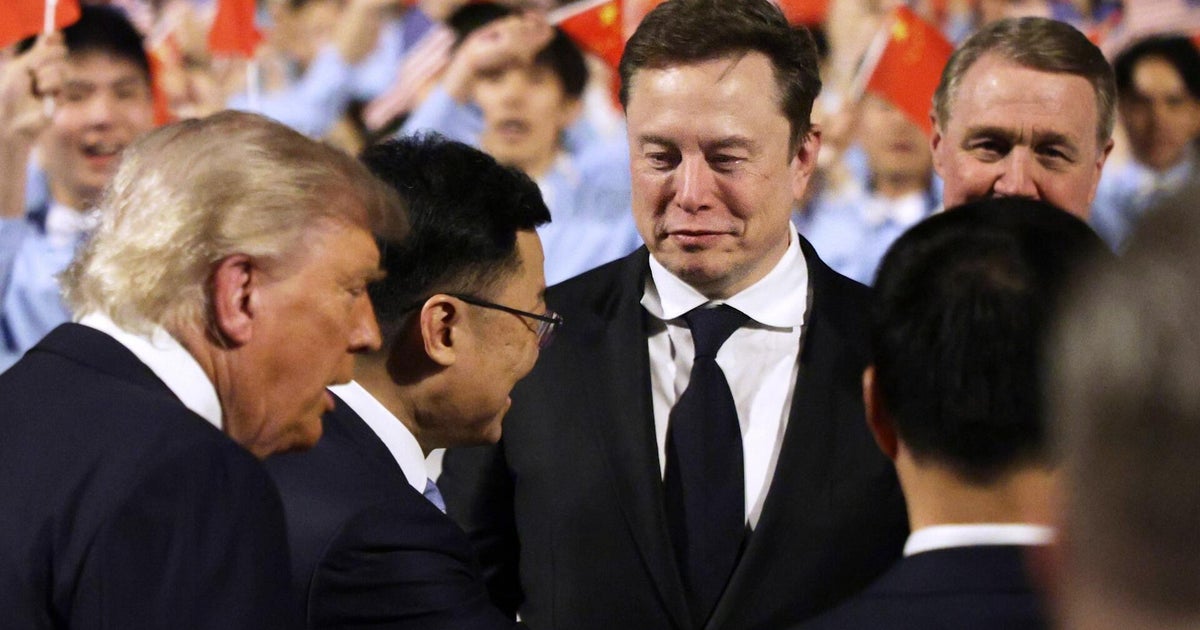
Chinese President Xi Jinping has reassured a group of American CEOs accompanying President Trump on a visit to China, that the country will become more receptive to American business. This is a significant development for business leaders who are keen on expanding their operations in the world’s second-largest economy.
During a meeting with the business delegation, which included notable figures such as Apple CEO Tim Cook, Tesla CEO Elon Musk, and Nvidia CEO Jensen Huang, Xi Jinping expressed his commitment to further opening up China’s economy to American businesses. These executives, whose combined net worth approaches $1 trillion, lead companies with significant interests in China. This comes despite the ongoing trade disputes between the two largest global economies, which have endured for several years.
China’s commitment to welcoming more foreign businesses follows years of escalating trade tensions with the U.S. The Trump administration, in 2019, raised tariffs on Chinese imports by as much as 125% after President Trump stated that China was taking advantage of the U.S. Despite these complications, American companies continue to view China’s growing middle class and substantial consumer base as crucial markets for growth.
This is particularly true as it becomes increasingly challenging to generate profits from financially struggling consumers in the U.S. and other developed economies. The White House reported that several American business leaders participated in a part of a broader meeting between U.S. and Chinese officials. During this, the two sides discussed ways to enhance economic cooperation between the two countries.
This included discussions on expanding market access for American businesses in China and increasing Chinese investment. The list of CEOs accompanying President Trump comprised of Cristiano Amon (CEO of Qualcomm), Tim Cook (CEO of Apple), Lawrence Culp Jr. (CEO of GE Aerospace), Larry Fink (CEO of BlackRock), Jane Fraser (CEO of Citigroup), Jensen Huang (CEO of Nvidia), Ryan McInerney (CEO of Visa), Sanjay Mehrotra (CEO of Micron Technology), Elon Musk (CEO of Tesla and SpaceX), Kelly Ortberg (CEO of Boeing), and others.
Analysts from the political risk consultancy, Eurasia Group, suggest that China could take several steps to ease economic tensions with the U.S., based on the CEOs attending the talks. They expect the two sides to announce increased trade and tariff adjustments in non-sensitive sectors, including Chinese purchases of U.S. agricultural products like beef, Boeing aircraft, and energy.
China could also ease restrictions on foreign financial services firms, lower antitrust barriers, or for Tesla, give the electric car maker the green light to roll out fully autonomous driving. The trip has already yielded benefits for some of the CEOs accompanying President Trump, including Boeing CEO Kelly Ortberg. On Thursday, the president informed Fox News host Sean Hannity that China had agreed to purchase 200 Boeing 737 Max jets, a significant increase from an earlier deal for 50 aircraft.
President Trump also revealed that Xi Jinping had agreed to buy more soybeans, a considerable advantage for U.S. farmers who have suffered due to China’s retaliatory decision a year ago to halt purchases of the key agricultural export.
Historically, business leaders have often accompanied U.S. presidents on high-stakes overseas trips or trade missions. For example, during President Obama’s 2015 visit to India, dozens of U.S. CEOs attended a summit to expand bilateral trade and investment. In 2000, President Bill Clinton brought leading U.S. executives to India, including representatives from General Motors, IBM, and Microsoft.
When President Trump visited China in 2017, he was joined by the leaders of major U.S. banks, energy companies, and technology firms. Moody’s Analytics chief economist Mark Zandi emphasized that the Chinese-U.S. relationship is highly dependent on the countries’ business relationship. He added that the presence of top executives alone could help “open up the lines of communication” between U.S. companies and Chinese officials and business leaders.
For the U.S. CEOs accompanying President Trump, the broader goals include increasing sales to Chinese consumers and businesses, as well as ensuring their companies are positioned to win key manufacturing and trade agreements. For example, Apple, the largest smartphone brand in China, is looking to outdo local rivals such as Huawei and Xiaomi.
Apple also relies on Chinese partners such as Foxconn, the world’s largest contract electronics manufacturer, to produce the majority of its products, which are then shipped worldwide. Semiconductor giant Nvidia is seeking broader access to China’s AI market as U.S. export controls threaten sales of its advanced chips.
A number of major U.S. financial companies were also represented on the trade trip, including BlackRock CEO Larry Fink and Citigroup CEO Jane Fraser. BlackRock is seeking broader access to China’s fast-growing wealth and retirement markets while navigating increasing political scrutiny in both Washington and Beijing. Citigroup, on the other hand, wants broader access to China’s financial markets, partly to help its clients engage in cross-border transactions.
Also among the executives in China with U.S. officials is Jacob Thaysen, the only biotech industry representative on the trip. Thaysen expressed that export restrictions have negatively impacted Illumina’s sales of DNA-sequencing technology in China. He said, “We want to be a part of China,” emphasizing the need for U.S. companies to maintain a strong presence in the Chinese market.