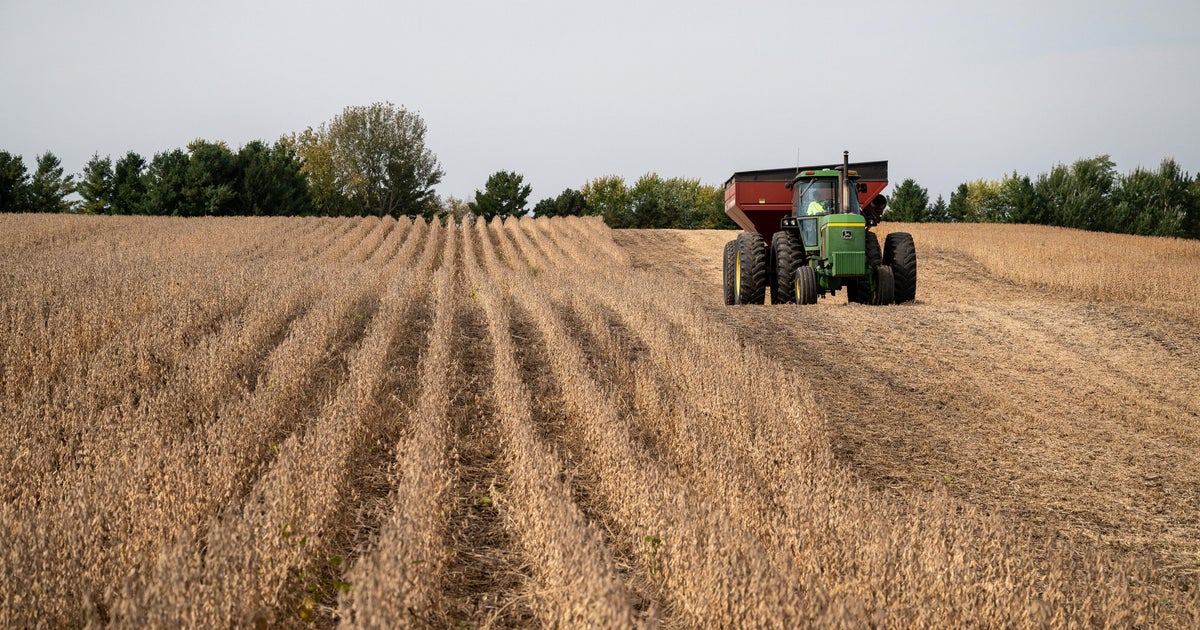
On a crisp Monday morning, under the opulent chandeliers of the White House, President Trump disclosed a significant $12 billion aid initiative aimed at bolstering American farmers who have been adversely affected by ongoing tariffs and a broader trade conflict with China. The announcement highlighted the administration’s efforts to cushion the agricultural sector from the economic tremors induced by international trade tensions.
Flanked by key figures including Treasury Secretary Scott Bessent and Agriculture Secretary Brooke Rollins, along with an assembly of lawmakers and agricultural community representatives, President Trump termed the financial outlay a necessary buffer to the uncertainties swirling around the farming sector. The funding, he noted, was to be generated from the revenue accruing from the tariffs imposed on imported goods.
“This relief will provide much-needed certainty to farmers as they get this year’s harvest to market and prepare for the planting of next year’s crops,” President Trump asserted. He emphasized that the assistance package was not only a measure to stabilize farmer incomes but also a strategic intervention aimed at tempering food prices for American families, thereby easing the cost-of-living pressures at home.
Secretary Rollins detailed that the application process for the funding would commence in the ensuing weeks, with disbursements expected to be completed by February 28, 2026. On a broader scale, nearly $11 billion of the allocated funds were earmarked for the Department of Agriculture’s Farmer Bridge Assistance program, specifically designed to hand out one-time payments for row crop cultivators.
During an interview on “Face the Nation,” Secretary Bessent expressed optimism about the future, urging the farming community to prepare for the upcoming agricultural cycle which promised better yields and financial returns. “You’ve got to start financing for planning next year when things will be very good,” he remarked, instilling a sense of hope and forward-looking spirit among stakeholders.
The aid package was met with approval from various quarters of the political landscape. Representative Glenn “GT” Thompson, the chair of the House Committee on Agriculture, praised the initiative, recognizing its potential to provide essential financial headroom for farmers grappling with a precarious economic environment. “The critical assistance announced today will help farmers obtain financing for 2026 and serve as a bridge to the long-term improvements to the farm safety net, which were included in the One Big Beautiful Bill,” he stated, referencing broader legislative efforts aimed at reinforcing agricultural policies.
The economic strain on U.S. farmers has been severe, particularly in the wake of China’s suspension of soybean purchases earlier in May, a retaliatory strike against the Trump administration’s tariff policies. Reports from the American Farm Bureau Federation, with President Zippy Duvall at the helm, depict a grim picture with estimated losses for the farming sector pegged at around $34 billion. Duvall’s commentary underscored the dual onslaught of rising operational costs and plummeting crop prices which have squeezed farmer incomes. “Farmers face the same high prices as all of America’s families, as more of their income is funneled into household bills and higher operating costs, including loans, equipment, and supplies,” Duvall explained.
The backdrop of these domestic challenges coincides with a fragile détente in the trade hostilities between the U.S. and China. President Trump and Chinese President Xi Jinping had reached a preliminary agreement on trade, with the White House announcing the resumption of soybean sales to China. It was expected that China would purchase at least 12 million metric tons of soybeans in just two months at the tail end of 2025, signaling a partial recovery in trade relations.
Despite these agreements, the reality on the ground remains daunting for many farmers. Correspondents and analysts point out that even with a revival in soybean sales, the volumes are unlikely to match the pre-trade war levels. Coupled with the fact that domestic prices for soybeans have surged by as much as 15% post-agreement, according to Bessent, the sector finds itself navigating a complex landscape of both opportunity and enduring challenge.
The timing of the aid package’s consideration is also of note, coming shortly after a debilitating 43-day U.S. government shutdown which had temporarily stalled discussions on financial relief for the farming community. With these fiscal measures now cleared for implementation, there is a cautious optimism that they may indeed pave the way for a more stable and prosperous farming sector, serving as a critical stopgap as policymakers and industry leaders work towards a more resilient agricultural paradigm.
In conclusion, while the $12 billion aid package represents a significant governmental attempt to stabilize the farming sector, the complexities of global trade dynamics, coupled with internal economic pressures, suggest that the path ahead will require continued strategic oversight and robust policy intervention to secure the future of American agriculture. As these developments unfold, stakeholders across the spectrum remain vigilant, hopeful that the combined efforts of targeted fiscal support and strategic trade engagements will steer the sector back to profitability and growth.