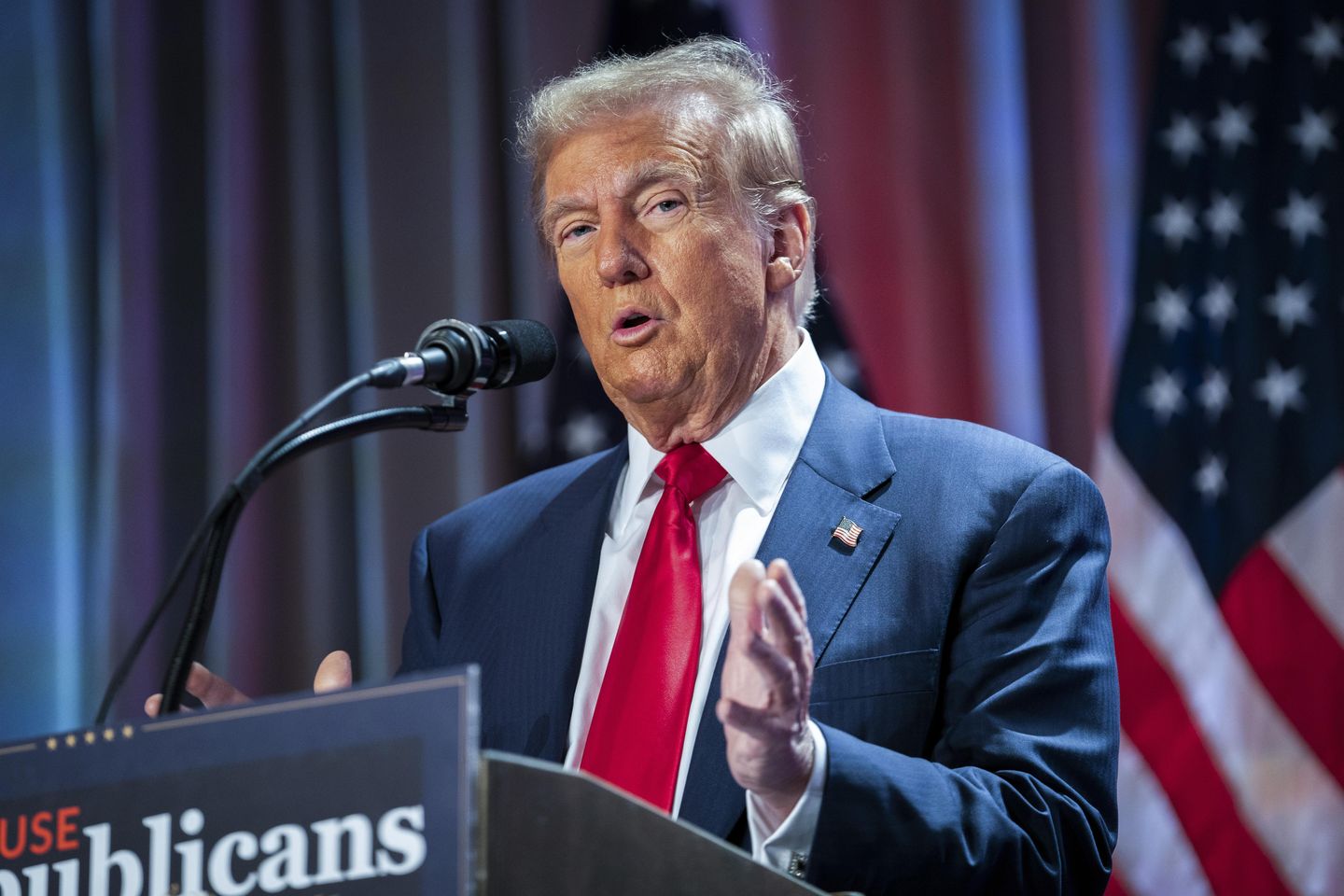
President-elect Donald Trump made a bold and controversial announcement on Monday, revealing his plans to impose a 25% tariff on all products coming into the United States from Mexico and Canada. In addition, he also stated that there would be an additional 10% levy on all Chinese products. These tariffs are intended to serve as penalties for the influx of deadly fentanyl and illegal immigrants crossing the borders into the country.
The decision to implement these tariffs on the first day of his presidency is a clear indication of Trump’s tough stance on border security and trade relations with these countries. The move is likely to have far-reaching implications for the global economy and could potentially lead to heightened tensions between the United States and its neighbors.
The issue of illegal immigration has been a central focus of Trump’s campaign and presidency, with the President-elect vowing to crack down on illegal border crossings and strengthen security measures along the U.S.-Mexico border. The imposition of tariffs on Mexican products is seen as a direct response to the continued flow of illegal immigrants into the country, as well as the smuggling of fentanyl, a powerful synthetic opioid that has been responsible for a growing number of overdose deaths in the United States.
Similarly, the decision to impose tariffs on Chinese products is likely to have significant implications for the ongoing trade war between the two countries. Trump has long accused China of engaging in unfair trade practices and intellectual property theft, and has sought to level the playing field through the imposition of tariffs and other measures. The additional tariffs announced on Monday are likely to further escalate tensions between the United States and China, potentially leading to retaliatory measures from the Chinese government.
The announcement of these tariffs has already sparked widespread debate and controversy, with critics warning that they could have negative consequences for the U.S. economy and global trade. Many have expressed concerns that the tariffs could lead to higher prices for consumers, reduced trade volumes, and increased tensions with key trading partners. Some have also raised questions about the legality of the tariffs under international trade agreements, and whether they could lead to retaliatory measures from other countries.
Despite these concerns, Trump has remained steadfast in his commitment to imposing the tariffs, arguing that they are necessary to protect American jobs and national security. The President-elect has repeatedly emphasized the need to secure the country’s borders and crack down on illegal immigration and drug trafficking, and sees the tariffs as a key tool in achieving these goals.
It remains to be seen how these tariffs will impact relations with Mexico, Canada, and China, as well as the broader global economy. The decision to impose tariffs on the first day of his presidency is a clear signal of Trump’s intent to take a hard line on trade and border security issues, and sets the stage for what is likely to be a contentious and challenging start to his administration.