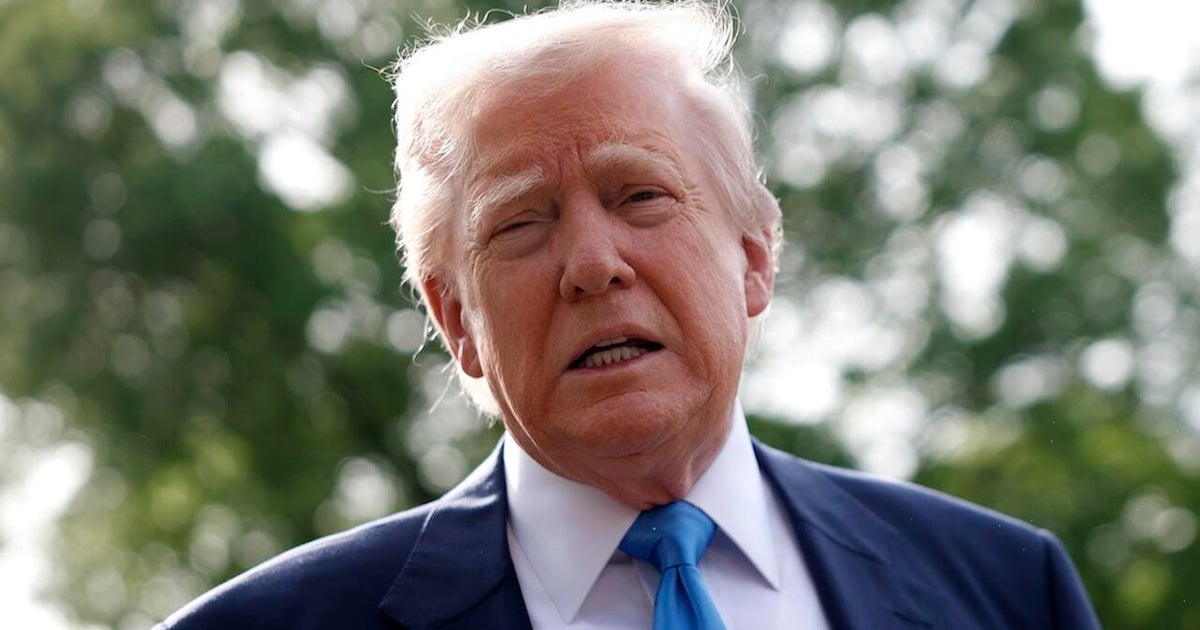
In an unfolding drama that has caught the attention of the international community, President Donald Trump recently remarked in an ABC News interview that he has the capability to communicate directly with El Salvador’s President Nayib Bukele to facilitate the return of Kilmar Abrego Garcia. Abrego Garcia, a Salvadoran national, was deported from the United States last month under controversial circumstances and subsequently imprisoned in El Salvador.
The situation surrounding Abrego Garcia is complex. It dates back to a 2019 court decision that explicitly barred his deportation to El Salvador. Despite this, the U.S. government proceeded with the deportation—an action they later referred to as an “administrative error” in official court documents. The Supreme Court has since intervened, demanding the administration work towards Abrego Garcia’s release and return to the U.S.
This debacle is interwoven with several key themes in U.S. immigration policy under President Trump, particularly the focus on deporting individuals accused of gang affiliations. Abrego Garcia, who entered the U.S. illegally in 2011 at the age of 16, was swept up in these deportations despite legal protections stemming from a “withholding of removal” status he had been granted. This status was based on a credible fear of gang persecution should he return to his home country.
During the interview with ABC’s Terry Moran, the discussion about whether President Trump could personally intervene to secure Abrego Garcia’s return was met with an ambiguous response. Trump acknowledged his potential to influence the situation but expressed hesitation, citing character assessments and legal advice that seemed to complicate the decision.
Trump labelled Abrego Garcia as a “tough cookie,” alleging gang affiliations with MS-13 and accusations of domestic abuse—claims Abrego Garcia’s legal representatives have fervently denied. According to his attorneys, there has never been a criminal charge substantiating these allegations. Furthermore, reports suggest that although Abrego Garcia’s wife did file for a temporary protective order in 2021 citing domestic violence, she later refrained from pursuing the case, indicating that the situation did not escalate as initially feared.
The Trump administration’s stance has been one of stringent adherence to its immigration policies, which have been marked by a notable rigor in dealing with individuals accused of gang affiliations. The administration has utilized the Alien Enemies Act of 1798—a historical statute that permits deportation during invasions—as a basis for these actions. However, this approach has faced significant legal challenges and calls for reform, particularly concerning the due process rights of the deported individuals.
Critics and advocates alike have voiced concerns over the lack of judicial oversight and the potential for rights violations under this stringent policy framework. The Supreme Court’s directive for a judicial review for migrants under the Alien Enemies Act removals highlights the ongoing tension between national security measures and the upholding of constitutional rights.
The broader implications of this case extend well beyond the individual plight of Abrego Garcia. They touch on the dynamics of U.S.-El Salvadoran relations, the ethics of international deportations, and the balance between national security and human rights. President Trump’s administration has been characterized by a hardline stance on immigration, emphasizing the need for robust action to curb illegal entry and stay. Yet, this case exemplifies the complexities and potential pitfalls of aggressive deportation strategies, especially when legal protections are overlooked.
The ongoing legal proceedings in U.S. courts, coupled with diplomatic interactions between the U.S. and El Salvador, will likely shape the eventual outcome of Abrego Garcia’s situation. For now, the world watches as a man’s fate hangs in the balance, caught between bureaucratic error and international law, raising critical questions about justice, sovereignty, and human decency in the face of rigid policy stances.
This case not only highlights the individual human impact of broad policy decisions but also serves as a critical examination of how legal interpretations and administrative actions can diverge significantly—with life-altering consequences for those caught in the middle. As this situation continues to unfold, it remains a poignant reminder of the challenges and responsibilities that lie at the intersection of immigration policy, international relations, and human rights.