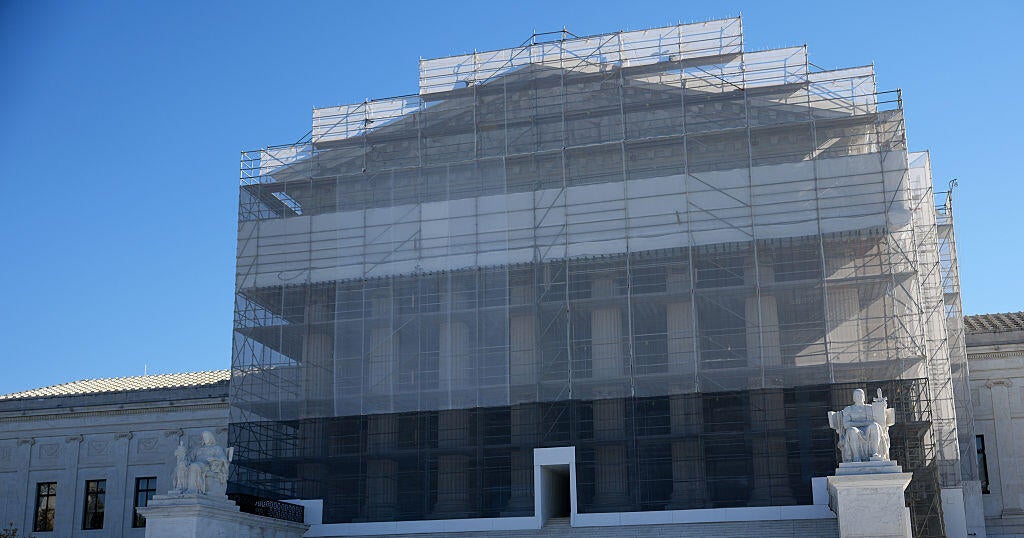
President Trump’s quest to reshape the executive branch and assert his presidential authority faces a significant test at the Supreme Court, as the justices prepare to hear a case on Monday that could potentially dismantle protections designed to insulate independent agencies from political pressure. The case at hand, known as Trump v. Slaughter, centers around Mr. Trump’s decision to dismiss Rebecca Kelly Slaughter from her position at the Federal Trade Commission without cause, despite a federal statute that restricts a commissioner’s removal to instances of inefficiency, neglect of duty, or malfeasance in office.
The key issue before the Supreme Court is whether these removal protections for FTC members violate the separation of powers and whether the court should overturn a pivotal 1935 decision in Humphrey’s Executor v. United States. This legal battle marks the culmination of a gradual erosion of the Humphrey’s Executor precedent by the court’s conservative justices. In the original ruling, which involved President Franklin Roosevelt’s attempt to remove a member of the Federal Trade Commission, the Supreme Court permitted Congress to shield certain independent agency members from being removed by the president at will.
However, in recent years, the conservative justices have chipped away at this precedent, culminating in decisions that ended removal protections for officials at the Consumer Financial Protection Bureau in 2020 and the Federal Housing Finance Agency in 2021. Since Mr. Trump’s return to the White House for a second term, he has actively sought to expand the scope of presidential power and has taken steps to dismiss numerous Democratic-appointed members of independent boards and commissions.
Rebecca Kelly Slaughter’s dismissal from the Federal Trade Commission was a significant event in this broader effort by Mr. Trump to exert control over independent agencies. Appointed to the FTC by the former president in his first term and subsequently reappointed by President Biden, Slaughter received an email in March notifying her that her “continued service on the FTC is inconsistent with my Administration’s priorities.” This move to remove Slaughter, along with fellow Democratic commissioner Alvaro M. Bedoya, left the FTC with only three commissioners, all of whom were Republicans.
Like many other independent agency leaders who were ousted by Mr. Trump, Slaughter took legal action to challenge her dismissal and argued that it was unlawful. When Congress established the FTC in 1914, it specified that commissioners could only be removed by the president for inefficiency, neglect of duty, or malfeasance in office. However, Mr. Trump’s actions…
The upcoming Supreme Court case presents a critical opportunity to address the balance of power between the executive branch and independent agencies, with far-reaching implications for the future of regulatory oversight and accountability in the federal government. The outcome of Trump v. Slaughter could have wide-ranging consequences for the functioning of independent agencies and the ability of presidents to exert control over their operations.
At the heart of this legal battle is the fundamental question of whether independent agencies should be shielded from political interference or whether the president should have greater latitude to remove agency officials at will. The precedent set in Humphrey’s Executor has long been seen as a key safeguard against executive overreach and a means of ensuring the independence of regulatory bodies tasked with overseeing important sectors of the economy.
However, the erosion of this precedent in recent years has raised concerns about the potential for increased political influence over independent agencies and the potential for partisan considerations to drive decision-making within these bodies. The Supreme Court’s decision in Trump v. Slaughter will not only determine the fate of individual agency officials like Rebecca Kelly Slaughter but also shape the broader landscape of regulatory governance in the United States.
The case has already sparked intense debate among legal scholars, policymakers, and advocates on both sides of the political spectrum. Supporters of the removal protections argue that they are essential for preserving the independence and integrity of agencies like the FTC, which play a crucial role in protecting consumers and promoting competition in the marketplace. They contend that allowing presidents to remove agency officials without cause could undermine the effectiveness of these agencies and subject them to undue political influence.
On the other hand, opponents of the removal protections argue that they unduly restrict the president’s authority to oversee and manage the executive branch. They contend that the Constitution vests the president with the power to remove executive branch officials and that any limitations on this power violate the principles of separation of powers. They also argue that the removal protections established in cases like Humphrey’s Executor are outdated and no longer reflect the realities of modern governance.
The Supreme Court’s decision in Trump v. Slaughter is expected to have significant implications for the future of administrative law and the relationship between the executive branch and independent agencies. Depending on the outcome of the case, it could either reaffirm the existing framework of removal protections for agency officials or pave the way for a more expansive view of presidential authority over these bodies.
Regardless of the court’s ruling, the case is likely to have a lasting impact on the balance of power within the federal government and the ability of presidents to shape the direction of regulatory policy. As the justices prepare to hear arguments in Trump v. Slaughter, the eyes of the legal and political world are focused on the Supreme Court, awaiting a decision that could reshape the landscape of administrative law in the United States for years to come.